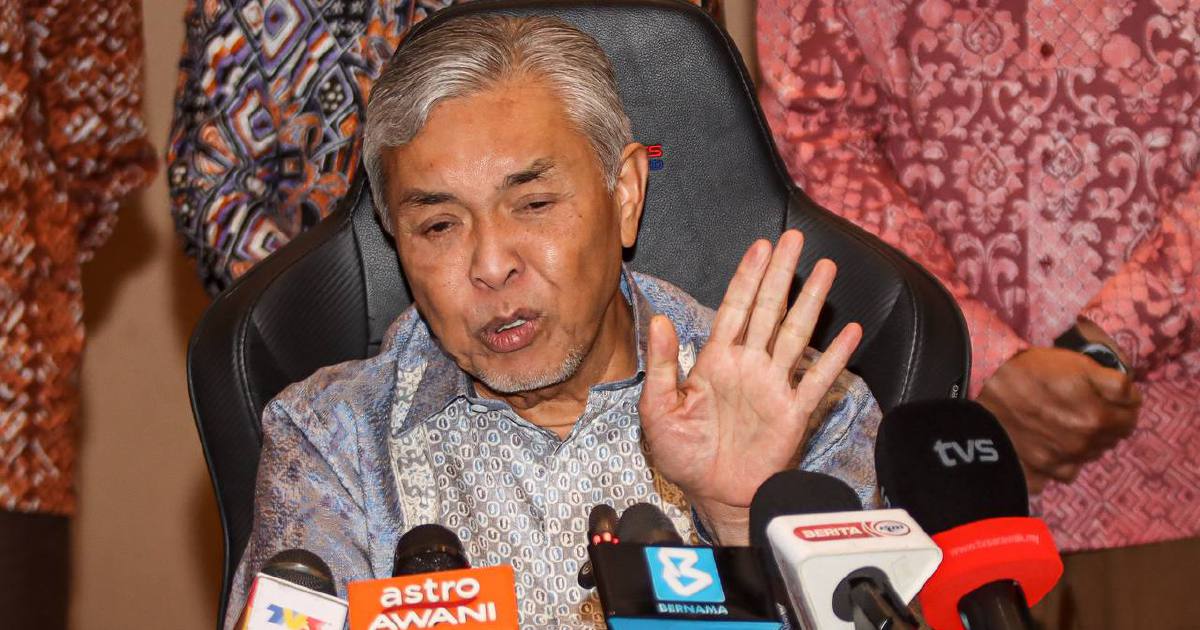
In a significant show of unity that underscores the stability of Malaysia's ruling coalition, Barisan Nasional president Datuk Seri Dr Ahmad Zahid Hamidi has decisively shut down mounting speculation about potential moves to dislodge Prime Minister Datuk Seri Anwar Ibrahim from office. Speaking in George Town, Zahid reasserted the 15-party coalition's steadfast dedication to maintaining the unity government framework until the conclusion of the 15th Parliament, signalling a consolidated political front amid persistent rumours about backbench tensions and factional jostling within the alliance.
The remarks carry considerable weight in Malaysia's contemporary political landscape, where coalition stability remains a pressing concern following the tumultuous transitions of recent years. The unity government, formed in 2022 following the contentious 15th general election, has been periodically tested by speculation about defections, leadership challenges, and internal disagreements between the Malay-Muslim dominated Barisan Nasional and the multi-ethnic DAP-led Pakatan Harapan component. Zahid's forceful dismissal of toppling rumours suggests that Barisan Nasional, as the numerically dominant coalition partner, has no appetite for destabilising the current arrangement, at least not in the immediate term.
This declaration arrives at a moment when Malaysian politics continues to navigate the complexities of consensus-based governance. The unity government model, though unprecedented in scope, has required careful negotiation and frequent compromise between ideologically distinct partners. Such arrangements inherently generate speculation about the durability of partnerships, particularly when individual parties harbour divergent policy preferences or regional power bases. Zahid's explicit confirmation that Barisan Nasional will honour its commitment throughout the 15th Parliament's tenure effectively removes ambiguity about the coalition's intentions and provides reassurance to international observers and domestic stakeholders concerned about political volatility.
Barisan Nasional's role as the linchpin of the ruling coalition cannot be understated. As the historic custodian of federal power for decades prior to the 2018 electoral shock, the coalition commands substantial parliamentary numbers and remains the largest single political force within the unity government. The withdrawal of Barisan Nasional support would almost certainly precipitate the government's collapse, making Zahid's reaffirmation of commitment particularly significant. His words effectively place Barisan Nasional's imprimatur on the continuation of the Anwar-led administration, at least through the current parliamentary cycle.
The timing of these comments also merits examination within the broader context of Malaysian electoral dynamics. With the 15th Parliament expected to run its full term through 2027 or 2028, political players are already calculating trajectories for the inevitable 16th general election. By publicly anchoring Barisan Nasional to the unity government framework, Zahid potentially closes off options for last-minute repositioning or dramatic coalition shifts that might otherwise tempt opposition parties or disaffected backbenchers. Such declarations serve to suppress speculation and maintain the disciplinary structures necessary for coalition governance to function effectively.
Internal dissensions within both Barisan Nasional and Pakatan Harapan have occasionally surfaced, with various party leaders expressing reservations about specific policies or governance decisions. These frictions, while manageable thus far, underscore the fragility inherent in multi-party coalitions operating under significant ideological and religious differences. Zahid's explicit rejection of toppling narratives serves as both a reassurance to coalition partners and a cautionary signal to restless party cadres that stability, rather than opportunistic manoeuvrings, represents the coalition leadership's governing philosophy.
For Anwar Ibrahim personally, the endorsement from Barisan Nasional's leadership removes a particular category of existential threat. Unlike prime ministers serving with commanding majority governments, Anwar's tenure depends fundamentally on maintaining coalition cohesion. The risk that Barisan Nasional might engineer his removal—whether through withdrawal of support or orchestration of defections—has lingered as a spectre in Malaysian political analysis since the unity government's inception. Zahid's categorical denial of such ambitions substantially reduces this vulnerability, at least as long as Barisan Nasional's leadership remains committed to current statements.
The broader implications for Southeast Asian regional stability warrant consideration as well. Malaysia's experience with coalition governance and constitutional pluralism attracts attention from comparable democracies navigating similar challenges. A stable unity government demonstrates the feasibility of managing diverse political interests within institutional frameworks, potentially offering lessons for other regional actors confronting fragmentation or polarisation. Conversely, if Malaysian coalition governance were to fracture spectacularly, it might reinforce arguments that plural coalitions represent unstable, suboptimal governance structures.
Looking ahead, Zahid's declaration should be understood as a statement of current intent rather than an immutable guarantee. Political circumstances evolve, electoral calculations shift, and the composition of parliamentary support bases can change through various mechanisms. Nevertheless, his emphatic public commitment to the unity government through the completion of the 15th Parliament substantially raises the political costs of any subsequent reversal. Any future Barisan Nasional withdrawal from the coalition would require explanation and justification, undermining the credibility of present statements and damaging the party's reputation for reliability among coalition partners.
The stability signalled by Zahid's remarks provides Malaysian stakeholders—including businesses, investors, and citizens concerned with governance continuity—with reassurance that the current administration possesses adequate parliamentary foundations to execute its agenda without imminent threats of collapse. While Malaysian politics will undoubtedly continue generating speculation and rumour, this categorical reaffirmation of coalition commitment represents a significant anchoring of expectations, at least for the medium term.

