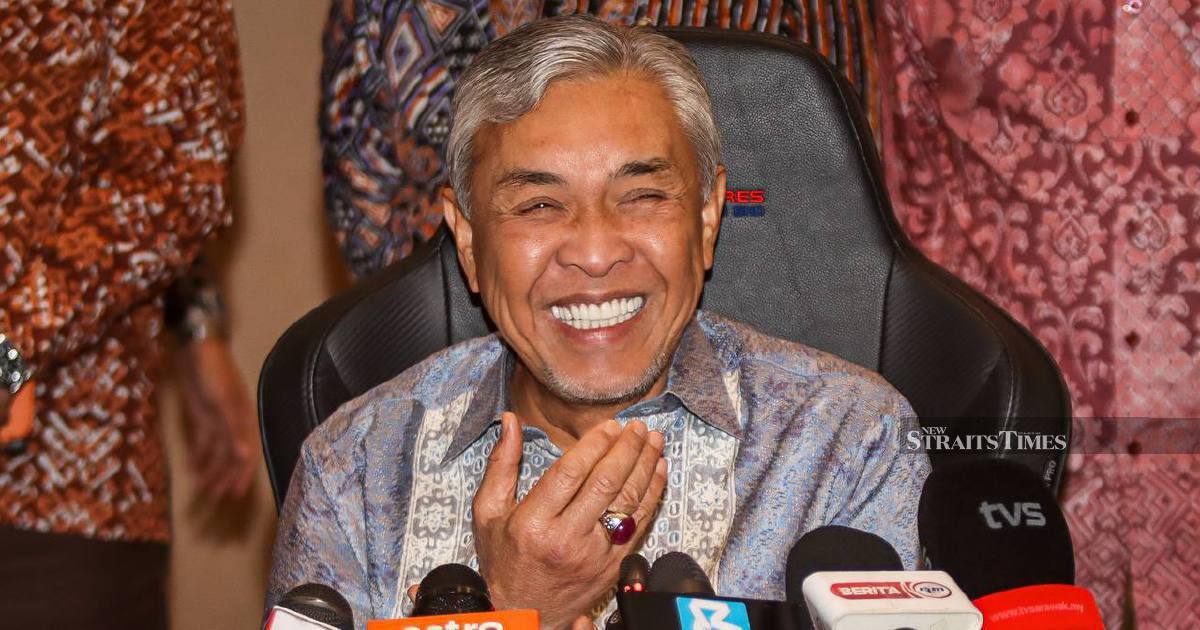
Deputy Prime Minister Datuk Seri Dr Ahmad Zahid Hamidi has kept alive a meaningful tradition of political communication by composing his own pantun in response to Prime Minister Datuk Seri Anwar Ibrahim's recent verse, delivered during an engagement in George Town. The exchange represents a revival of classical Malay literary forms as a medium for conveying complex political messages in a manner that draws from Malaysia's cultural heritage rather than relying solely on conventional speeches or press statements.
The pantun, a form of poetry deeply rooted in Malay culture spanning centuries, operates according to strict aesthetic and philosophical principles that demand considerable wit and linguistic dexterity from those who compose them. Each four-line verse traditionally employs an AABB rhyme scheme in the first two lines, followed by a deeper philosophical or metaphorical meaning embedded in the final couplet. The choice to employ this venerable form suggests an intention to elevate the discourse beyond routine political exchange, infusing it instead with cultural significance and a connection to Malay literary traditions that resonate with educated audiences across the region.
Prime Minister Anwar Ibrahim had initiated this poetic dialogue by presenting his own pantun organised around themes of unity and cohesion, addressing persistent challenges that have characterised Malaysia's political landscape over recent years. His choice of subject matter—emphasising collective purpose and shared national objectives—reflects recurring preoccupations within his administration regarding the need to forge stronger consensus among Malaysia's diverse political and social constituencies. The use of pantun as the vehicle for these messages suggests recognition that traditional forms carry particular weight and authenticity when discussing matters of national importance.
Deputy Prime Minister Zahid's response, featuring imagery of roofs and storms, appears deliberately constructed to acknowledge the protective functions of political leadership while simultaneously recognising the turbulent conditions that govern bodies must weather. The metaphorical framework deployed in his verse—suggesting structures that shelter inhabitants from external forces—resonates with longstanding Malay literary conventions where natural phenomena frequently represent broader societal challenges and the human response to them. This layering of meaning exemplifies why pantun composition remains a valued skill among Malaysia's political leadership, offering a sophisticated mechanism for advancing nuanced arguments through culturally resonant language.
The exchange between these two senior figures carries particular significance given the complex dynamics that have characterised their working relationship since Zahid assumed the deputy premiership under Anwar's administration. Previous periods of tension within the leadership hierarchy have occasionally surfaced in Malaysian politics, making collaborative gestures through cultural expressions particularly noteworthy as indicators of functional partnership. The choice to conduct this dialogue through pantun rather than through more confrontational modes of communication suggests both leaders recognise benefits in maintaining harmonious public relations despite any underlying differences regarding policy approaches or administrative priorities.
For Malaysian readers attuned to Malay language and literature, these exchanges offer windows into how traditional cultural forms remain instrumental in shaping political narratives and inter-elite communication. The pantun tradition, far from being merely ceremonial or decorative, functions as a legitimate channel through which senior officials can address constituencies, signal policy directions, and reinforce cultural identity simultaneously. This demonstrates that political communication in Malaysia operates across multiple registers—formal institutional frameworks, media engagement, and cultural performance—with each serving distinct communicative purposes.
The George Town setting for this exchange also carries significance, as Penang's capital city represents a historically important centre for Malay letters and intellectual tradition. The location amplifies the cultural resonance of conducting political dialogue through classical forms, situating contemporary political interaction within a continuum of Malay cultural practice stretching back generations. This geographical context transforms what might otherwise appear as merely symbolic gesture into something connected more deeply to regional cultural geography and historical consciousness.
Beyond the immediate political participants, such pantun exchanges inevitably reach broader audiences through media circulation and social media sharing, particularly among segments of the population valuing Malay cultural authenticity and linguistic sophistication. The sophistication required to compose coherent pantun with appropriate metaphorical depth means that such exchanges also function as demonstrations of educational attainment and cultural refinement, subtle but nonetheless significant elements within Malaysia's political culture.
The timing of these poetic exchanges warrants attention, coinciding as they do with broader discussions concerning national direction and political stability. When senior leadership opts for cultural modes of communication rather than operational directives or conflict-oriented statements, observers typically interpret this as signalling relative stability within the governing coalition and confidence regarding baseline consensus on fundamental national priorities. The perpetuation of this dialogue format thus serves purposes beyond mere symbolism, carrying implications for how observers assess the health of Malaysia's political relationships and institutional functioning.
As Malaysia continues navigating complex governance challenges requiring coordination among diverse political actors, the persistence of traditional cultural forms in elite communication may serve valuable integrative functions. The pantun exchange between Anwar and Zahid exemplifies how Malaysia's unique cultural heritage—simultaneously Malay, Islamic, and pluralistic—continues shaping the texture of political life in ways that distinguish governance practices from those found in culturally homogeneous contexts. Whether such cultural expressions translate into substantive policy coordination remains a question that observers will continue monitoring as Malaysia's political leadership engages with mounting economic pressures and social expectations.

