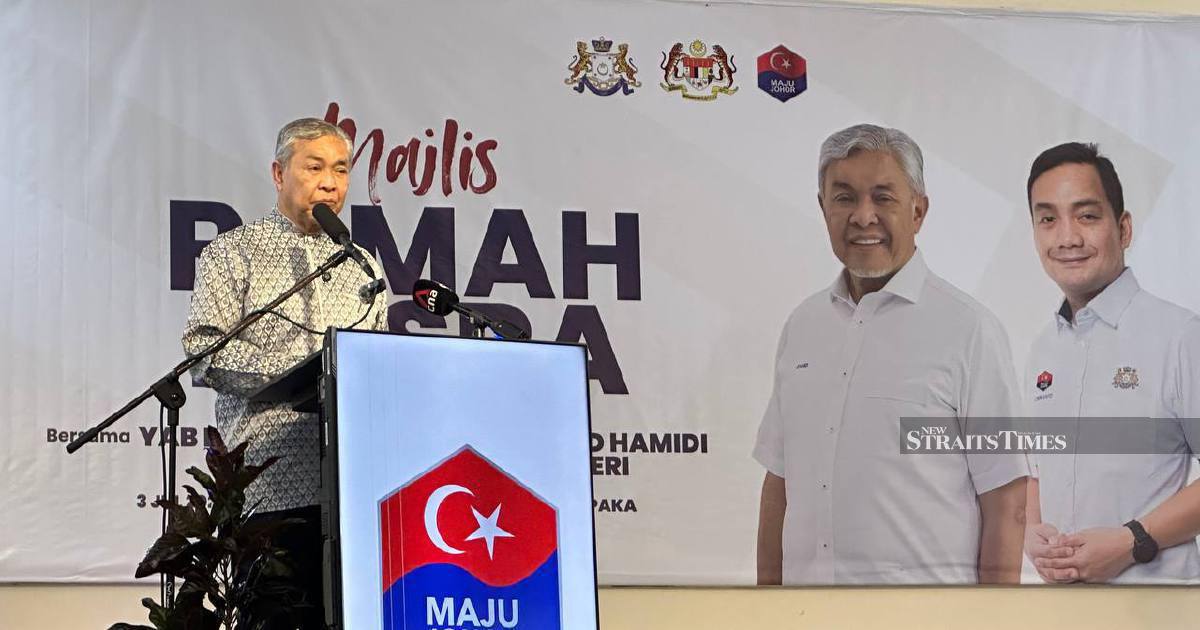
Datuk Seri Dr Ahmad Zahid Hamidi, the Barisan Nasional chairman, has made a direct appeal to his coalition partners within Malaysia's unity government to move past accumulated tensions and historical disputes. In remarks made in Johor Baru, Zahid cautioned against allowing old grievances to become weaponry during the forthcoming state election campaign, signalling his concern that internal divisions could undermine the combined strength needed for electoral success. The statement reflects growing awareness within Umno's leadership that the coalition's stability depends on maintaining discipline among its constituent parties during this critical electoral phase.
The call comes at a delicate moment in Malaysian politics. The unity government, which brought together former political opponents following the 2022 general elections, represents an unprecedented arrangement that has transformed Malaysia's political landscape. However, such broad-based coalitions inherently carry tensions between parties that spent years attacking one another, and these underlying strains threaten to surface when campaigns intensify. Zahid's intervention suggests that internal management of these relationships has become a pressing concern for Barisan Nasional leadership, even as the coalition seeks to project unity to voters.
In practical terms, Zahid's appeal addresses a common problem in coalition politics: the temptation for component parties to differentiate themselves from partners through criticism, particularly when their own electoral fortunes appear vulnerable. Partner parties may resort to highlighting past failures or attributing blame for national problems to Umno-led governance, using such arguments to justify their continued political relevance. For Umno, dominant within both Barisan Nasional and the broader government structure, such attacks carry particular sting, even when they originate from ostensible allies. Zahid's message implicitly acknowledges this risk while attempting to establish ground rules for the campaign period.
The Johor state election occupies special significance within Malaysia's political calculus. As the gateway to peninsular Malaysia and home to one of the nation's most competitive electoral battlegrounds, Johor has traditionally shaped national political narratives. Victories or defeats in this state reverberate beyond its borders, influencing perceptions about which coalitions and leaders command genuine popular support. For Barisan Nasional and Umno specifically, Johor carries historical weight; the state represents part of the coalition's heartland, and losing ground there would signal serious erosion of support. This context elevates the stakes of Zahid's appeal, transforming it from mere housekeeping into a matter of coalition survival.
The timing of Zahid's statement also warrants consideration. Malaysian elections are typically preceded by periods during which political temperatures rise and historical narratives resurface as parties compete for voter attention. Both government and opposition movements weaponise past scandals, governance failures, and broken promises as campaign tools. For unity government partners, the challenge intensifies because they must simultaneously campaign against the opposition while restraining criticism of coalition colleagues. This balancing act requires extraordinary discipline, which Zahid's appeal now attempts to reinforce through leadership pressure and public commitment.
From a Malaysian perspective, the stability of the unity government carries broader implications beyond electoral mathematics. Since its formation, the arrangement has provided relative political stability following years of ministerial instability and frequent government changes. Maintaining this stability through election cycles requires that component parties resist the urge to blame one another for unpopular decisions or poor governance outcomes. Zahid's call essentially asks coalition members to prioritise institutional cohesion over short-term political advantage, a significant demand given electoral pressures.
The statement also reflects strategic calculations about voter behaviour. Coalition partners likely harbour concerns that attacks on Umno could alienate traditional Barisan Nasional supporters, who may interpret internal criticism as evidence that the coalition itself lacks confidence or unity. Conversely, allowing opponents to monopolise attacks on Umno while partners remain silent might suggest complicity or indifference. Zahid's framework attempts to navigate this dilemma by establishing that internal matters should remain internal, channelling all external fire toward common opposition targets instead.
In regional context, Malaysia's unity government represents an important test case for post-polarisation politics in Southeast Asia. Neighbouring countries facing similar political fragmentation watch how Malaysian parties manage coalitions that bridge deep ideological and historical divisions. If the Johor campaign devolves into intra-coalition recriminations, it demonstrates that such arrangements remain fragile, reinforcing skepticism about reconciliation models. Conversely, if coalition discipline holds, it suggests that institutionalised cooperation can function despite past hostilities.
Zahid's appeal nonetheless reveals underlying fragility within the unity project. The fact that the coalition chairman must publicly call for restraint suggests that such restraint does not come naturally to participants, and that previous agreements about campaign conduct require constant reinforcement. This pattern typically emerges when coalitions are relatively new or when partner parties retain distinct interests that diverge from broader coalition objectives. The necessary repetition of such calls throughout the campaign season would further underscore these tensions for Malaysian voters observing the political contest.
Moving forward, the practical impact of Zahid's intervention will depend on partner parties' willingness to comply and their capacity to maintain messaging discipline across multiple campaign events and statements. In electoral environments where local pressures mount and party operatives compete for voter attention, adhering to coalition-wide guidelines becomes increasingly difficult. Whether partners genuinely embrace Zahid's framework or merely pay lip service to it will become evident as the Johor campaign unfolds, offering observers important insights into the coalition's true cohesion and political maturity.

