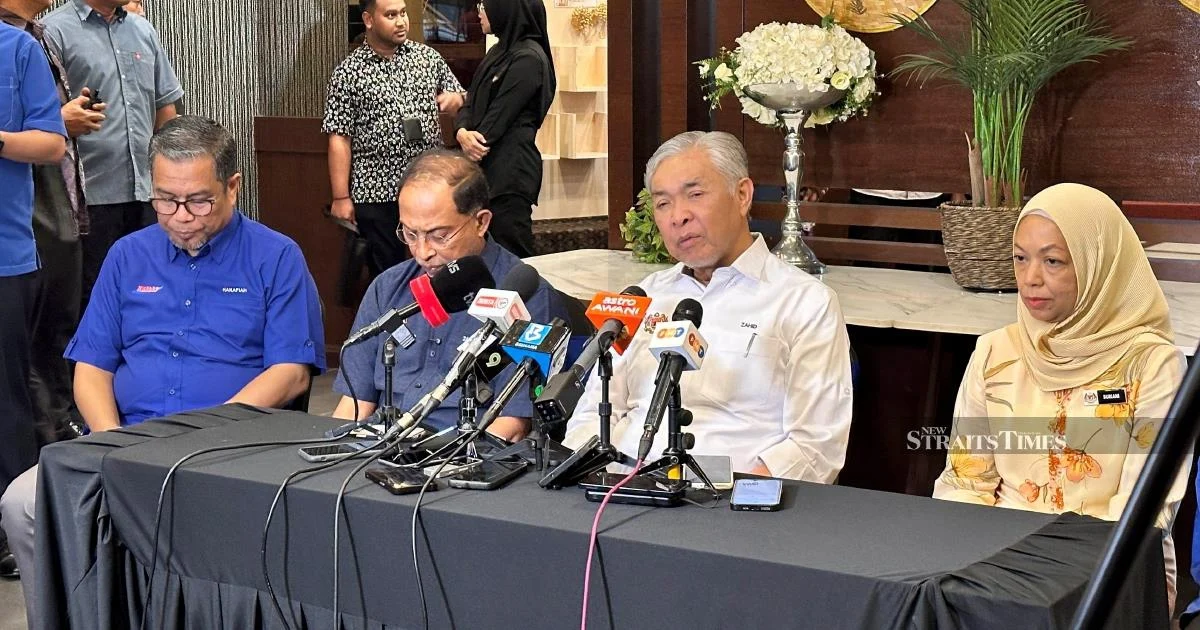
Barisan Nasional chairman Datuk Seri Dr Ahmad Zahid Hamidi has signalled growing discomfort within Malaysia's governing coalition over campaign strategies that invoke the legacy of former prime minister Najib Razak and his wife Datin Seri Rosmah Mansor in the upcoming Johor state election. Speaking in Kluang, Zahid appeared to admonish one of the unity government's component parties for deploying Rosmah's image during canvassing efforts, underscoring simmering tensions between BN and its coalition partners just as the campaign enters its decisive phase.
The rebuke reflects a strategic pivot within BN's hierarchy toward presenting a forward-looking narrative in the Johor contest, rather than relying on political figures whose legacies remain deeply contested within Malaysian society. Zahid's apparent criticism suggests that senior BN leadership views the deployment of former top officials' images as potentially counterproductive, particularly among voters who remain sceptical of the previous Najib administration's policies and governance record. This friction between coalition members over campaign messaging highlights underlying disagreements about how best to consolidate support ahead of polling day.
The Johor election represents a critical test for the unity government in one of Malaysia's largest and most politically significant states. As a historically BN stronghold, the state carries enormous symbolic weight for the coalition's broader credibility and electoral viability heading into the next general election cycle. Any significant erosion of support in Johor could signal broader vulnerabilities within BN's organisational effectiveness and public appeal, making the campaign strategy decisions particularly consequential for senior party figures like Zahid.
Rosmah's continued prominence in Malaysian political discourse remains a contentious matter, given her proximity to governance decisions during the Najib administration and various controversies that have shadowed her public profile. The deployment of her image in campaign materials evidently crossed a line for BN's central leadership, which appears determined to establish clearer boundaries around which symbols and figures should feature in official coalition messaging. Zahid's intervention suggests that BN's strategic communications team believes such imagery may activate negative voter sentiment rather than generating enthusiasm or constructive engagement.
The tension between different coalition components also reflects broader structural challenges within Malaysia's unity government arrangement, which brings together multiple political entities with sometimes conflicting interests and campaign philosophies. Component parties occasionally pursue localised strategies that diverge from the central party line, creating coordination difficulties and mixed messaging at the national level. Zahid's public rebuke represents an effort to reassert party discipline and ensure a more cohesive approach across all campaign activities and promotional materials.
For Malaysian voters, particularly those in Johor, the internal coalition discord may raise questions about the stability and unity of the government partnership. Political uncertainty stemming from visible disagreements between coalition partners could influence voting patterns, especially among swing voters and urban populations who place premium value on good governance and internal political coherence. The campaign dynamics in Johor therefore carry implications extending well beyond state-level politics into calculations about national stability and direction.
BN's electoral calculations in Johor also reflect changing voter demographics and shifting political preferences in urban and semi-urban constituencies. Younger voters and middle-class urbanites increasingly value forward-thinking governance platforms over appeals rooted in past administrations or historical party figures. Zahid's directive to coalition partners to emphasise future-oriented messaging aligns with broader electoral research suggesting that voters across Southeast Asia, including Malaysia, increasingly reward parties that concentrate on contemporary policy solutions rather than dwelling on previous leadership or past controversies.
The coalition's internal management challenges extend to operational coordination in a complex political landscape where the unity government spans ideological and partisan divides that previously seemed unbridgeable. Managing these different factions while maintaining campaign message discipline requires sophisticated political navigation, and Zahid's public intervention indicates that gaps have emerged between the centre's preferred strategy and execution at the ground level. Resolving these gaps before polling day becomes essential for maximising the coalition's electoral performance.
For political observers in Malaysia and the wider region, the incident underscores how even seemingly dominant coalitions must constantly negotiate internal pressures and competing visions among component parties. The Johor campaign has become a test case for whether the unity government can maintain sufficient coherence to project an image of stable, effective governance. How successfully BN's leadership harmonises different coalition voices over the coming weeks will significantly influence both the state election outcome and assessments of the broader partnership's durability and functionality in Malaysian politics.

