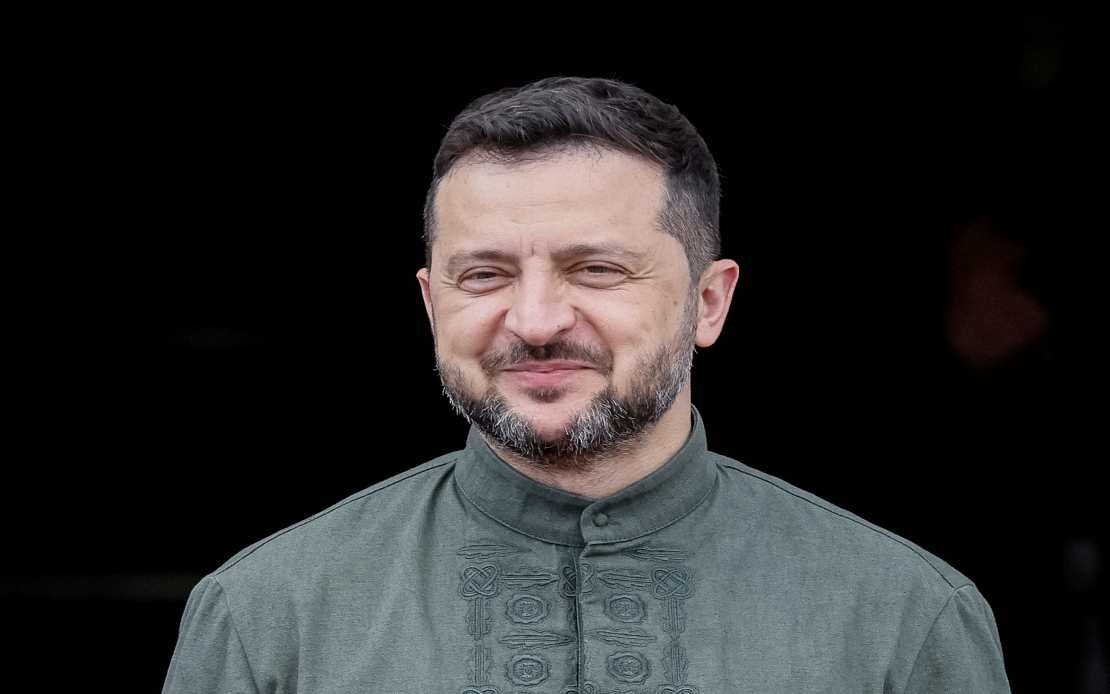
Ukrainian President Volodymyr Zelensky has signed a law creating a national pantheon to commemorate historical figures deemed as heroes by the Ukrainian state, a move that has intensified an already strained relationship with neighbouring Poland and raises complex questions about historical memory in post-Soviet Eastern Europe. The legislation, passed through parliament in July and now formally enacted, represents a significant shift in how Ukraine seeks to shape its national identity and commemorate its past, particularly regarding controversial figures from the independence struggle.
At the heart of the controversy lies the planned inclusion of members of the Ukrainian Insurgent Army, or UPA, an underground nationalist organisation that resisted both Nazi and Soviet occupation during World War II. From Poland's historical perspective, the UPA bears direct responsibility for systematic massacres of Polish and Jewish populations, with particular atrocities concentrated in the Volyn region of what is now western Ukraine. Historical records indicate that tens of thousands of civilians perished in these campaigns, making this not merely a matter of competing national narratives but one rooted in documented mass violence and genocide.
Zelensky's decision to proceed with signing the law underscores Ukraine's determination to reclaim narratives of resistance and independence that Warsaw views through the lens of victimhood and historical trauma. Speaking before war veterans on Saturday, Zelensky declared that "The Ukrainian pantheon will definitely be built, and only Ukrainians will decide who is a hero for us," a statement that encapsulates the fundamental disagreement between the two nations over who deserves commemoration and how historical figures should be evaluated. The framing reflects a broader Ukrainian perspective that emphasises anti-colonial struggle against foreign domination, regardless of methods employed.
The envisioned memorial complex in Kyiv will serve multiple functions beyond honouring controversial independence fighters. The pantheon is designed to celebrate historical figures stretching back to the medieval Kyivan Rus empire, establishing a cultural continuum that Ukraine believes validates its historical legitimacy and territorial claims. Additionally, the structure will function as a burial site for Ukrainian presidents, further cementing its role as a central symbol of the Ukrainian state and its values.
This conflict carries particular significance for Southeast Asian observers given the region's own complex history of post-colonial nation-building and the contemporary tensions that arise when neighbouring states hold fundamentally different interpretations of shared historical events. Malaysia and other ASEAN nations have grappled with similar challenges regarding how to commemorate independence struggles while acknowledging historical complexities, making the Ukraine-Poland dispute instructive for understanding the fraught terrain where patriotism, memory, and international relations intersect.
The deterioration in Ukrainian-Polish relations has accelerated dramatically in recent months. In June, tensions escalated when Zelensky granted a military unit the honorary title "Heroes of the UPA." Warsaw's response was swift and symbolic: the Polish government withdrew the Order of the White Eagle, one of Poland's highest honours, which had previously been awarded to Zelensky. This reciprocal stripping of honours extended beyond government actors, as several Ukrainian and Polish politicians returned decorations they had received from the neighbouring country, signalling a breakdown in diplomatic courtesy and mutual respect.
The Polish government's official response to the law's signing has been measured in public pronouncements, yet the underlying displeasure is unmistakable. When parliament initially advanced the legislation in July, the office of Polish President Karol Nawrocki issued a statement contending that glorifying individuals convicted of genocide represented a fundamental incompatibility with Western values and integration. This framing positions the disagreement not merely as a bilateral dispute but as a question of whether Ukraine's historical reckoning aligns with the norms and values of the Euro-Atlantic community.
The timing of this legislation is fraught with geopolitical significance. Ukraine's reliance on Western military, financial, and diplomatic support in its ongoing conflict with Russia makes the deterioration of relations with Poland, a crucial ally within NATO and the European Union, particularly costly. Poland has been instrumental in coordinating Western military assistance to Ukraine and has served as a critical transit point for humanitarian aid and weapons transfers. Any fracturing of this partnership threatens to complicate Ukraine's strategic position at a moment when unity among Western supporters is essential.
For historians and policymakers across the region, this episode illustrates the enduring challenge of reconciling national pride with historical accountability. The UPA's resistance against totalitarian occupation represents a genuine chapter in Ukrainian independence struggles, yet the documented massacres of Polish and Jewish civilians constitute an undeniable dimension of that history. Finding frameworks that acknowledge both realities simultaneously, rather than choosing one narrative over another, remains elusive for both nations.
The pantheon law also reflects Ukraine's broader project of de-communisation and historical reorientation following the 2014 Euromaidan revolution and the subsequent Russian invasion. Removing Soviet monuments and erecting new memorials commemorating pre-Soviet Ukrainian identity has been central to Ukraine's attempt to construct a national identity distinct from Russian spheres of influence. However, this project becomes complicated when the figures being elevated engaged in violence that extends beyond resistance against foreign occupation.
Moving forward, the diplomatic fallout from this decision may persist for years. Poland's concerns are unlikely to dissipate simply because the law has been signed, and further symbolic gestures of commemoration could trigger additional tensions. Meanwhile, Ukraine faces the challenge of maintaining Western support while asserting its own historical narratives and national identity claims. For Southeast Asian observers, this situation underscores how historical memory remains a potent force in international relations, capable of undermining even strategic partnerships forged through military necessity and geopolitical alignment.

