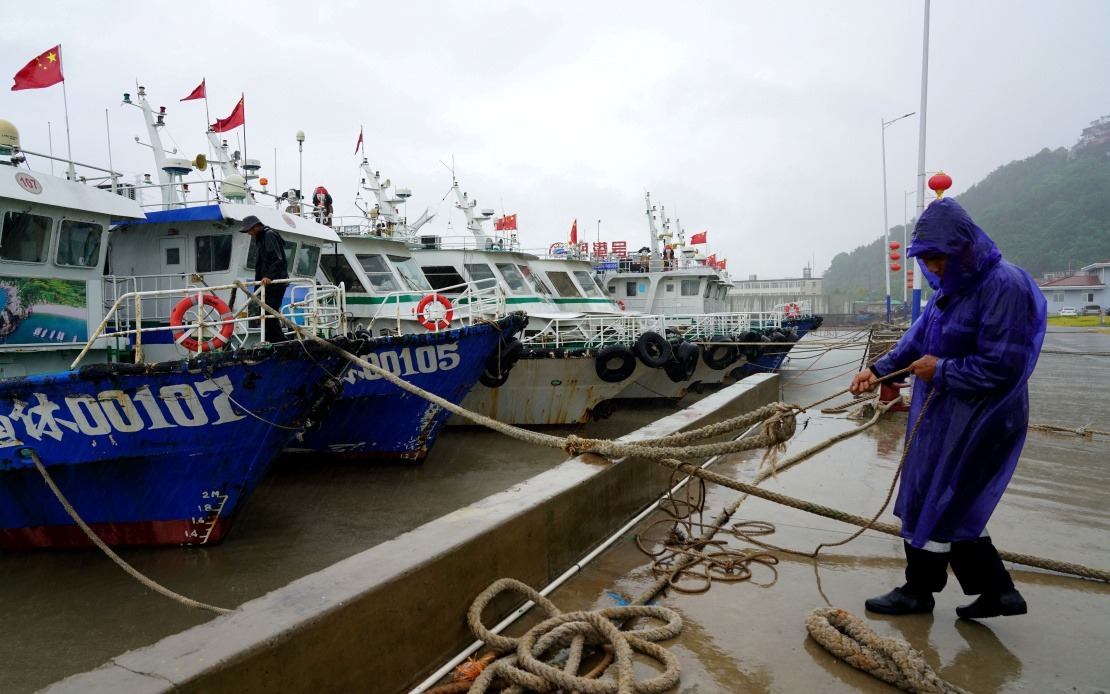
Zhejiang Province in eastern China has intensified its emergency preparedness as Typhoon Dolphin barrels toward the coast, with regional authorities elevating their response protocols to Level III on Friday. The upgrade signals growing concern about the trajectory and potential impact of what meteorologists are tracking as the year's 13th typhoon. The storm, positioned approximately 763 kilometres east of Wenling in Zhejiang at dawn on Friday, represents a significant weather threat to one of China's most economically vital regions and carries implications for regional trade and transportation across Southeast Asia.
The Zhejiang Meteorological Observatory has forecast the typhoon to advance westward at a measured pace of between 15 and 20 kilometres per hour, with its destructive potential expected to remain steady or intensify slightly in coming days. Critically, China's National Meteorological Centre issued a yellow alert on Thursday evening, projecting that Typhoon Dolphin will make landfall somewhere along the coast between Shanghai and Fuqing in Fujian Province during the weekend or early the following week. This positioning places Zhejiang squarely in the crosshairs, as the province sits geographically between these two landing zones.
Lou Xiaofen, the chief forecaster at the Zhejiang Meteorological Observatory, has stated plainly that the typhoon carries a substantial probability of striking Zhejiang directly, a scenario that would unleash considerable disaster potential across a densely populated and industrialised region. The meteorological assessment suggests Typhoon Dolphin could reach intensity levels between strong typhoon and severe typhoon classifications by the time it makes contact with land. Should this projection hold, the accompanying rainfall could be severe, particularly in areas north of the actual landfall point, where moisture-laden winds would continue to deposit heavy precipitation inland.
The scope of preventive action already undertaken across Zhejiang underscores the seriousness with which authorities are treating this threat. By Friday morning, all 162 passenger ferry routes operating throughout the province had been suspended, effectively halting a critical transportation artery for the region's residents and commerce. Simultaneously, work has ceased entirely at all 193 offshore industrial and energy projects, representing a substantial economic impact but a necessary safeguard against catastrophic infrastructure damage. Maritime authorities have also succeeded in directing 474 construction vessels to safe harbours, removing potential hazards from waters that could soon become treacherous.
The coordination of maritime safety measures has reached an impressive scale. Provincial maritime authorities have dispatched 86,000 early warning messages to relevant stakeholders and completed inspections of 24,000 individual vessels, a massive logistical undertaking that reflects the complexity of managing maritime operations across a busy coastal region. High-powered tugboats have been positioned at strategic locations and placed on standby, ready to mobilise for emergency rescue and recovery operations should conditions deteriorate or vessels find themselves in distress.
The activation of Level III alert status carries specific operational mandates that reshape how local governance functions across affected areas. Under these elevated protocols, authorities must maintain constant vigilance over the typhoon's development and movement, continuously updating forecasts and issuing warnings to the public. Population evacuation procedures must be initiated where deemed necessary, with officials required to guide residents to designated safe zones. Public communication becomes paramount, with authorities obligated to provide clear, timely guidance to help residents understand the risks and take appropriate protective measures.
For Malaysian readers and regional observers, the situation in Zhejiang carries relevance beyond immediate humanitarian concerns. The province is a major manufacturing hub and port region with significant trade connections throughout Southeast Asia. Any severe disruption to Zhejiang's port facilities, transportation networks, or industrial operations would create ripple effects across regional supply chains. Malaysian exporters relying on east China transit points, as well as importers sourcing products from Zhejiang factories, should monitor the typhoon's progression closely and prepare for potential logistics delays.
The 2026 typhoon season has proven particularly active, with Typhoon Dolphin representing the 13th named system already. This frequency underscores the intensifying nature of seasonal tropical storm activity in western Pacific waters, a pattern that meteorologists attribute partly to warming ocean temperatures. For Southeast Asia, including Malaysia, such heightened activity in adjacent waters carries implications for regional weather patterns and the potential for system movements that could eventually impact the broader region.
The response mobilisation across Zhejiang also demonstrates the sophistication of modern disaster management systems in China, where centralised coordination, real-time communication networks, and pre-positioned resources enable rapid scaling of emergency operations. However, the true test comes when the typhoon makes landfall and conditions deteriorate. How effectively the evacuated populations remain safe, how well critical infrastructure withstands the onslaught, and how quickly recovery can commence will determine the ultimate human and economic toll of Typhoon Dolphin.

