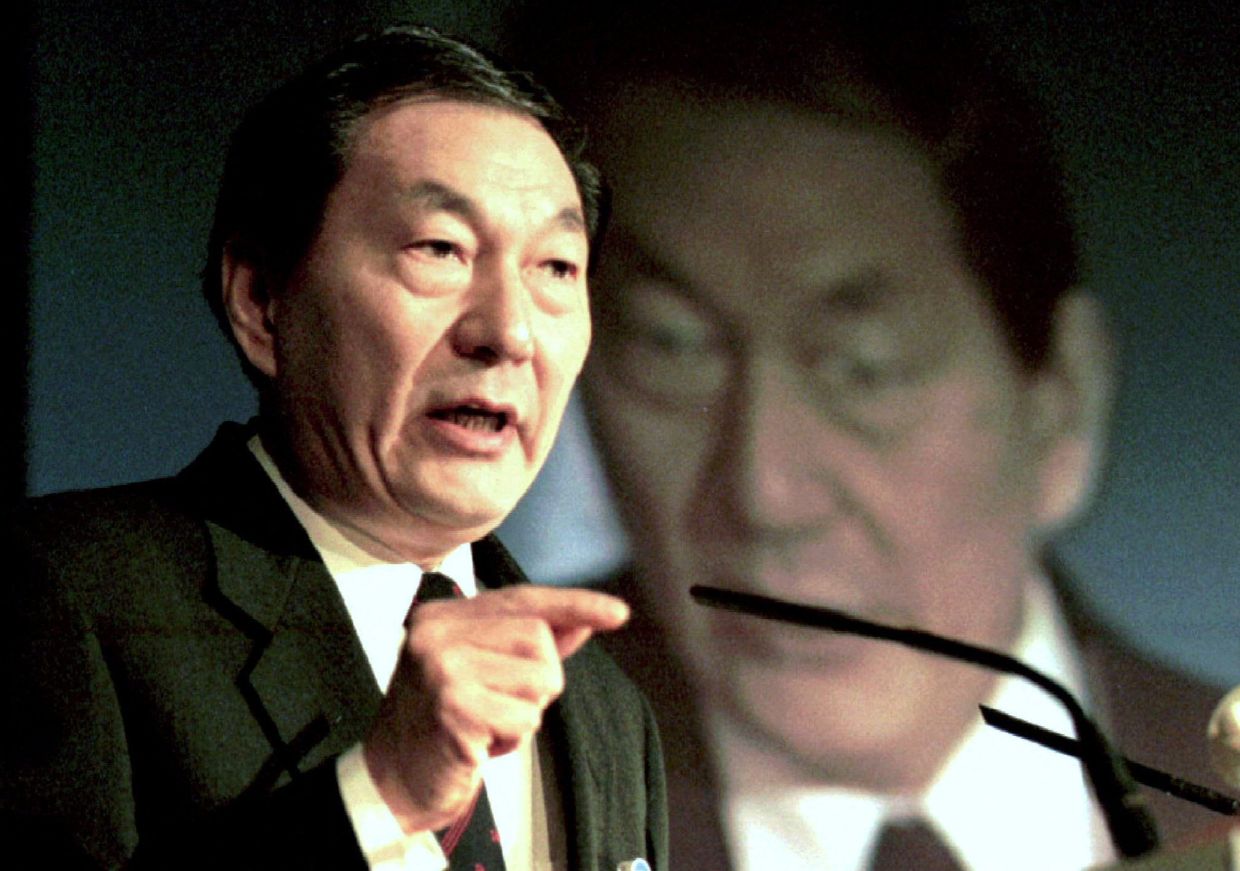
Zhu Rongji, the former premier of China who engineered some of the nation's most consequential economic reforms and guided its integration into the global trading system, died in Beijing on Wednesday 12 August after receiving medical treatment for an unspecified illness. He was 98. The Xinhua News Agency confirmed his passing following what state media described as unsuccessful medical interventions in the capital.
As China's top economic official from 1998 to 2003, Zhu oversaw a transformation that fundamentally altered the structure of the world's second-largest economy. His tenure coincided with periods of severe economic stress, including the 1997 Asian financial crisis and the challenges posed by double-digit inflation, yet he maintained his reform agenda throughout. Before assuming the premiership, he served as the nation's economic planner, a role that positioned him to shape responses to these crises from within the highest councils of power.
The most visible legacy of Zhu's tenure lies in his aggressive restructuring of state-owned enterprises. He closed or consolidated tens of thousands of inefficient companies across telecommunications, banking, energy production, and other sectors, a process that displaced tens of millions of workers. This ruthless rationalisation was justified by officials as necessary medicine for an overextended system burdened by mounting debt. The closure of uncompetitive state firms was intended to clear space for private enterprise to flourish and for remaining state companies to operate on more commercially rational principles. Such decisions, while economically logical in technocratic terms, imposed substantial social costs that reverberated through Chinese society for years afterward.
One of Zhu's most significant contributions to China's global position was orchestrating the nation's accession to the World Trade Organization in 2001, following years of negotiation. In 2000, he met with then-European Union Trade Commissioner Pascal Lamy in Beijing to resolve deadlocked discussions—a crucial intervention that paved the way for China's formal entry the following year. This milestone transformed China's relationship with the international economy, facilitating its rise as a manufacturing powerhouse and integrating it into rules-based global commerce. Since that accession, China's gross domestic product has expanded elevenfold, establishing it as the world's second-largest economy. However, subsequent decades have witnessed mounting disputes between Beijing and trading partners over compliance with WTO principles, with critics pointing to state subsidies, non-tariff barriers, and intellectual property violations.
The contrast between Zhu's market-oriented reform philosophy and the direction adopted by subsequent Chinese administrations underscores a fundamental shift in economic strategy. Current President Xi Jinping has championed the expansion and strengthening of state control, pursuing what officials describe as a "stronger, better, and bigger" state-controlled economy designed to serve national strategic interests. This reversal represents a marked departure from the privatisation and deregulation trajectory that Zhu championed during his years in office, reflecting competing visions about the proper role of state ownership in a modern economy.
Zhu's reputation for decisive action and detailed competence impressed both foreign and domestic observers. John Thornton, former co-president of Goldman Sachs, recalled meeting Zhu in the mid-1990s and later working with him on the October 1997 Hong Kong listing of what became China Mobile. During preparation for this share sale—a gesture Zhu deemed important to demonstrate Hong Kong's continued capitalist orientation following its return to Chinese sovereignty—the premier personally engaged with Goldman Sachs executives and Deutsche Telekom specialists, posing detailed technical questions that typically would come from corporate financial officers rather than national leaders. Thornton observed that Zhu possessed both an unusual willingness to make difficult decisions and an uncommon grasp of operational details.
Before becoming premier, Zhu served as governor of the People's Bank of China from 1993 to 1995, a period during which he accelerated China's financial opening. He initiated experimental programmes allowing foreign financial institutions to operate within China and orchestrated the nation's first international bond issuance, substantially broadening the country's access to global capital markets. This period of financial liberalisation laid groundwork for subsequent reforms that would transform China's banking sector. In 1999, Zhu created asset-management companies tasked with purchasing approximately 1.4 trillion yuan (roughly US$220 billion) in non-performing loans from the country's four largest state banks. This institutional innovation permitted those banks to cleanse their balance sheets and eventually transition to public shareholding beginning in 2005, making them more responsive to market discipline and less inclined to extend credit to perpetually unprofitable enterprises.
Zhu gained additional renown for his anti-corruption efforts and bureaucratic streamlining as premier. His determined assault on administrative procedures earned him the epithet "one-chop Zhu," a reference to the official seals used to authorise documents in China. By consolidating approvals and eliminating redundant administrative layers, he reduced the friction costs of doing business within the state apparatus. The late paramount leader Deng Xiaoping characterised Zhu as a "rare talent" possessed of economic acumen and the fortitude to tackle formidable challenges. His fluency in English and facility with humour also enhanced his standing among international interlocutors, distinguishing him as an unusually cosmopolitan figure within the Chinese leadership.
A memorable 1999 press conference with United States President Bill Clinton demonstrated Zhu's capacity for witty deflection under pressure. When questioned about allegations that China had made campaign contributions to the Democratic Party, Zhu responded that such a small sum—merely US$300,000—would have been extraordinarily foolish given China's foreign-exchange reserves of US$146 billion. He suggested that if political contributions were truly efficacious, he could have deployed far larger sums to far greater effect. The sardonic response, delivered with evident amusement, drew laughter from assembled journalists and illustrated his verbal dexterity in navigating sensitive political terrain.
Zhu's early life shaped his later convictions about economic reform and meritocratic governance. Born in Hunan province in October 1928, he studied electrical engineering at Beijing's Tsinghua University from 1947 to 1951 and joined the Communist Party in 1949, the same month Mao Zedong proclaimed the People's Republic. During the 1957 Hundred Flowers Campaign, when authorities briefly tolerated public criticism of party policies, Zhu voiced disapproval of Mao's economic programmes, arguing that they generated irrational growth patterns. This candour resulted in his classification as a "rightist" and subsequent demotion. The Cultural Revolution brought further hardship: Zhu spent five years performing agricultural labour, raising pigs and cultivating rice on a farm. Following his rehabilitation in 1978 after Mao's death, he ascended through governmental ranks with remarkable speed, becoming Shanghai's mayor in 1987 and a vice premier in 1991 before joining the Politburo Standing Committee in 1992.
Following his retirement as premier in 2003, when he handed the office to Wen Jiabao, Zhu devoted himself to enhancing the international standing of his alma mater, Tsinghua University, and channelled royalties from his published works toward financing educational facilities in rural regions. In a 2000 address to the national legislature, Zhu articulated his hopes for historical memory, stating that he would be satisfied if the Chinese people remembered him as an honest official rather than a corrupt one, and would be further gratified should they judge that he had accomplished substantive accomplishments during his tenure. This combination of modesty and confidence in his legacy reflected his approach to public service—pragmatic ambition tempered by concern for his reputation among ordinary citizens.
Zhu is survived by his wife, Lao An, and two children. His son, Levin Zhu, headed China International Capital Corporation, a prominent Beijing investment bank, from the early 2000s until 2014. His daughter, Zhu Yanlai, served in senior management roles at Bank of China (Hong Kong). The family's prominence in finance reflected both the elder Zhu's networks and the elevated social position he had achieved through his service to the state.

