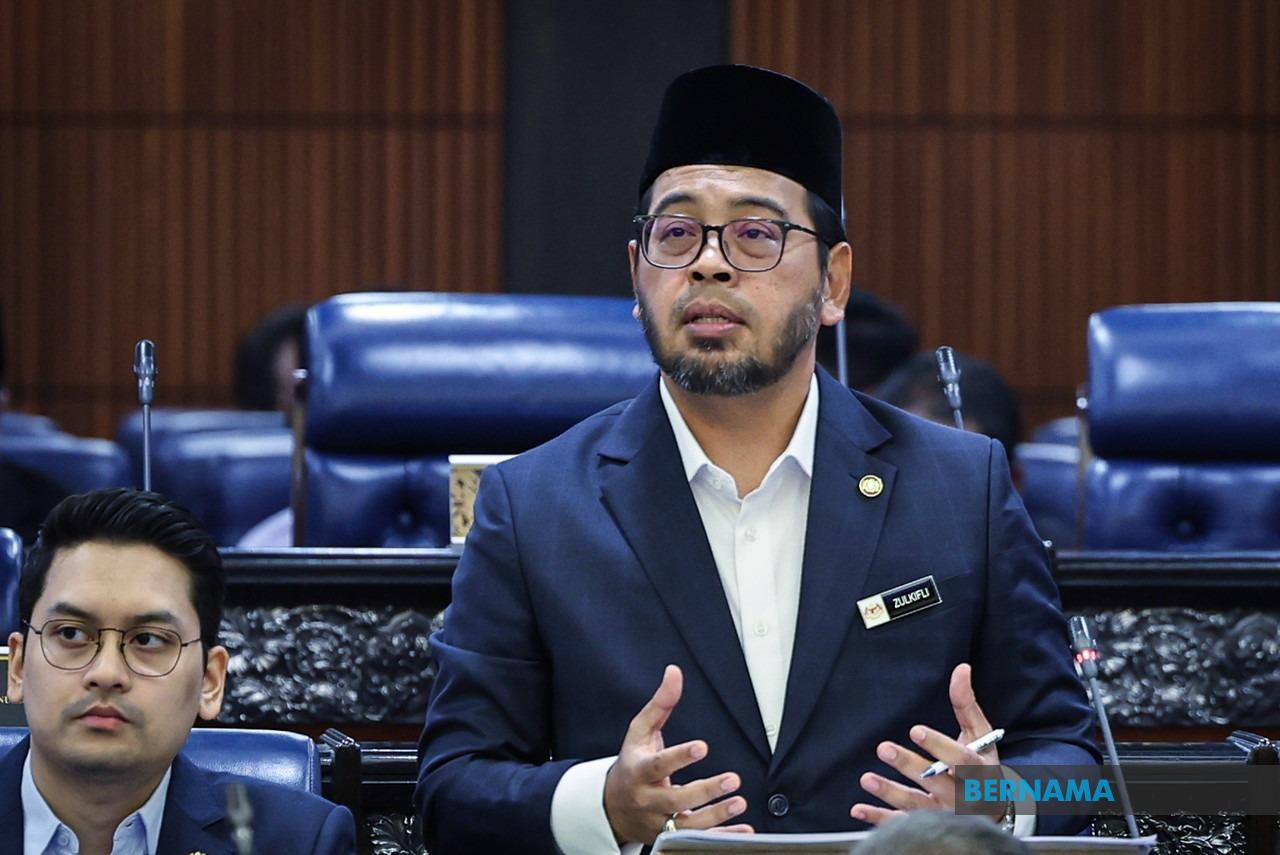
Malaysia's Religious Affairs Minister, Dr Zulkifli Hasan, has articulated a stinging critique of the financial malpractice at Tabung Haji by deploying an everyday analogy that resonates with ordinary Malaysians. During parliamentary debate following a ministerial briefing on the Royal Commission of Inquiry report into the Islamic pilgrimage fund, Zulkifli drew parallels to the experience of a single mother named Mak Cik Senah to illuminate how the fund's leadership systematically deceived depositors about its true financial condition. The comparison proved particularly potent in conveying the fundamental dishonesty embedded in the fund's pre-2018 accounting practices, transforming complex financial manipulation into language the public could understand.
At the heart of Zulkifli's exposition lies a crucial legal principle that Tabung Haji systematically violated. Under the Tabung Haji Act, the fund may only distribute profits to members when its total assets exceed its liabilities and other financial obligations. Yet throughout the period before 2018, the fund announced substantial dividend payments despite operating in a state of structural insolvency. The paradox was not accidental but engineered: depositors receiving healthy returns while the institution quietly accumulated mounting deficits. This inversion of financial reality created the illusion of a thriving institution, masking the progressive deterioration of the fund's actual position.
The mechanism enabling this deception centred on what Zulkifli identified as asset valuation manipulation conducted outside audited financial statements. Specifically, the fund deployed a methodology called Realisable Asset Value (RAV) that systematically inflated the recorded worth of its holdings. By inflating the value of assets on paper, fund managers created the statistical fiction that liabilities remained smaller than assets, thereby satisfying the technical requirement to declare dividends. Zulkifli characterised this as a form of creative accounting that violated Malaysian Financial Reporting Standards and corrupted the impairment policies governing asset assessment. The effect was to present financial statements that bore little resemblance to the fund's genuine economic position.
The extent of this valuation dishonesty emerged with clarity when PricewaterhouseCoopers conducted its 2018 audit. The firm discovered that of Tabung Haji's claimed total assets of RM4.6 billion, only RM556 million—roughly twelve percent—had been professionally assessed by qualified valuers. The remaining assets, representing the overwhelming majority of the fund's reported holdings, apparently rested on valuations lacking independent professional verification. This stark disproportion underscores that the asset inflation was neither incidental nor marginal but constituted the very foundation upon which dividend distributions rested. Zulkifli's observation that professional valuers had assessed less than one-eighth of claimed assets cuts to the heart of the scandal's magnitude.
The Minister drew an explicit comparison between Tabung Haji's practices and recognised schemes of financial fraud. He referenced Ponzi schemes and the infamous Skim Pak Man Telo, both predatory structures that sustain payouts to earlier participants by cannibalising the capital of later entrants. In Tabung Haji's case, the fund was distributing dividends financed not from genuine investment returns but from the gradual erosion of the pool of depositors' savings. Describing this as payment from 'invisible money,' Zulkifli articulated that the fund was, in essence, returning to depositors portions of their own capital while misrepresenting this as profit. This mechanism operated across several years, quietly diminishing the actual value of the fund while maintaining the appearance of prosperity.
The consequences of this sustained financial deception eventually became unavoidable. As the deficit between liabilities and genuine assets widened, the fund approached the precipice of insolvency. Rather than allow Tabung Haji to collapse entirely—which would have devastated millions of depositors, predominantly Muslim Malaysians who had contributed to the fund in anticipation of making the Hajj pilgrimage—the federal government was compelled to inject more than RM10 billion in rescue capital. This extraordinary intervention represented not merely a financial bail-out but recognition that Tabung Haji's failure would strike at the very foundations of a cherished religious and social institution.
Zulkifli's articulation of the opportunity cost accompanying this bail-out carries particular force in a country grappling with competing development demands. The RM10 billion mobilised to save Tabung Haji, he noted, could have constructed dozens or even hundreds of hospitals, schools, mosques, and other essential infrastructure serving the broader Muslim community and the nation more generally. This observation moves beyond accounting critique into the realm of fiscal priority and governance accountability. The squandering of public resources to remedy privately-managed institutional failure represents not only a drain on the exchequer but a diversion of capital from visible public goods that would have benefited society substantially.
The chronology of the Tabung Haji crisis carries implications extending beyond the fund itself into questions of institutional oversight and auditing standards in Malaysia. The Royal Commission of Inquiry's determination that Ernst & Young was not the primary auditor but merely reviewed pro forma statements prepared internally by the fund raises uncomfortable questions about how such deception persisted for years without triggering mandatory corrective intervention. The distinction between comprehensive audit and limited pro forma review becomes not merely technical but crucial to understanding how systematic fraud escaped detection. For Malaysian regulators and financial institutions, the Tabung Haji case presents a cautionary tale about the gaps that can emerge when complex valuations escape rigorous independent verification.
For depositors who entrusted their savings to Tabung Haji, Zulkifli's analysis offers both explanation and validation of their justified sense of betrayal. Individuals making sacrifices to contribute to the fund in pursuit of the religious obligation to perform Hajj discovered that their accumulating balances had been systematically misrepresented. The comfortable dividend payments they received, rather than reflecting genuine fund performance, represented a partial return of their own capital dressed up as profit. This breach of fiduciary trust strikes particularly deeply in a cultural context where religious institutions occupy positions of special moral authority and are presumed to operate with heightened ethical standards.
Moving forward, the Tabung Haji case demands comprehensive institutional reform extending beyond financial restatement. The governance structure that permitted managers to conduct asset valuations outside audited statements requires fundamental revision. Independent oversight mechanisms must be strengthened to prevent future valuations from resting on such narrow professional assessment. Furthermore, the episode underscores the necessity for financial reporting standards that resist manipulation while maintaining accessibility to ordinary depositors. Zulkifli's Mak Cik Senah analogy, in translating technical breaches of the Tabung Haji Act into human terms, implicitly advocates for financial governance that respects both the technical requirements of law and the practical understanding of ordinary citizens whose life savings are at stake.

