A significant repatriation effort has concluded with 24 Filipino workers returning safely to the Philippines early on Sunday, marking the successful resolution of a diplomatic case that had captured the attention of Manila's highest levels of government. The returnees, who had been held in the Russian city of Irkutsk without formal charges since approximately September of the previous year, arrived at Ninoy Aquino International Airport in two separate batches after transiting through Bangkok, Thailand. Their homecoming represents a tangible outcome of President Ferdinand R. Marcos Jr.'s direct intervention during bilateral negotiations with Russian President Vladimir Putin, conducted on the margins of the ASEAN-Russia Commemorative Summit held in Kazan earlier this week.
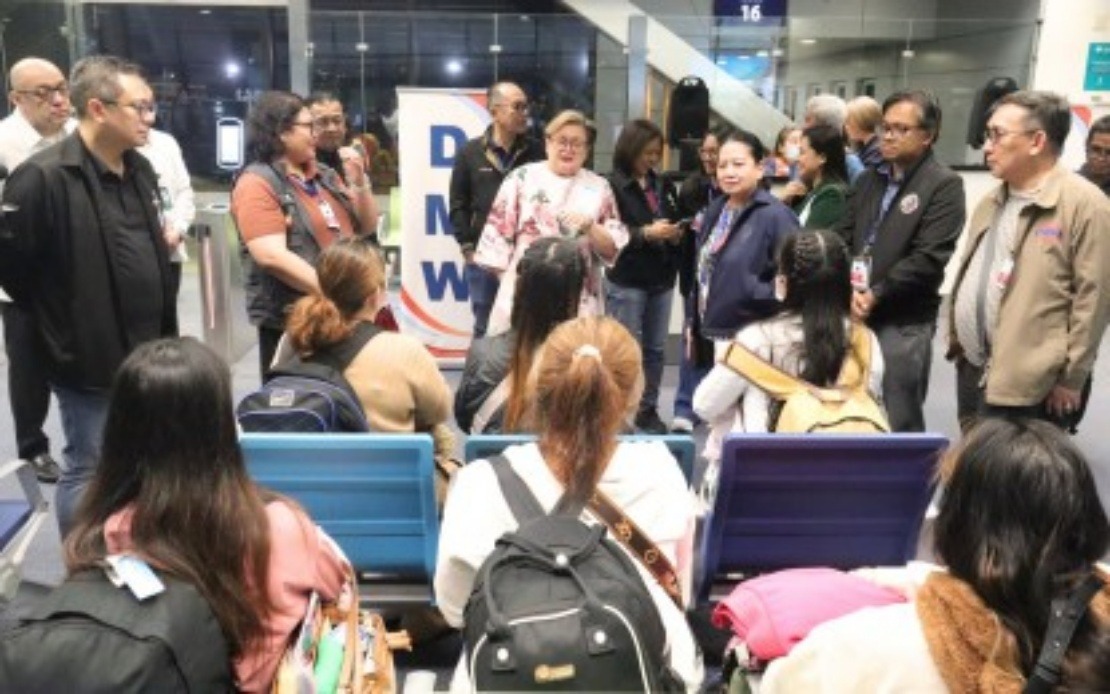
The arrival logistics reflected careful coordination between multiple Philippine government agencies. The initial group of six detainees disembarked shortly after midnight aboard Philippine Airlines Flight PR737, while the substantially larger second contingent of 18 individuals touched down hours later via PAL Flight PR733. The staggered arrival schedule necessitated organizational planning by both the Department of Foreign Affairs and the Department of Migrant Workers, both of which had campaigned for the workers' release throughout their extended detention. Foreign Affairs Secretary Maria Theresa Lazaro and Migrant Workers Secretary Hans Cacdac were present at the terminal to receive the returnees personally, underscoring the government's commitment to supporting overseas Filipino workers in distress.
The circumstances surrounding the workers' initial deployment to Russia suggested they may have been victims of sophisticated recruitment fraud schemes that exploited their employment aspirations. Philippine officials indicated that the Filipinos were taken into custody ostensibly for immigration-related infractions, yet credible reporting suggested the underlying cause traced to irregular recruitment practices that facilitated their travel to Irkutsk under false pretenses. The detention without formal charges during the nine-month period raised concerns about due process and the vulnerability of migrant workers to exploitation in unfamiliar legal jurisdictions. Such cases underscore the persistent challenges facing Southeast Asian labour-exporting nations in protecting their citizens abroad, particularly in regions where institutional safeguards may differ substantially from home-country standards.
President Marcos's diplomatic engagement on this matter demonstrated the importance placed on worker welfare within the administration's foreign policy framework. During his Kazan meeting with Putin, the Philippine leader prioritized the case sufficiently to raise it in direct conversation with the Russian president, indicating that bilateral relations had been weighted against the lengthy detention. Marcos publicly acknowledged Putin's cooperation and the Russian government's assistance in facilitating the repatriation, suggesting that the resolution reflected mutual interest in resolving the humanitarian dimensions of the dispute. The diplomatic channel through which this matter was ultimately resolved highlights how presidential-level engagement can sometimes accomplish objectives that routine consular negotiations may not achieve within comparable timeframes.
The repatriation coordination involved substantive cooperation between Philippine authorities and their Russian counterparts, mediated partly through consular channels but substantively elevated through executive-level discussions. The Department of Foreign Affairs worked alongside the Department of Migrant Workers and the Overseas Workers Welfare Administration throughout the process, ensuring that consular protocols, labour agency responsibilities, and worker support systems all functioned in concert. This institutional coordination reflects the comprehensive approach required when addressing cases involving detained nationals abroad, where legal expertise, diplomatic skill, and worker assistance capabilities must converge.
For Malaysian and regional observers, this case carries instructive implications regarding the treatment of migrant workers in labour-destination countries where governance structures or legal frameworks may differ from those in workers' home nations. The Philippines' success in securing the release of 24 workers through sustained diplomatic pressure and high-level engagement offers a model that other Southeast Asian countries might reference when their nationals face similar predicaments. The incident also illustrates the transnational nature of recruitment fraud, a challenge that extends across the entire region as criminal networks exploit workers' desires for employment opportunities in distant markets.
The returning Filipinos are now expected to access reintegration and support services coordinated through multiple government departments. These assistance programs address not only immediate resettlement needs but also potential trauma resulting from extended detention in unfamiliar circumstances. The government's commitment to providing comprehensive post-repatriation support acknowledges that returning workers often require more than simple transportation home; they need psychological support, employment counselling, and in some cases financial assistance to stabilize their circumstances following extended periods of lost income and uncertainty.
Authorities indicated that investigations into the circumstances of the workers' recruitment and transit to Russia would continue, suggesting that the repatriation does not conclude the government's engagement with this matter. Identifying and prosecuting the recruitment intermediaries responsible for misleading these workers could prevent future similar cases. The investigative phase represents an important accountability mechanism, particularly given the apparent systemic nature of the fraud that brought 24 workers to Russia under false pretenses. Such investigations often reveal networks extending across multiple countries, requiring international cooperation to ensure meaningful consequences for traffickers and fraudsters.
The successful outcome reflects broader diplomatic engagement between Manila and Moscow, occurring during a period when ASEAN-Russia relations have received elevated attention. The Kazan summit itself provided the diplomatic platform that enabled this bilateral discussion, demonstrating how regional forums sometimes facilitate resolution of bilateral issues that might otherwise remain unaddressed. The willingness of both governments to prioritize the worker welfare issue suggests that humanitarian concerns can transcend other tensions or disagreements that may characterize state-to-state relations.
For the broader Southeast Asian migrant worker community, the repatriation outcome sends a measured signal regarding government responsiveness to workers detained abroad. However, the fact that workers spent nine months in detention before resolution suggests that preventive mechanisms and rapid-response diplomatic protocols remain insufficient. The case argues for strengthened pre-deployment screening mechanisms to identify fraudulent recruitment schemes before workers depart their home countries, alongside enhanced consular capacity to detect and respond quickly to instances where nationals are detained in labour-destination countries.
The return of these 24 workers represents not merely the conclusion of individual hardship but also validation of sustained government effort to protect nationals abroad. The personal involvement of the Philippine president in raising the matter with his Russian counterpart demonstrated that worker welfare constitutes a legitimate foreign policy priority deserving executive attention. For a labour-exporting nation like the Philippines, where overseas remittances constitute a significant portion of national income and where millions of citizens work internationally, such protective diplomatic engagement reflects fundamental state obligations to its diaspora population.
%22%2F%3E%3C%2Fpattern%3E%3C%2Fdefs%3E%3Crect%20width%3D%22100%25%22%20height%3D%22100%25%22%20fill%3D%22url(%23ph4paxcg)%22%2F%3E%3Crect%20width%3D%22100%25%22%20height%3D%22100%25%22%20fill%3D%22url(%23ph4paxcp)%22%2F%3E%3Ctext%20x%3D%2250%25%22%20y%3D%2250%25%22%20text-anchor%3D%22middle%22%20dominant-baseline%3D%22central%22%20fill%3D%22rgba(255%2C255%2C255%2C0.95)%22%20font-family%3D%22Georgia%2C%20'Times%20New%20Roman'%2C%20serif%22%20font-weight%3D%22700%22%20font-size%3D%22194%22%20letter-spacing%3D%22-0.02em%22%3EHaaland%3C%2Ftext%3E%3C%2Fsvg%3E)
%22%2F%3E%3C%2Fpattern%3E%3C%2Fdefs%3E%3Crect%20width%3D%22100%25%22%20height%3D%22100%25%22%20fill%3D%22url(%23phrd62g)%22%2F%3E%3Crect%20width%3D%22100%25%22%20height%3D%22100%25%22%20fill%3D%22url(%23phrd62p)%22%2F%3E%3Ctext%20x%3D%2250%25%22%20y%3D%2250%25%22%20text-anchor%3D%22middle%22%20dominant-baseline%3D%22central%22%20fill%3D%22rgba(255%2C255%2C255%2C0.95)%22%20font-family%3D%22Georgia%2C%20'Times%20New%20Roman'%2C%20serif%22%20font-weight%3D%22700%22%20font-size%3D%22320%22%20letter-spacing%3D%22-0.02em%22%3EPM%3C%2Ftext%3E%3C%2Fsvg%3E)