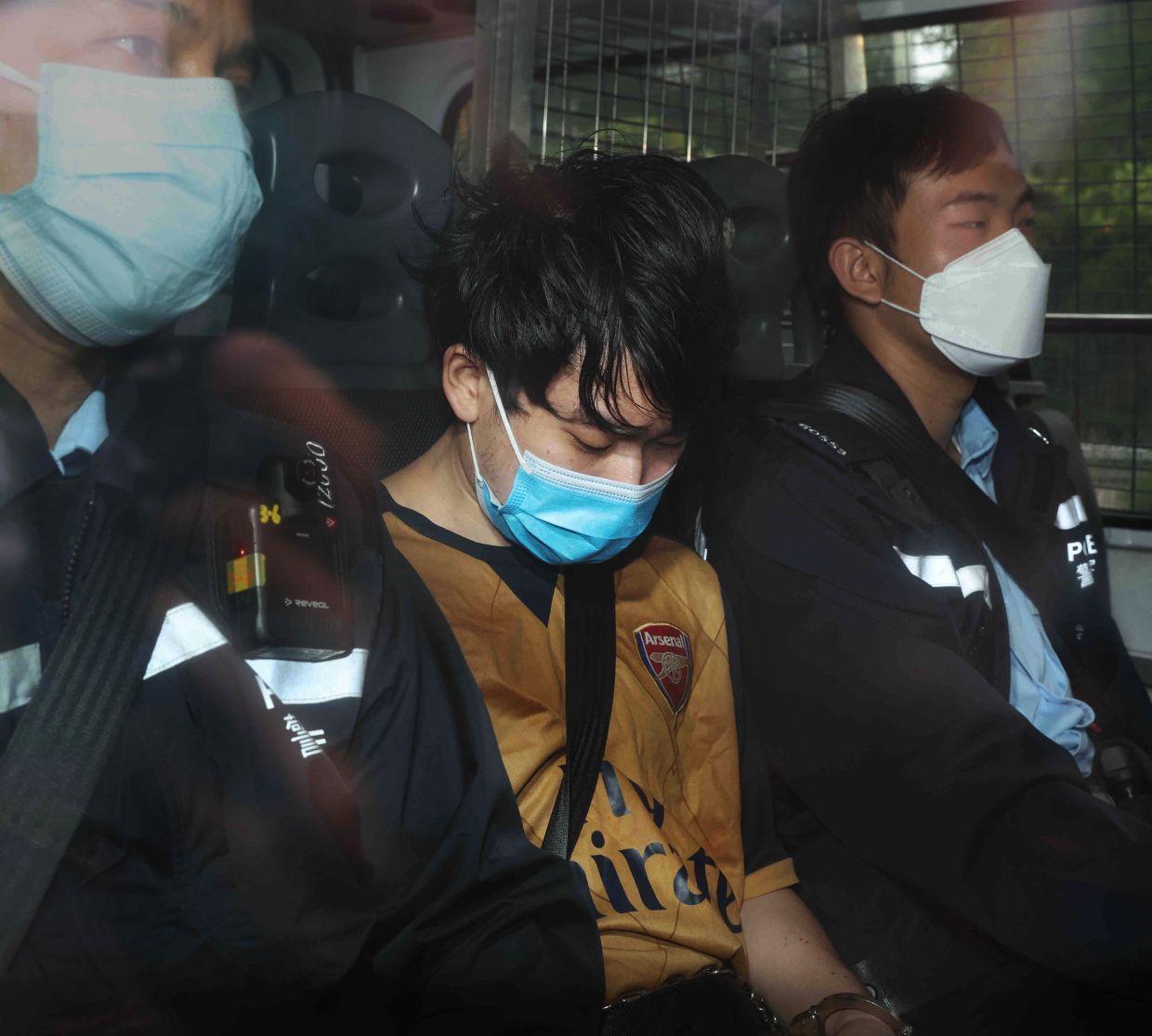
A 29-year-old unemployed Hong Kong man has offered a startling explanation for his girlfriend's death, telling a High Court jury that he fatally beat her while attempting to assist with weight loss by keeping her awake throughout the night. Ng Ka-sing stands accused of murdering 30-year-old Yip Tsz-ching at their modest 700-square-foot flat in Galore Garden, Hung Shui Kiu, during the final days of April 2022. The case has drawn attention not only for the tragic circumstances but for the unusual and contested narrative put forth by the defence regarding the couple's final hours together.
Prosecutors have rejected Ng's version of events, presenting instead a darker picture of deliberate violence. Senior public prosecutor Audrey Parwani told the seven-member jury during her opening statement that the defendant had provided multiple contradictory accounts to police about how Yip sustained her injuries. The prosecution's case rests on the premise that Ng's explanations do not align with the forensic evidence gathered during the investigation. Among the most significant findings was that Yip suffered extensive corrosive burns covering 55 per cent of her body, injuries that prosecutors argue were unlikely to have resulted from the accidental scenario Ng describes.
According to Ng's cautioned interview with police, the events unfolded over approximately 19 hours beginning on the evening of 27 April 2022. He claimed that he struck Yip repeatedly with a rod, ostensibly to prevent her from sleeping, as part of a misguided weight-loss regimen. The beating allegedly continued intermittently from 10pm on 27 April until 1.30am the following morning, then resumed between 3am and 5.30am on 28 April. Ng further asserted that he maintained this pattern simply because his girlfriend did not explicitly tell him to stop. This explanation becomes more troubling when contextualised by testimony from a sworn sister living in the shared flat, who allegedly advised him to "continue for a bit longer" when he questioned whether he should cease his actions.
The narrative becomes increasingly complex when examining Ng's account of how the chemical burns occurred. He claimed that Yip poured a bottle of drain cleaner over herself, whilst he splashed the liquid on the floor purportedly to "stimulate" her feet. He also alleged that Yip struck herself against a wall seven to eight times after slipping on the wet floor. By approximately 5am on 28 April, according to Ng's statement, Yip informed him that she was experiencing severe pain and believed she might not survive. She subsequently lapsed into a coma following her last words at 7.21am that morning.
The discovery of Yip's body dramatically contradicts any narrative of accident or innocent intent. On the morning of 29 April at around 6am, joggers spotted what appeared to be a human leg protruding from a rolled-up quilt loaded onto a wheelboard that Ng was transporting along Tin Ha Road. The discovery led to charges not only of murder but also of preventing the lawful burial of a body. When questioned by the initial witnesses, Ng reportedly told a street cleaner that the item was a "corpse" and that he intended to transport it to a police station. Upon arrest at 6.36am, he allegedly stated: "This was my girlfriend. I hit her to death with a rod by mistake."
Forensic evidence paints a grimly detailed picture of Yip's final moments and the subsequent treatment of her remains. Lo Man-hung, a forensic evidence specialist, discovered that the body had been secured to an overturned wooden chair using black rubbish bags and covered with a quilt. Yip's head was wrapped in multiple layers of cling film and adhesive tape, a detail that assumes particular significance given the pathologist's eventual findings. The meticulous binding and concealment of the body, along with the attempt to transport it discreetly, appears inconsistent with a narrative of tragic accident or misguided assistance.
Government pathologist Dr Foo Ka-chung provided the most crucial evidence regarding Yip's death. His examination revealed multiple bruises, abrasions and lacerations across her head and other areas of the body consistent with blunt force trauma such as punching and kicking. The pathologist determined that her official cause of death was suffocation resulting from head injuries, compounded by the extensive burns covering her chest, abdomen and limbs. By the time her body was discovered, Foo estimated that Yip had been deceased for between 12 and 24 hours, suggesting death occurred during the early morning hours of 28 April.
The trial's trajectory took a significant turn when Ng's defence team offered to accept a plea of guilty to the lesser charge of manslaughter rather than proceed with a full murder trial. Prosecutors rejected this offer, indicating their confidence in the strength of their evidence and their determination to pursue the more serious charge. This decision signals that the Crown believes the circumstances surrounding Yip's death demonstrate the hallmarks of intentional killing rather than tragic accident, regardless of Ng's stated motivations.
The case raises troubling questions about domestic violence, coercive control and the circumstances that led to such extreme behaviour within a private residence. The involvement of a third party—the sworn sister who allegedly encouraged Ng to continue the beating—adds another layer of complexity to the investigation. Prosecutors must now convince the jury that Ng's account of accidentally killing his girlfriend through an ill-conceived weight-loss scheme lacks credibility when weighed against the forensic evidence of systematic violence, chemical burns and careful concealment of the body.
The trial before Mrs Justice Judianna Barnes is expected to last 18 days, with the jury tasked with determining whether Ng's version of events represents a plausible account of tragic misadventure or a deliberate attempt to conceal a more sinister sequence of actions. The case underscores the sometimes shocking nature of domestic circumstances hidden behind closed doors and the critical role forensic evidence plays in establishing what actually transpired in those fatal hours.