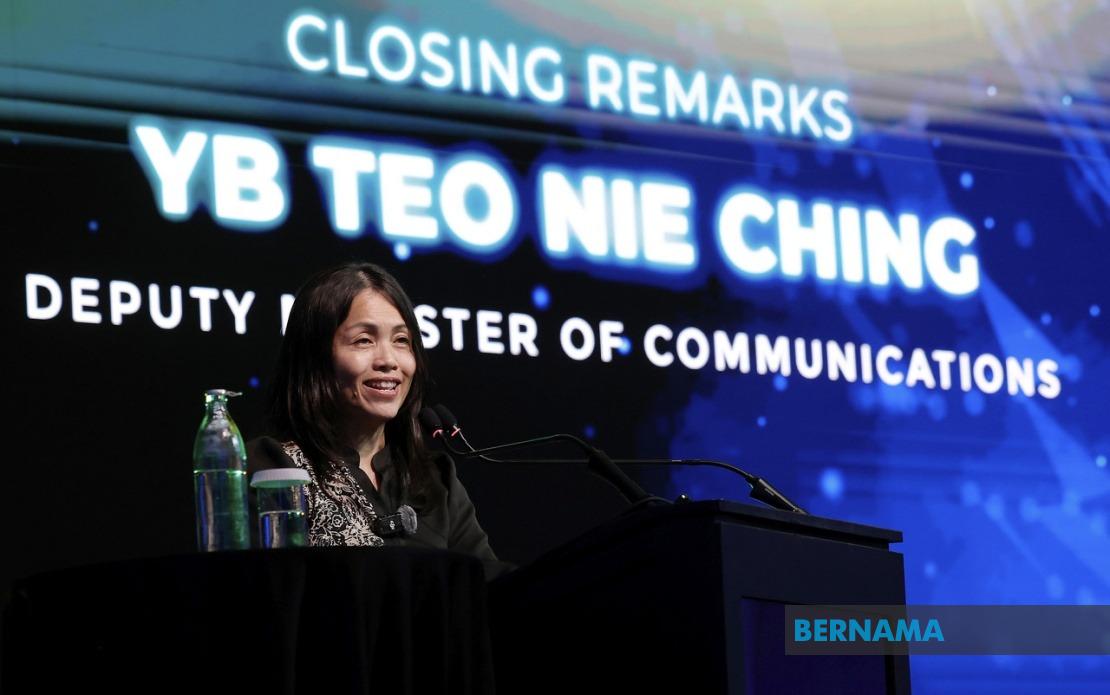
Deputy Communications Minister Teo Nie Ching has underscored that building a trustworthy digital ecosystem requires more than technological advancement—it demands robust accountability frameworks and genuine commitment to serving public interests. Speaking at the closing session of the International Regulatory Conference (IRC) 2026 in Kuala Lumpur, Teo articulated a vision where digital progress is measured against criteria of safety, fairness and citizen confidence rather than innovation metrics alone. This perspective reflects a maturing understanding among Malaysian policymakers that technological capability without governance safeguards risks eroding public trust in digital platforms.
The deputy minister's remarks come at a critical juncture when Southeast Asia's digital landscape is expanding rapidly. Citizens across the region are increasingly reliant on online platforms for commerce, communication and information access, yet concerns about harmful content, misinformation and privacy breaches persist. Teo's emphasis on alignment between technological development and regulatory evolution addresses a fundamental challenge facing governments worldwide: how to foster innovation while protecting vulnerable users from digital harms. Her framing suggests Malaysia intends to position itself as a leader in balanced digital governance rather than adopting either permissive or overly restrictive approaches.
Data released by the Malaysian Communications and Multimedia Commission reveals the magnitude of content moderation work required to maintain online safety standards. Between January 2022 and mid-July 2026, the MCMC issued 1.2 million removal requests to social media platforms, resulting in the successful takedown of 1.138 million pieces of harmful content. These figures underscore the persistent challenge of toxic material circulating online—from hate speech and child exploitation material to disinformation campaigns. The sheer volume of requests demonstrates that content moderation has become an operational priority for regulators attempting to protect the digital environment.
Moreover, the pace of content removal demands has accelerated dramatically in 2026. From January through mid-July of this year alone, the MCMC issued 377,502 removal requests, nearly matching the entire output for 2025 and representing approximately 1,900 daily requests. Platform compliance has been reasonably strong, with providers removing 350,332 pieces of harmful content during the same period. This acceleration suggests either increasing volumes of problematic material or heightened regulatory vigilance—possibly both. For Malaysian users and businesses operating online, these trends indicate growing government scrutiny of platform conduct and evolving enforcement standards that may have operational implications.
Teo's argument that technology and accountability must advance in tandem represents a departure from earlier assumptions that innovation could be effectively managed retrospectively through after-the-fact regulation. Instead, her position advocates for what is increasingly termed "by design" safety—embedding protective measures into platforms' foundational architecture rather than bolting them on later. This approach resonates with international best practices endorsed by regulators in the European Union and other jurisdictions, suggesting Malaysia's regulatory philosophy is aligning with global standards while remaining attuned to local contexts.
Crucially, the deputy minister rejected the notion that regulatory bodies alone bear responsibility for digital safety. She explicitly called for distributed accountability involving platforms, schools, communities, and industry participants. This collective responsibility framework recognises that while government regulation establishes minimum standards, systemic protection requires sustained engagement from multiple stakeholders. Social media platforms must implement robust content moderation and algorithmic transparency; educational institutions must foster digital literacy; communities must report harmful material; and technology companies must invest in safety innovation. Fragmented efforts will inevitably prove insufficient against the sophistication and scale of online threats.
For Malaysian citizens, the implications are multifaceted. Young people will increasingly encounter digital literacy curricula addressing online safety and misinformation recognition. Business operators will need to understand evolving compliance obligations when using social platforms for marketing. Consumers will benefit from stricter enforcement against fraudulent traders exploiting online channels. Simultaneously, civil society organisations and journalists must remain vigilant that safety frameworks do not become instruments for suppressing legitimate expression or stifling dissent—a concern particularly relevant in Southeast Asia's contested media environment.
The IRC 2026, themed "Shaping the Next Digital Era: Regulation, Resilience and Trust," represents Malaysia's third hosting of this international platform. The choice of venue reflects the country's growing prominence in regional digital governance discussions. By convening regulators, industry leaders and technical experts, Malaysia positions itself as a serious participant in shaping global standards for digital regulation. The conference provides space for jurisdictions to exchange experiences managing everything from content moderation to emerging technologies like artificial intelligence, creating knowledge networks that strengthen regulatory capacity across the region.
Teo's emphasis on trust as a foundational element is particularly significant. Trust is the intangible asset that underpins digital economy growth—consumers who doubt platform safety hesitate to conduct transactions online; businesses reluctant to rely on digital infrastructure limit expansion of online services; citizens sceptical of digital government services resist adopting e-governance platforms. Without sustained commitment to creating genuinely safer, fairer digital spaces, growth in Southeast Asia's digital economy will plateau. This commercial imperative aligns with public protection goals, creating convergence between business interests and regulatory objectives.
Looking forward, the regulatory environment surrounding digital platforms in Malaysia and across Southeast Asia will likely intensify. The accelerating pace of content removal requests suggests the problem is not stabilising but becoming more complex. Emerging technologies including generative artificial intelligence promise new capabilities yet simultaneously create novel vectors for harmful content generation. Regulators will need to develop expertise in understanding rapidly evolving technical systems while maintaining flexibility to adapt frameworks as technology evolves. Teo's message to the IRC 2026 —that accountability and people-centredness must remain central to all such efforts—provides essential guidance for navigating these challenges.

