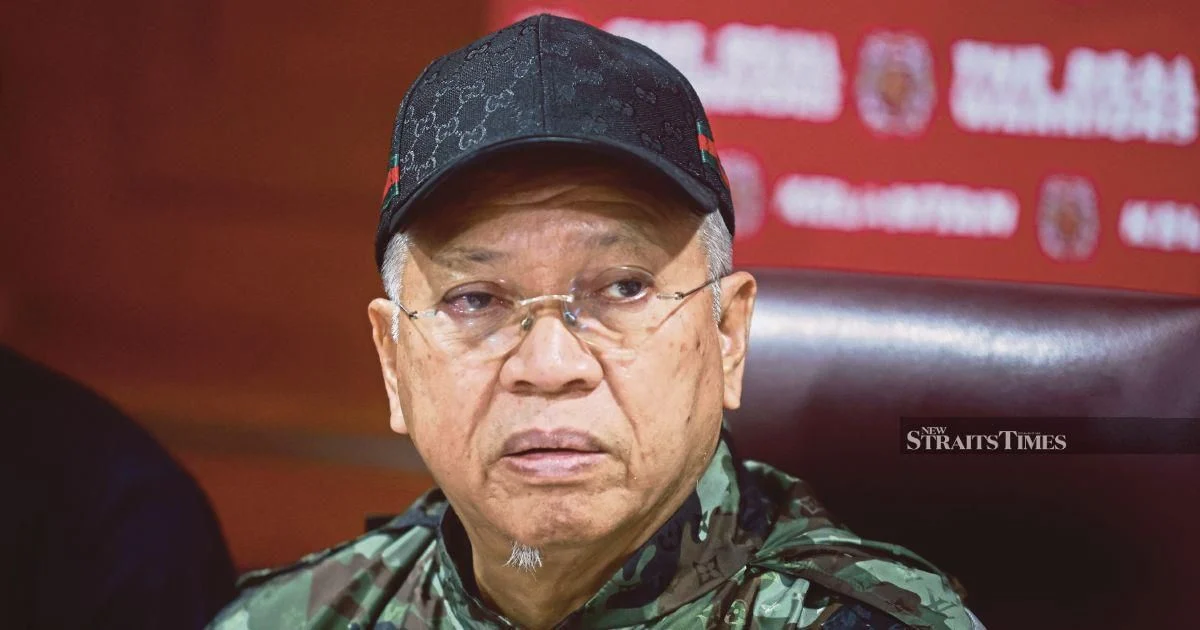
Tan Sri Annuar Musa has acknowledged that his personal efforts to bridge the mounting tensions between Pas and rival camps within Bersatu ultimately proved unsuccessful, casting fresh doubt over the cohesion of the Perikatan Nasional coalition as intra-party disputes intensify across the political alliance. The Kelantan-based politician's admission, made in his home state, underscores the gravity of factional struggles now threatening to destabilise what was once positioned as a unified alternative political force in Malaysian politics.
The failure to achieve reconciliation between these key coalition partners reveals the structural weaknesses embedded within Perikatan Nasional's architecture. Unlike more institutionalised party structures, the coalition has historically relied on personal relationships and political pragmatism to hold divergent interests together. When such informal mechanisms break down, as they appear to have done, the consequences ripple across the entire alliance, weakening its bargaining position and internal discipline.
Pas, as the numerically strongest component of Perikatan Nasional, has watched with evident frustration as Bersatu's internal fragmentation reflects broader governance challenges. The party's own positions on religious and social policy issues have sometimes clashed with the more secular-leaning approaches favoured by other coalition members. These ideological differences, however subtle they may appear to outsiders, have created friction that extends beyond simple personality conflicts between leaders.
The Bersatu factionalism represents a more acute crisis. What emerged as Dr Mahathir Mohamad's political vehicle has become increasingly fractious, with competing leadership camps pursuing divergent strategic objectives. Some elements favour maintaining alliance flexibility and potential openness to negotiations with other political blocs, while others advocate for consolidating power within existing arrangements. These competing visions have made Bersatu an unpredictable coalition partner.
Annuar Musa's public disclosure of failed reconciliation attempts carries significant political weight. His position as a senior Umno figure and coalition statesman suggests his efforts commanded considerable resources and goodwill. If someone of his stature cannot negotiate acceptable compromises, this indicates the disputes have moved beyond the realm of typical political bargaining into more fundamental questions about the coalition's future direction and the distribution of power within it.
For Malaysian observers, these developments highlight the inherent instability of coalitions built primarily around opposition to the ruling Pakatan Harapan government rather than positive shared policy platforms. When external pressures ease or circumstances change, coalitions of convenience tend to fracture along their natural fault lines. The current rupture within Perikatan Nasional demonstrates this dynamic at work.
The implications extend into federal politics and state-level governance. Several states where Perikatan Nasional holds or contests power face potential destabilisation if the coalition's internal cohesion collapses. Kelantan, where Pas maintains firm control, could theoretically remain stable, but states where power balances depend on maintaining coalition unity face genuine uncertainty. Any dissolution of Perikatan Nasional could trigger unprecedented political shifts in multiple jurisdictions simultaneously.
For Pas specifically, fragmentation within Bersatu creates both opportunity and risk. The party could potentially strengthen its own position by negotiating bilateral arrangements or by positioning itself as the reliable anchor within a reshuffled political structure. Conversely, if Perikatan Nasional dissolves entirely, Pas would face the challenge of constructing new political alliances from scratch, a process fraught with difficulty given the party's particular ideological positioning.
The broader Southeast Asian context matters too. Political observers across the region watch Malaysian coalition dynamics closely, as they often foreshadow similar patterns of realignment elsewhere. Indonesia and Thailand both contain coalitions with comparable structural weaknesses. How Malaysia navigates this present crisis of political cohesion could provide instructive lessons for other nations wrestling with multi-party governance challenges.
Annuar Musa's candid acknowledgement of failure may paradoxically represent a necessary step toward genuine reform. By publicly accepting that personal mediation cannot solve these problems, coalition leadership opens space for more fundamental restructuring conversations. Whether such restructuring leads to genuine institutional strengthening or simply produces different factional arrangements remains to be seen. What seems certain is that Perikatan Nasional cannot continue indefinitely in its current fractured state without facing severe consequences for its political relevance.