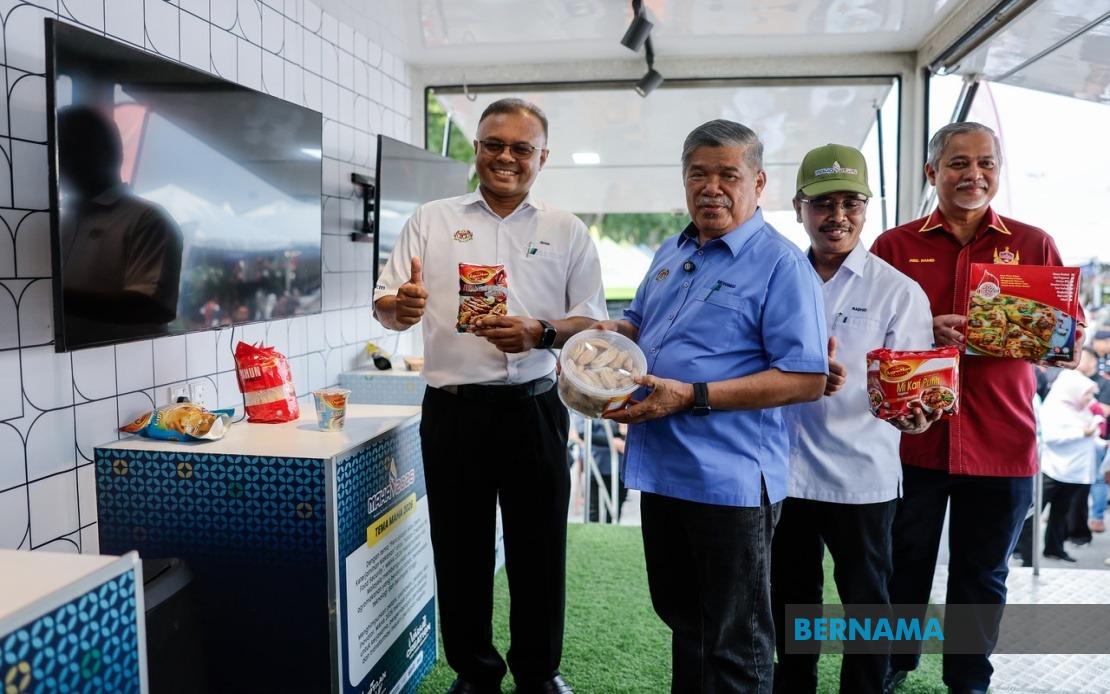
Malaysia's premier agriculture, horticulture and agrotourism showcase will enter a new era in 2026 with the confirmed participation of international exhibitors, expanding the biennial event beyond domestic boundaries for the first time. Agriculture and Food Security Minister Datuk Seri Mohamad Sabu announced that seven major agricultural producers and regions have committed to showcasing their expertise and innovations at MAHA 2026, transforming the exhibition into a regional trade platform that promises substantial benefits for local farmers, agribusinesses, and consumers seeking global best practices.
The participating countries represent some of the world's most significant agricultural players across diverse farming systems and commodities. Brazil brings expertise in tropical agriculture and large-scale cultivation practices, while China and its Guangxi region contribute advanced horticultural knowledge and technologies relevant to Southeast Asian climates. The United States, Japan, and South Korea are recognised leaders in agricultural innovation, mechanisation, and high-value crop production. Hungary's participation adds European perspectives on sustainable farming methods and crop diversity. Additionally, Uzbekistan has signalled its intention to participate, with several other nations still in discussions regarding their involvement, suggesting the final roster may expand further.
The inclusion of international exhibitors represents a strategic recognition that food security challenges transcend national borders, as Minister Mohamad articulated during the official announcement at Shah Alam. His statement reflects a growing consensus among agricultural authorities across Asia that collaborative approaches, knowledge exchange, and technology transfer are essential to addressing regional food vulnerabilities. When agricultural crises strike any nation, whether through natural disasters, disease outbreaks, or supply chain disruptions, neighbouring countries increasingly depend on each other for stabilisation. This interdependence makes multilateral agricultural exhibitions crucial venues for building relationships, understanding capabilities, and establishing trade pathways.
For Malaysian participants, the international dimension creates unprecedented opportunities to engage directly with sophisticated agricultural technologies and management systems that can enhance their competitiveness. Agriculture and Food Security Ministry secretary-general Datuk Isham Ishak emphasised that the expanded platform will enable local farmers, cooperatives, and agribusinesses to rapidly update their knowledge of cutting-edge practices and innovations. Rather than relying solely on academic research or consulting services, Malaysian agricultural professionals can witness demonstrations, ask questions, and understand how technologies function within integrated farming systems. This hands-on learning environment accelerates the adoption curve for innovations that might otherwise take years to penetrate the Malaysian market.
The exhibition will facilitate structured business development through dedicated business matching sessions designed to connect buyers with sellers across international boundaries. These sessions represent far more than casual networking; they create formal opportunities for Malaysian enterprises to negotiate contracts, establish supply relationships, and explore export markets for their produce and value-added agricultural products. Simultaneously, foreign exhibitors gain access to Malaysian distribution networks, understand local market preferences, and identify partnership opportunities with established players. For small and medium-sized agricultural enterprises that typically lack resources for international market research, these matchmaking sessions can prove transformative in opening export channels.
Consumers and visitors attending MAHA 2026 will benefit from expanded product variety and exposure to global agricultural innovations that may eventually reach Malaysian retail markets. Exposure to international standards, packaging approaches, and quality benchmarks can elevate consumer expectations and drive local producers toward excellence. The competitive environment created by international participation encourages domestic agribusinesses to innovate, improve efficiency, and enhance product quality to remain relevant in a marketplace where customers have access to global alternatives. This market dynamics effect ultimately benefits Malaysian consumers through improved choice and quality even for locally-produced goods.
The timing of this international expansion aligns with Malaysia's broader food security agenda. By increasing agricultural productivity and diversifying production sources through technology adoption and knowledge transfer, the nation can reduce its dependence on imports for critical food categories. Many international exhibitors operate at scales and efficiencies that Malaysian producers aspire toward, making their participation particularly valuable for demonstrating pathways to increased local production capacity. As commodity prices fluctuate and global supply chains face increasing fragility, the ability to enhance domestic production becomes strategically important for price stability and supply consistency.
Complementing the exhibition's expansion, Agriculture and Food Security Minister Mohamad also unveiled the Surveillance and Intervention Supply Demand Agrofood system, commonly known as SISDA, during the same event. This sophisticated platform represents Malaysia's technological response to the challenge of managing agricultural supply chains in an era of complexity and uncertainty. SISDA integrates big data analytics with machine learning algorithms to monitor supply conditions, track demand patterns, and identify price trends across the agricultural sector. The system's early warning capabilities enable government officials to anticipate shortages before they occur, facilitating proactive interventions that prevent disruptive price spikes or supply disruptions.
The system's design reflects recognition that traditional supply monitoring methods are insufficient for modern agricultural economies characterised by rapid price volatility, diverse product varieties, and complex distribution networks. By processing vast datasets encompassing production volumes, market transactions, weather patterns, and consumer demand signals, SISDA can identify emerging imbalances before they crystallise into crisis situations. Government agencies can implement targeted interventions, whether through strategic reserves releases, import facilitation, or producer support, with precision based on real-time data rather than reactive policymaking. This represents a significant upgrade to Malaysia's food security governance infrastructure.
For consumers, SISDA's ultimate promise is enhanced price stability and affordability. By preventing supply shocks and identifying emerging scarcities, the system allows authorities to implement interventions that maintain reasonable price ranges for essential food categories. Farmers and agribusinesses benefit from more predictable market conditions and advance warning of demand changes, enabling better planning of planting decisions and production volumes. Rather than being surprised by sudden price collapses after harvest or unexpected shortages driving prices upward, participants in the food supply chain can operate with greater certainty.
The convergence of increased international participation at MAHA 2026 and the launch of SISDA reflects a comprehensive approach to agricultural development that combines technology adoption, market access, and data-driven governance. Malaysia is positioning itself as a regional agricultural innovation hub where producers can access global expertise, engage in international trade, and operate within a sophisticated monitoring framework designed to ensure stability and sustainability. For a nation where agriculture remains economically significant and food security carries strategic importance, these initiatives represent meaningful steps toward building a more resilient, efficient, and internationally competitive agricultural sector.
As preparations advance toward 2026, the international exhibitor roster may expand further, potentially including additional countries and regions currently in negotiation phases. The biennial exhibition has evolved from a primarily domestic showcase into a significant regional agricultural event, reflecting Malaysia's confidence in its agricultural potential and commitment to participating meaningfully in regional food security cooperation. The combination of international knowledge exchange, direct market access, and government-led supply chain management positions Malaysia to strengthen its agricultural capabilities while contributing to broader Southeast Asian food security objectives.

%22%2F%3E%3C%2Fpattern%3E%3C%2Fdefs%3E%3Crect%20width%3D%22100%25%22%20height%3D%22100%25%22%20fill%3D%22url(%23ph4oa4pg)%22%2F%3E%3Crect%20width%3D%22100%25%22%20height%3D%22100%25%22%20fill%3D%22url(%23ph4oa4pp)%22%2F%3E%3Ctext%20x%3D%2250%25%22%20y%3D%2250%25%22%20text-anchor%3D%22middle%22%20dominant-baseline%3D%22central%22%20fill%3D%22rgba(255%2C255%2C255%2C0.95)%22%20font-family%3D%22Georgia%2C%20'Times%20New%20Roman'%2C%20serif%22%20font-weight%3D%22700%22%20font-size%3D%22272%22%20letter-spacing%3D%22-0.02em%22%3EJohor%3C%2Ftext%3E%3C%2Fsvg%3E)