Bolivia has entered a precarious phase of political and economic instability as President Rodrigo Paz invoked emergency powers to counter an unprecedented wave of civil unrest. The declaration, announced via national television, represents an escalation in tensions that have gripped the South American nation for nearly two months, fundamentally reshaping the political landscape and raising international concerns about the country's stability.
The crisis stems from coordinated action by labour unions and agricultural organisations, whose members have systematically blockaded major roads in protest against the Paz administration's economic policies. These groups have unified around calls for the president's resignation, framing their action as a necessary response to what they characterise as inadequate government response to mounting inflation and deteriorating living standards affecting ordinary Bolivians. The protests carry echoes of earlier labour-led uprisings in the region, where workers have increasingly mobilised to challenge austerity-oriented governance.
The human toll of the prolonged blockade has become increasingly visible across Bolivian society. Hospitals report acute shortages of essential medicines and equipment as supply chains have fractured under the weight of road closures. Markets and supermarkets in major population centres have struggled to stock basic foodstuffs, forcing families to ration purchases and seek alternatives through informal channels. Fuel distribution networks have been disrupted, causing petrol queues reminiscent of previous regional crises and threatening to cascade into broader economic dysfunction if the situation persists.
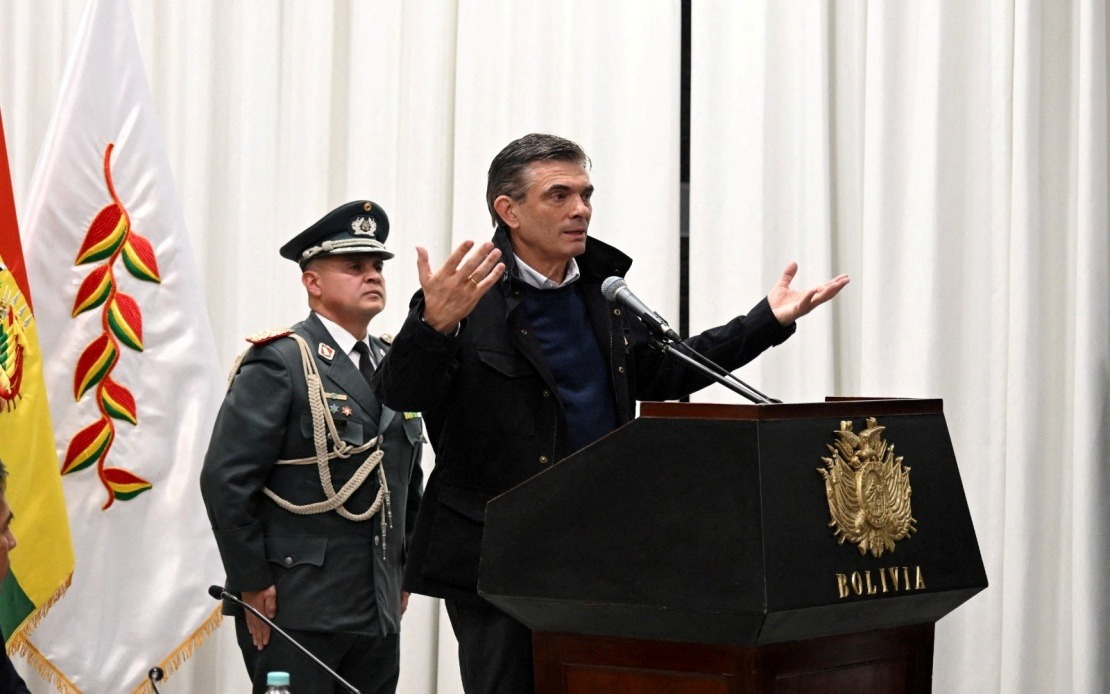
President Paz's televised address captured the frustration evident in government circles, emphasising the human suffering caused by the blockades rather than acknowledging the underlying grievances driving the protests. His statement that Bolivians have become "hostages" unable to work, study, access medical care, or purchase essentials reflects the widening impact of the crisis beyond political circles into everyday civilian experience. This framing suggests the administration believes it must appeal to neutral public opinion and demonstrate resolve rather than negotiate with protest leaders.
The declaration of a state of exception carries significant implications for civil liberties and governance in Bolivia. By invoking emergency powers, Paz has cleared legal pathways for military deployment across the country to forcibly reopen roads and restore transportation networks. This represents a critical juncture where elected civilian authority has essentially handed operational control of the crisis response to armed forces, a development that Southeast Asian policymakers and observers monitor closely given regional sensitivities around military intervention in civilian affairs.
The blockade strategy employed by the unions and farmers reflects a deliberate calculus that economic disruption serves as leverage more powerful than traditional protest methods. By making daily life demonstrably worse for the general population, organisers believe they can either force government capitulation or generate sufficient public pressure on Paz to compel his departure. This tactic has proven effective in other Latin American contexts but carries enormous risks, as it can turn public sympathy away from protesters and toward government calls for order restoration.
Bolivia's economic vulnerability amplifies the crisis. The country depends heavily on commodity exports and foreign investment, both of which suffer when international investors perceive political instability. The 50-day disruption has already inflicted measurable damage on manufacturing, tourism, and service sectors, with losses accumulating daily. Neighbouring countries and trading partners have grown increasingly concerned about Bolivia's inability to export goods and maintain normal commercial relations, raising the possibility of regional economic spillover effects.
The underlying causes—rising living costs and economic pressure—reflect structural challenges extending beyond Paz's immediate policy choices. Bolivia confronts inflationary pressures affecting much of the region, currency depreciation against the US dollar, and global commodity price volatility that constrains government revenue. These macro-economic headwinds limit the room for manoeuvre available to any administration attempting to simultaneously satisfy worker demands and maintain fiscal sustainability, a dilemma that has precipitated similar crises across Latin America.
For Malaysia and other Southeast Asian nations, the Bolivian crisis offers instructive lessons about the dangers of allowing labour grievances to accumulate without periodic policy adjustment. The blockade movement demonstrates how worker organisations can mobilise with remarkable coordination when they perceive government indifference to their concerns. Malaysian policymakers, managing their own complex relationships with labour unions and farming communities, may observe how confrontation escalates when dialogue mechanisms break down or prove ineffective in addressing substantive economic concerns.
International observers remain uncertain whether military deployment will rapidly restore order or instead entrench opposition and radicalise protest movements. Historical precedent suggests that heavy-handed security responses often intensify civil resistance rather than extinguishing it, potentially creating a prolonged standoff. The success of Paz's emergency declaration depends not merely on military capacity to clear roads but on whether underlying economic grievances can be addressed through policy reforms that demonstrate government engagement with legitimate worker concerns.
The coming weeks will prove decisive in determining whether Bolivia can navigate this crisis through a combination of security action and political negotiation, or whether the country faces prolonged turmoil. The stakes extend beyond Bolivia itself, affecting regional trade patterns, investment flows, and the broader question of governmental legitimacy in an era of intensifying economic strain across Latin America.