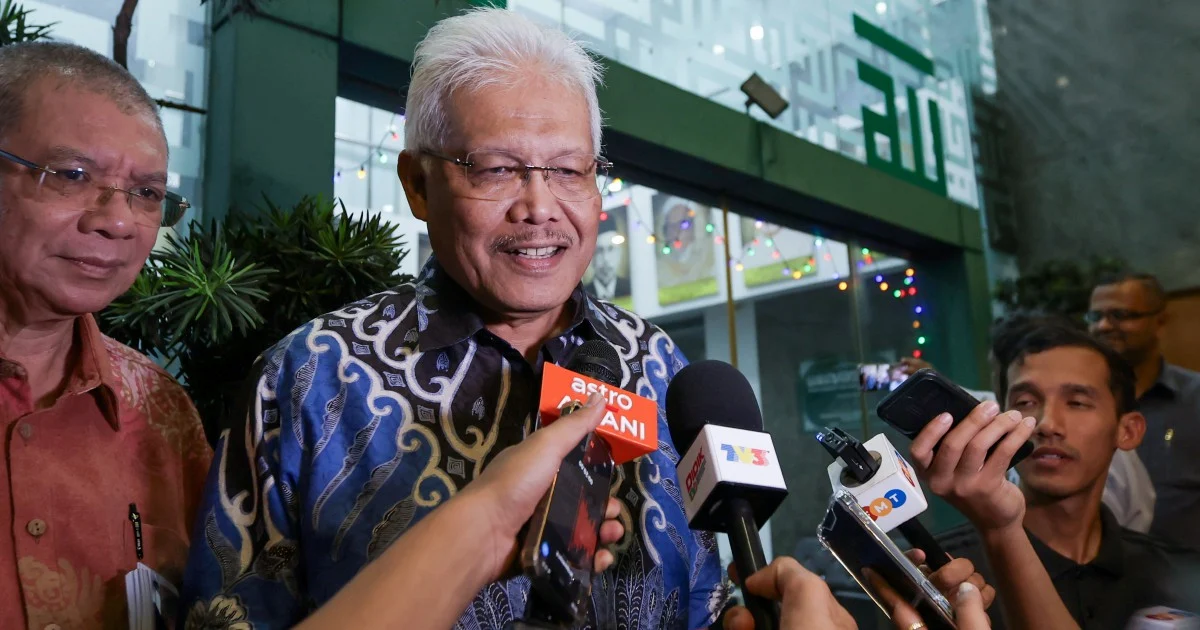
Datuk Seri Takiyuddin Hassan, serving as chief whip for Perikatan Nasional, has lodged official documentation with the Dewan Rakyat Speaker's office confirming the reappointment of Datuk Seri Hamzah Zainudin to his post as opposition leader. The filing represents a procedural formality required under parliamentary rules whenever opposition leadership positions change hands or are renewed following elections or significant political realignments.
This administrative step underscores the institutional framework governing opposition roles within Malaysia's Westminster-style parliament. The Speaker's office maintains formal records of all major parliamentary positions, and the submission of such notifications ensures transparent documentation of leadership structures across political coalitions. By filing this notification, PN has satisfied constitutional and parliamentary standing order requirements that govern how opposition coalitions present their leadership arrangements to the legislature.
Hamzah's reappointment signals continuity within the PN alliance at a time when Malaysia's coalition politics remain in flux. The opposition bloc has maintained relative stability under his stewardship despite broader shifts in the country's electoral landscape and shifting parliamentary alliances. His leadership carries particular significance given PN's role as the primary alternative coalition to the currently ruling Pakatan Harapan-Barisan Nasional government, making the opposition leader's position one of considerable political weight and parliamentary responsibility.
The notification process, while administrative in nature, carries political implications for how parliamentary business will be conducted in coming sessions. Opposition leaders hold defined responsibilities under parliamentary procedure, including the right to ask questions during designated sessions, propose amendments, and coordinate their bloc's legislative strategy. Hamzah's formal reconfirmation establishes clear lines of authority and accountability as PN navigates its legislative agenda during parliamentary proceedings.
Takiyuddin's role as chief whip places him at the operational centre of PN's parliamentary machinery. Chief whips manage party discipline, coordinate voting strategies, and ensure members attend key votes—responsibilities that make the chief whip's submission of leadership notifications a routine but essential function. By handling this paperwork, Takiyuddin has fulfilled obligations that maintain PN's organisational coherence within the dewan.
The reappointment reflects internal PN deliberations and consensus among its component parties regarding opposition leadership. While these decisions often occur without public fanfare, they represent important moments where coalition partners affirm their collective direction and strategic priorities. Hamzah's continued role suggests that PN's leadership structures remain intact despite the complex maneuvering that characterises Malaysian coalition politics.
For Malaysian and Southeast Asian observers, opposition leadership stability matters because it affects parliamentary effectiveness and legislative scrutiny. Strong, continuous opposition leadership enables governments to face robust questioning and policy challenges, mechanisms that strengthen democratic accountability. Hamzah's reappointment thus contributes to the parliamentary ecosystem's overall health by ensuring that systematic checks on executive power remain operational and organised.
PN's formal notification process also reflects Malaysia's adherence to parliamentary conventions inherited from British democratic traditions. These procedural requirements, though sometimes appearing ceremonial, actually serve practical purposes by creating transparent records and preventing disputes about who legitimately holds which positions. When opposition leadership changes occur or reappointments take place, proper notification ensures all stakeholders—government ministers, fellow opposition members, civil servants advising the legislature—operate from identical information about parliamentary hierarchies.
The timing of Hamzah's reappointment documentation comes as Malaysian politics continues adjusting to the electoral outcomes and governmental formations that have emerged over the past few years. Opposition positioning matters considerably in this period, as PN shapes its legislative approach and public messaging while evaluating prospects for future electoral success. Clear leadership structures support these efforts by enabling coordinated strategy across PN's diverse membership, which encompasses parties with distinct ideological emphasis and regional strongholds.
Looking forward, Hamzah's confirmed role as opposition leader will define parliamentary dynamics in upcoming sessions. Opposition leaders control crucial speaking time during important debates, coordinate their side's legislative priorities, and serve as the public face of alternative governance visions. His position enables PN to present coherent policy critiques and develop its platforms for the next general election, functions essential for healthy democratic competition.