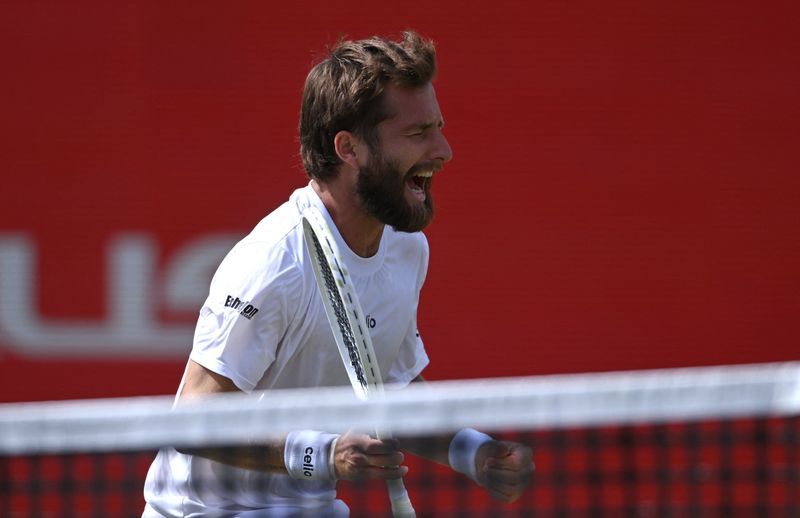
French tennis player Corentin Moutet has been stripped of nearly his entire prize earnings from the Queen's Club championship after the ATP handed him a substantial fine for his conduct during a televised post-match interview. The 27-year-old, currently ranked 36th in the world, had earned $43,000 for reaching the second round of the prestigious grass-court tournament in London, but a $40,000 penalty for unsportsmanlike conduct has effectively eliminated those winnings.
The disciplinary action stemmed from Moutet's interview with the BBC immediately following his first-round victory over fellow Frenchman Giovanni Mpetshi Perricard. During the on-court discussion, Moutet employed profanities on seven separate occasions, behaviour that triggered swift intervention from both the interviewer and tournament officials. The incident underscores the growing tension between players' raw emotional reactions and the expectations of broadcast-friendly conduct at professional tennis events.
Moutet's profane outbursts were triggered when discussing a particularly frustrating moment during his match—being aced on match point by a 142mph second serve that left him visibly frustrated. When the interviewer politely requested he refrain from repeating the expletive, Moutet instead used it three additional times before the segment was terminated. The interview was subsequently followed by formal apologies to both the live crowd and television viewers across the United Kingdom and beyond. The incident then drew further commentary when Moutet later clarified his remarks through social media, suggesting his outbursts were intended as humour rather than genuine anger.
The ATP's formal statement characterised the behaviour as unsportsmanlike conduct, though Moutet has signalled his intention to appeal the decision. How successful such an appeal might prove remains uncertain, particularly given the high-profile nature of the incident and the clear breach of broadcasting standards. The fine represents a significant financial consequence that extends beyond mere monetary punishment—it directly impacts the player's career earnings and raises questions about the proportionality of penalties in professional tennis governance.
Moutet's tournament run proved short-lived beyond the opening victory, as he fell to Spain's Alejandro Davidovich Fokina in the subsequent round. This early exit limited his opportunity to accumulate additional prize money that might have cushioned the impact of the fine. For context, the $40,000 penalty represents a meaningful proportion of most professional tennis players' annual income, particularly those outside the world's top tier, making such disciplinary measures consequential beyond mere reputation damage.
This incident is far from Moutet's first brush with tennis disciplinary authorities, revealing a pattern of behavioural concerns that has troubled his career trajectory. In 2022, he was defaulted from the Adelaide International after directing expletives at the chair umpire during a match against Serbia's Laslo Djere—a far more severe penalty that removed him from competition entirely. That same year, the French Tennis Federation severed its support and backing of Moutet specifically due to ongoing behavioural issues, signalling institutional concern about his conduct both on and off court.
The Queen's Club incident raises broader questions about player conduct expectations in the modern era of tennis, where emotional intensity and psychological pressure are acknowledged components of elite sport. While tennis has long prided itself on traditions of decorum and respect, younger players operating in an era of intense media scrutiny and social media documentation face challenges in managing their emotions. The fine essentially represents tennis's governing bodies attempting to maintain standards while simultaneously grappling with evolving attitudes toward competitive intensity.
For Malaysian and Southeast Asian tennis observers, Moutet's situation serves as instructive context regarding the standards applied to professional players. The ATP's willingness to issue substantial fines for broadcast-inappropriate language demonstrates the financial stakes attached to player conduct, particularly at premium tournaments that attract global television audiences. As Southeast Asian players continue ascending the professional ranks, understanding these disciplinary frameworks becomes essential for career management and sponsorship considerations.
The timing of this incident during Queen's Club—traditionally one of the year's most prestigious grass-court warm-up tournaments ahead of Wimbledon—amplified its visibility and impact. The BBC's substantial audience across the United Kingdom meant Moutet's outbursts reached millions of viewers, elevating what might have been overlooked at a lower-profile event into a matter requiring formal sanction. The tournament's heritage and the emphasis on genteel conduct surrounding Wimbledon preparation likely influenced the ATP's determination to respond decisively.
Moutet's appeal process will likely consume considerable time and legal resources, with no guarantee of success given the clear evidence and broadcasting standards implications. The case highlights a fundamental tension in professional tennis between preserving competitive integrity and managing player emotions in high-pressure environments. Whether the ATP will maintain this firm stance on future similar incidents, or whether Moutet's appeal succeeds in mitigating the penalty, remains to be determined. What is certain is that for a player already under scrutiny from his national federation, this Queen's Club episode represents another significant setback in rehabilitating his public image and professional standing within the sport.


%22%2F%3E%3C%2Fpattern%3E%3C%2Fdefs%3E%3Crect%20width%3D%22100%25%22%20height%3D%22100%25%22%20fill%3D%22url(%23ph23zzwg)%22%2F%3E%3Crect%20width%3D%22100%25%22%20height%3D%22100%25%22%20fill%3D%22url(%23ph23zzwp)%22%2F%3E%3Ctext%20x%3D%2250%25%22%20y%3D%2250%25%22%20text-anchor%3D%22middle%22%20dominant-baseline%3D%22central%22%20fill%3D%22rgba(255%2C255%2C255%2C0.95)%22%20font-family%3D%22Georgia%2C%20'Times%20New%20Roman'%2C%20serif%22%20font-weight%3D%22700%22%20font-size%3D%22226%22%20letter-spacing%3D%22-0.02em%22%3EPenang%3C%2Ftext%3E%3C%2Fsvg%3E)