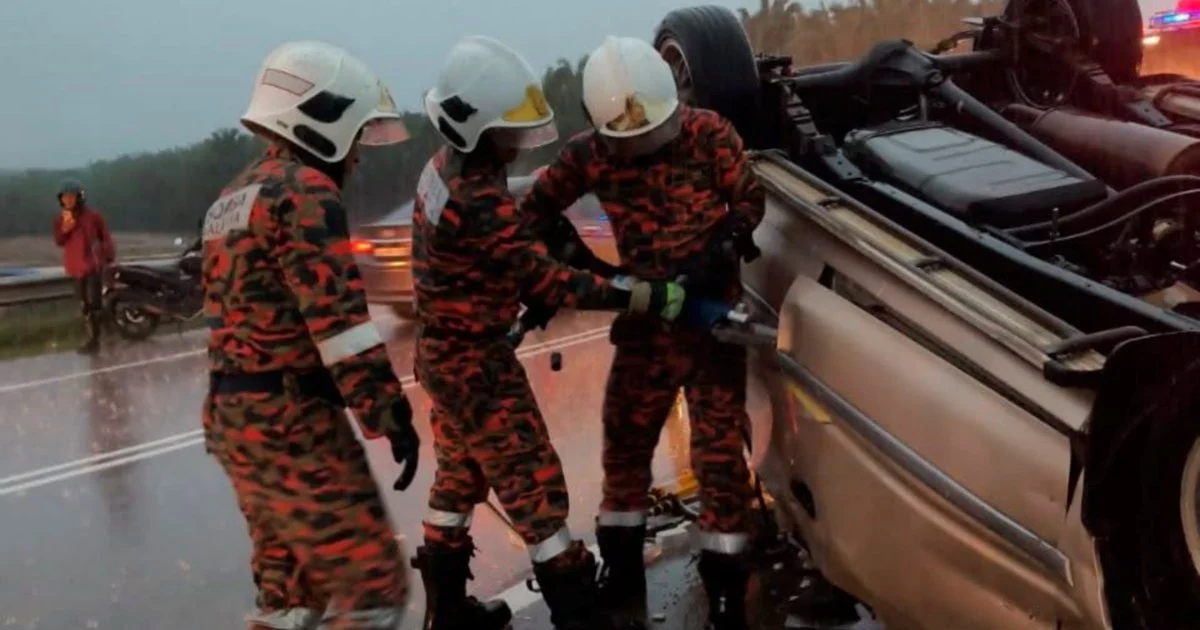
Four people lost their lives in Pahang today when two separate road accidents unfolded in quick succession in the districts of Maran and Pekan. Among the fatalities were two sisters, underscoring the devastating human cost of traffic incidents that continue to plague Malaysian highways. The accidents, occurring less than an hour apart, add to a growing toll of fatal crashes that have marked recent weeks across the nation's road network.
The incidents highlight an ongoing public safety crisis that extends far beyond individual tragedies. Road accidents in Malaysia remain a leading cause of unnatural death, particularly affecting young and working-age populations. The fact that the two casualties in one incident were sisters suggests the concentrated impact such accidents can have on single families, leaving parents, spouses, and children grieving simultaneously. This clustering of fatalities within such a short timeframe and geographic proximity is particularly concerning to traffic safety authorities.
Maran and Pekan, both in Pahang's eastern region, have experienced intermittent traffic incidents over the years, though neither district typically features prominently in national accident statistics. The close temporal proximity of today's crashes raises questions about whether specific road conditions, weather factors, or other hazardous circumstances contributed to both incidents. Investigators will likely examine whether visibility, wet road surfaces, vehicle conditions, or driver error played roles in either or both accidents.
The sequence of events today mirrors patterns seen in other tragic days on Malaysian roads when multiple serious crashes cluster within a short window. Such occurrences often follow particularly heavy traffic periods, adverse weather conditions, or times when driver fatigue is elevated. Understanding these patterns helps traffic authorities and researchers identify vulnerability windows when intervention and enhanced enforcement might prevent losses.
Road safety in Pahang has been an ongoing concern for state authorities and federal agencies alike. The state's mix of urban, suburban, and rural road networks, combined with tourism traffic along major routes, creates complex traffic management challenges. The accidents today underscore why sustained investment in road infrastructure improvements, enforcement mechanisms, and driver education remains critical across all Malaysian states.
Family members of those killed face an agonising immediate aftermath of identification, notification, and the beginning of prolonged grief. The particular tragedy of losing two sisters simultaneously compounds the emotional devastation families endure following fatal accidents. Beyond the immediate family circle, entire communities are affected when local residents perish in such circumstances, particularly in smaller towns and districts where social bonds run deep.
The incidents will inevitably prompt official investigations by the Royal Malaysia Police and relevant authorities. Post-crash analysis typically examines vehicle mechanical condition, road surface conditions, lighting, signage adequacy, and detailed witness accounts. Toxicology reports, where appropriate, form part of comprehensive accident reconstruction that informs both immediate police reports and longer-term safety policy responses.
Malaysia's road fatality rate remains a significant public health concern by regional and global standards. Organisations tracking transport safety regularly flag Malaysian road casualties as an area requiring intensified policy focus and resource allocation. Today's fatalities contribute to statistics that, when aggregated across months and years, demonstrate the scale of preventable tragedy. Enhanced penalties for dangerous driving, improved vehicle safety standards, better road design, and sustained public campaigns have shown effectiveness in some contexts but require consistent, nationwide application.
The emotional and economic ripple effects extend well beyond those directly involved. Emergency services personnel responding to fatal accidents carry psychological burdens. Hospital staff treating injured survivors process trauma regularly. Insurance claims cascade through family finances. Employers lose workers. Communities lose members. The true cost of fatal accidents encompasses far more than the immediate headlines documenting the number of deaths and circumstances of impact.
For Malaysian motorists and road users, incidents like today's serve as stark reminders of road conditions' inherent risks and the consequences of momentary inattention or poor decision-making behind the wheel. Whether travelling on highways between states or navigating local district roads, drivers encounter countless variables beyond their complete control. This reality underscores the importance of defensive driving techniques, adequate vehicle maintenance, and respecting speed limits and traffic regulations—factors that collectively reduce accident probability and severity.
%22%2F%3E%3C%2Fpattern%3E%3C%2Fdefs%3E%3Crect%20width%3D%22100%25%22%20height%3D%22100%25%22%20fill%3D%22url(%23ph23zzwg)%22%2F%3E%3Crect%20width%3D%22100%25%22%20height%3D%22100%25%22%20fill%3D%22url(%23ph23zzwp)%22%2F%3E%3Ctext%20x%3D%2250%25%22%20y%3D%2250%25%22%20text-anchor%3D%22middle%22%20dominant-baseline%3D%22central%22%20fill%3D%22rgba(255%2C255%2C255%2C0.95)%22%20font-family%3D%22Georgia%2C%20'Times%20New%20Roman'%2C%20serif%22%20font-weight%3D%22700%22%20font-size%3D%22226%22%20letter-spacing%3D%22-0.02em%22%3EPenang%3C%2Ftext%3E%3C%2Fsvg%3E)