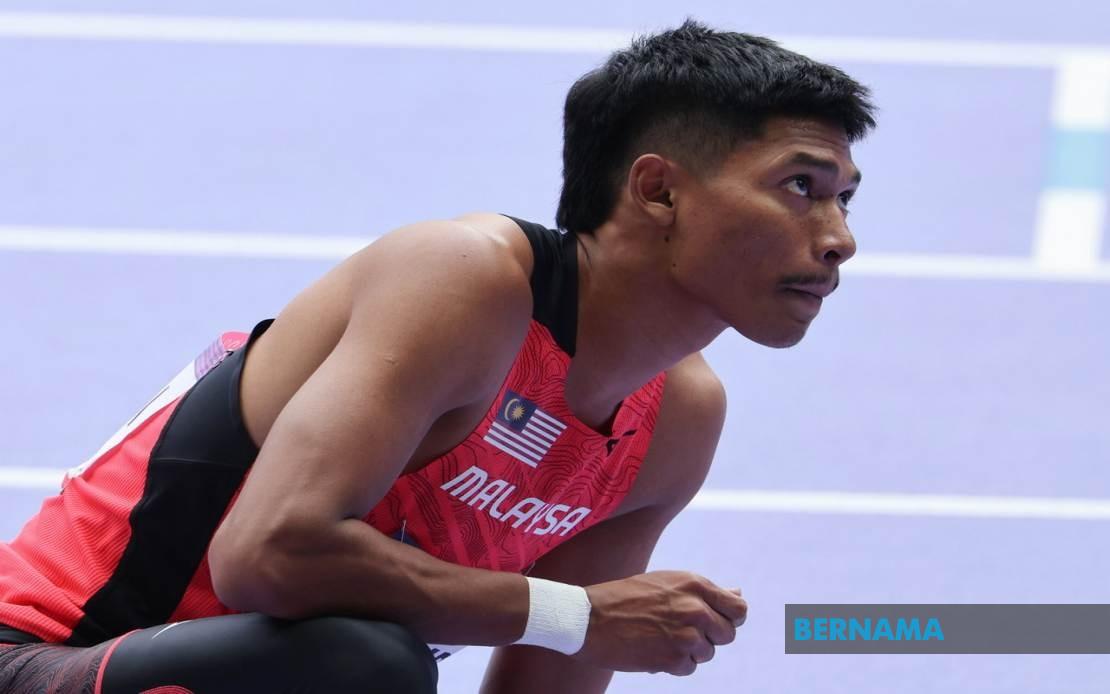
Muhammad Azeem Mohd Fahmi, Malaysia's national sprinter and holder of the 100-metre record with a time of 10.09 seconds, has signalled his intention to anchor his athletic ambitions in his home country rather than pursue opportunities abroad. The decision comes after the 22-year-old completed his university education at Auburn University in the United States, marking a significant turning point in his career trajectory as he transitions from student-athlete status to full-time professional sprinter.
Azeem's commitment to remaining domestically reflects a deliberate choice to prioritise family connections over the potential advantages of training and competing overseas. Having spent four years in the United States, he expressed an urgent desire to rebuild relationships with his immediate circle, recognising that the support network surrounding him—parents, siblings, extended family, and longtime coaches—has been instrumental to his athletic development. This emphasis on familial bonds underscores a philosophy among some Malaysian athletes that success need not require permanent relocation, particularly when domestic infrastructure and coaching support continue to strengthen.
The sprinter has outlined a structured training regimen that blends international expertise with local oversight, a hybrid approach increasingly common among emerging athletic talents in Southeast Asia. His American coach Ken Harnden will continue designing his training programmes remotely, while day-to-day supervision falls to Muhammad Amir Izwan Tan Abdullah, a local coach familiar with Malaysian conditions, facilities, and the athlete's previous development arc. This arrangement potentially offers optimal flexibility, allowing Azeem to benefit from advanced coaching methodologies without requiring permanent residence abroad.
Azeem's return to Malaysia also carries implications for the nation's athletics development pipeline. His decision to train locally signals confidence in Malaysian coaching infrastructure and may demonstrate to other young athletes that competitive international standards can be achieved while remaining at home. The presence of world-class performance records set on domestic soil—like Azeem's own 100-metre benchmark—provides tangible evidence that Malaysia's training environments can produce elite-level sprinters capable of regional and potentially global competitiveness.
The athlete's immediate priorities appear well-defined and sequenced strategically. He has committed to dedicating several months entirely to athletic training, viewing this period as crucial for consolidating his performance gains and preparing for competitive campaigns ahead. This decision to temporarily shelve academic pursuits demonstrates his recognition that peak athletic performance requires undivided focus, a calculation many young elite athletes must make during their competitive windows.
Azeem has outlined tentative plans to pursue postgraduate studies at some future juncture, potentially seeking a master's degree once his athletic career stabilises or transitions toward its latter stages. This deferred approach to further education reflects pragmatism; attempting simultaneous professional-level athletics and rigorous graduate study could compromise both endeavours. By sequencing his priorities—athletics now, advanced academics later—he positions himself to maximise achievement in his chosen field during his prime years.
The sprinter's narrative offers a counterpoint to the common perception that Malaysian athletes must expatriate to achieve elite status. While international training camps, overseas coaching, and foreign university scholarships remain valuable, Azeem's case suggests that strategic hybrid models—combining foreign expertise with domestic execution—can be equally effective. This approach may prove particularly relevant for other Malaysian track-and-field prospects evaluating their career pathways.
From a regional athletics perspective, Azeem's commitment to competing and training in Malaysia could elevate competitive standards across Southeast Asia. His presence in domestic competitions may attract higher-calibre participating athletes and coaches, contributing to a rising competitive baseline. Additionally, his record as a nationally-trained, home-based sprinter potentially influences international perception of Malaysian athletics capability and infrastructure quality.
The decision also reflects broader demographic and economic factors. Unlike previous generations of Malaysian athletes who faced limited domestic coaching and training infrastructure, Azeem benefits from substantially improved facilities and technical expertise within Malaysia. University athletic programmes, national training centres, and access to international coaching consultation have collectively created conditions where elite development need not require permanent overseas relocation.
Azeem's statement about his family's crucial role in his development demonstrates an understanding that athletic achievement exists within social contexts often overlooked in competitive sport narratives. The emotional and practical support from parents, siblings, and long-standing coaching relationships provides psychological stability and motivation that purely technical training cannot replicate. By prioritising time with these support systems, he acknowledges interdependencies that sustain long-term athletic careers.
Looking forward, the coming months will prove significant in validating Azeem's strategic choice. His performance in domestic and regional competitions will indicate whether the hybrid training model effectively maintains or improves his competitive standing. Malaysian track-and-field enthusiasts will monitor his progress closely, particularly his performances at upcoming regional meets and qualifying standards for international competitions. Success would demonstrate that Malaysia's sporting ecosystem has matured sufficiently to nurture elite sprinters without requiring permanent expatriation.
The sprinter's decision ultimately represents a vote of confidence in Malaysia's athletic future. By choosing to invest his peak competitive years in domestic training and competition, Azeem signals belief that the infrastructure, coaching expertise, and competitive environment have reached levels capable of supporting world-class athletics. This commitment may inspire other Malaysian athletes to consider similar pathways, potentially catalysing a broader shift toward developing elite talent within national borders rather than exclusively through overseas channels.
%22%2F%3E%3C%2Fpattern%3E%3C%2Fdefs%3E%3Crect%20width%3D%22100%25%22%20height%3D%22100%25%22%20fill%3D%22url(%23phj2h5g)%22%2F%3E%3Crect%20width%3D%22100%25%22%20height%3D%22100%25%22%20fill%3D%22url(%23phj2h5p)%22%2F%3E%3Ctext%20x%3D%2250%25%22%20y%3D%2250%25%22%20text-anchor%3D%22middle%22%20dominant-baseline%3D%22central%22%20fill%3D%22rgba(255%2C255%2C255%2C0.95)%22%20font-family%3D%22Georgia%2C%20'Times%20New%20Roman'%2C%20serif%22%20font-weight%3D%22700%22%20font-size%3D%22272%22%20letter-spacing%3D%22-0.02em%22%3EFahmi%3C%2Ftext%3E%3C%2Fsvg%3E)