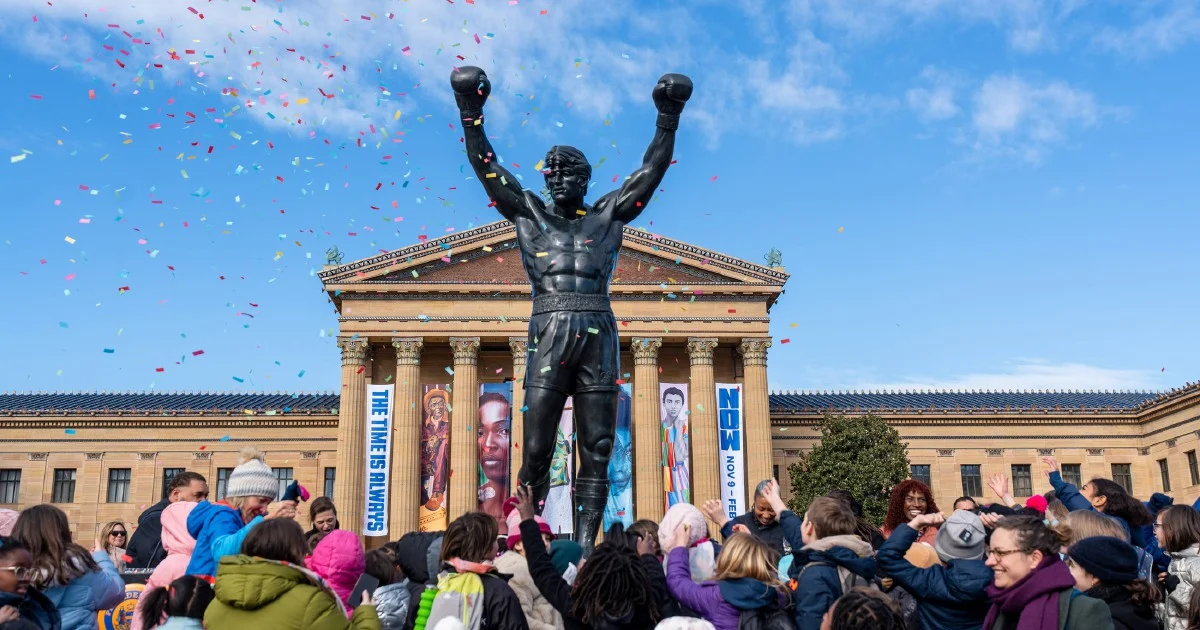
French football supporters gathered in Philadelphia for the World Cup have been handed an explicit caution: avoid tampering with the city's most celebrated statue. Officials and local guides cautioned the French contingent on Saturday about the peculiar misfortune that has apparently plagued sporting delegations whose enthusiastic fans have decorated the bronze monument of Rocky Balboa with their national colours.
The Rocky Balboa statue, erected near the Philadelphia Museum of Art in 1982, has become an international symbol of triumph over adversity through the Sylvester Stallone film franchise. Its location on the museum's iconic steps—famously featured in the original Rocky film—draws millions of visitors annually. Yet alongside its status as a monument to cinematic inspiration, the statue appears to have accumulated an unintended reputation for triggering athletic calamity among teams whose supporters cannot resist the urge to drape it with scarves, paint it, or otherwise claim it as a temporary emblem of their national pride.
For Malaysia and other Southeast Asian nations with football traditions, the notion of sporting curses carries particular cultural resonance. Whether understood through folklore, superstition, or psychological perspective, the idea that a symbolic act can influence outcomes reflects how sports transcend pure athleticism in the regional consciousness. The Rocky curse narrative also illustrates how international sporting events create converging spaces where local American culture intersects with global fan culture, occasionally producing unexpected complications for participating nations.
The specific warning issued to French supporters highlights a genuine management concern. Event organisers and venue authorities have grown weary of managing the aftermath of fan interventions with the statue. Beyond the practical issue of cleaning and restoration, there appears genuine trepidation about whether the symbolic act itself carries genuine consequences. That authorities felt compelled to formally warn the French contingent suggests previous incidents have created sufficient pattern to warrant preventive intervention.
Historical precedent apparently underlies this caution. Multiple teams whose fans have engaged in similar behaviour have subsequently experienced sporting disappointments. While confirmation bias may explain much of this—observers naturally remember failures that follow visible fan acts while forgetting successes—the cumulative weight of these anecdotes has generated sufficient folk wisdom that it now influences official guidance. For superstitious athletes and supporters, such warnings carry weight regardless of empirical causation.
The French delegation arrives as a major World Cup contender, heightening anxiety around any potential negative influence. France's recent tournament pedigree—having reached the 2018 final and won the 2018 championship—means supporters and officials take such precautions seriously. In professional football, where margins between victory and defeat narrow at elite levels, psychological factors gain outsized importance. If French supporters believe the Rocky statue curse is genuine, collective anxiety could theoretically influence team performance through psychological mechanisms rather than supernatural ones.
The warning also reflects broader tensions around fan behaviour at international events. Tournament organisers must balance enthusiasm and cultural expression—fundamental to sporting spectacle—against practical concerns regarding monument preservation and potential superstitious influence on competition integrity. For a statue without official barriers or protective infrastructure, fan contact remains difficult to prevent entirely, making communication and persuasion primary tools for authorities.
Philadelphia's relationship with the Rocky statue exemplifies how fictional narratives embed themselves into urban landscapes and collective consciousness. The bronze figure has transcended its cinematic origins to become a genuine cultural monument, receiving the reverence typically reserved for historical figures. That international visitors to the city automatically gravitate toward it—particularly during major sporting events—reflects how popular culture creates shared reference points across national boundaries.
For Malaysian readers engaging with this story, the broader lesson extends beyond football superstition into how international sporting events surface unexpected cultural intersections. When French supporters gather in Philadelphia, they encounter not merely an American city but an American cultural mythology that now intersects with their own national aspirations. The Rocky statue thus becomes a focal point where multiple narratives—American cinema, international football competition, folk superstition, and fan identity—converge in ways authorities must actively manage.
The warning issued to French supporters represents a pragmatic response to a peculiar phenomenon that defies neat categorisation. Whether the Rocky curse operates through supernatural mechanisms, psychological influence, or pure coincidence remains ultimately unknowable. What remains certain is that enough sporting teams have experienced disappointment following fan interference with the statue to create folk belief sufficiently powerful that major football delegations now receive explicit guidance to avoid it. For France's World Cup campaign, whether supporters heed this advice may ultimately matter far less than their team's tactical preparation and execution on the pitch.