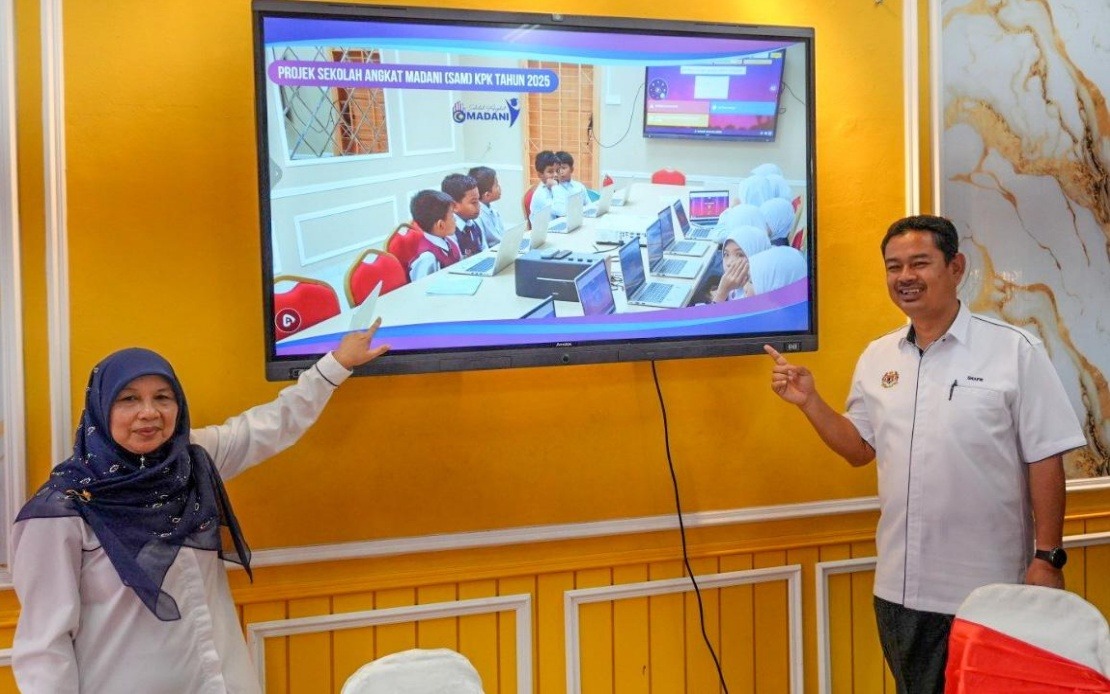
The Ministry of Plantation and Commodities (KPK) has committed RM100,000 towards comprehensive infrastructure and technology upgrades at SK Bendang Kering in Kuala Kangsar, marking a significant investment in rural educational development. The funds were formally handed over during a ceremony held at the school on June 19, overseen by Shafie Taib, the ministry's deputy secretary-general for Strategic Planning and Management. This initiative reflects a deliberate strategy by the government to bridge the infrastructure gap between urban and rural educational institutions, ensuring that students in less developed areas gain access to modern learning environments comparable to their counterparts in city centres.
The Malaysian Rubber Board (LGM) serves as the implementation partner for this adoption programme, a role that underscores the broader integration of Malaysia's commodity sector in supporting national educational priorities. Rather than remaining passive contributors, commodity-linked agencies have been mobilised to directly participate in closing disparities in educational access. This collaborative approach signals a recognition that achieving equitable development requires coordination beyond the traditional education ministry structures, drawing on resources and expertise from across different government portfolios. The programme itself forms part of a larger national commitment to human capital development, acknowledging that investment in school infrastructure today directly shapes workforce competitiveness tomorrow.
The tangible improvements delivered through this allocation address multiple dimensions of the learning experience. The renovation of the assembly area and main hall provides essential spaces for whole-school activities, flag ceremonies, and community gatherings that form the backbone of student life beyond classroom instruction. New reading corners have been established to encourage independent learning and foster a culture of literacy, particularly crucial in rural settings where access to libraries and digital resources may be limited. The upgrading of preschool classrooms recognises the foundational importance of early childhood education in establishing developmental trajectories that persist through subsequent schooling.
Technology integration has emerged as a cornerstone of this investment. The installation of interactive smartboards transforms teaching methodologies, enabling educators to move beyond traditional chalk-and-board instruction towards dynamic, multimedia-enriched lessons that cater to diverse learning styles. For rural students who may have limited exposure to digital platforms outside school, such technology serves as a critical gateway to contemporary modes of knowledge delivery. The provision of air conditioning units, while seemingly basic infrastructure, addresses a practical reality in Malaysia's tropical climate where excessive heat during afternoon classes can impair concentration and learning outcomes. This attention to physical comfort signals an understanding that effective education requires attending to the full spectrum of conditions affecting student wellbeing.
Beyond physical infrastructure, the programme encompasses a structured academic enhancement framework targeting foundational subjects critical to national examinations and skill development. The Malay, English, Science, and Mathematics focus reflects a prioritisation of linguistic and scientific literacy as essential competencies for socioeconomic participation. By introducing support systems and incentives for high-achieving students, the initiative creates positive reinforcement loops that motivate academic excellence while identifying and nurturing talent early. This performance-based component avoids a one-size-fits-all approach, instead recognising that rural students often possess significant potential that simply requires appropriate infrastructure and encouragement to flourish.
The adoption scheme extends into non-academic domains through targeted leadership and talent development camps. These initiatives acknowledge that education encompasses character formation, interpersonal skills, and leadership capacity alongside traditional academic metrics. For rural students, such programmes provide exposure to mentorship and peer networks that may be geographically limited in their home communities. By creating spaces where students can develop public speaking abilities, learn collaborative problem-solving, and build confidence, these camps address a gap in the holistic developmental opportunities available in rural schools. This investment in soft skills recognises that future employment and social advancement depend increasingly on competencies that extend well beyond examination results.
The selection of SK Bendang Kering carries symbolic weight as a signal of government commitment to equity. Kuala Kangsar, situated in the state of Perak, represents the type of peripheral rural location that often struggles to attract educational investment. By directing substantial resources to this institution, the ministry demonstrates that rural location does not predetermine educational quality or opportunity. This messaging is particularly important in Malaysia's context, where rural-urban disparities in educational infrastructure have historically contributed to broader socioeconomic divides. The adoption model itself offers a potentially scalable template whereby government-linked agencies can each commit to upgrading specific schools, multiplying the impact of public investment across the system.
For Malaysian educators and policymakers, this initiative provides a practical model for addressing infrastructure gaps beyond simple budgetary allocation. By embedding implementation responsibility with specialist agencies such as the Malaysian Rubber Board, the programme leverages existing organisational capacity and expertise. This partnership approach potentially reduces bureaucratic delays and administrative costs while creating ownership incentives for implementing agencies. The focus on measuring academic performance through subject-specific improvement tracks ensures accountability, allowing stakeholders to assess whether infrastructure investment translates into tangible learning gains. This emphasis on outcomes rather than merely inputs represents an evolution in how educational development programmes are conceived and evaluated.
The broader regional context amplifies the significance of this investment. Across Southeast Asia, rural educational disparities remain a stubborn challenge to inclusive development. Malaysia's deliberate approach to technology integration and infrastructure modernisation in rural settings offers potential lessons for neighbouring countries grappling with similar disparities. The programme also reflects a recognition that human capital development in rural areas generates externalities beyond individual student advancement, contributing to agricultural modernisation and rural economic diversification. As Malaysia navigates economic transition towards higher-value sectors, ensuring that rural students gain exposure to digital literacy and advanced learning methodologies becomes strategically important for national competitiveness.
Looking forward, the success of the SK Bendang Kering adoption will likely influence future government investment priorities and partnership models. If students demonstrate measurable academic improvement and parents report enhanced satisfaction with school facilities, this success story could catalyse similar initiatives across other rural institutions. The RM100,000 investment, while substantial for a single school, remains relatively modest when considered as a national intervention, suggesting that replicating this model across Malaysia's rural school system remains financially feasible. The real test lies in ensuring that improved infrastructure and programmes are sustained through adequate maintenance budgets and ongoing teacher training, challenges that have historically undermined the long-term effectiveness of rural educational initiatives.