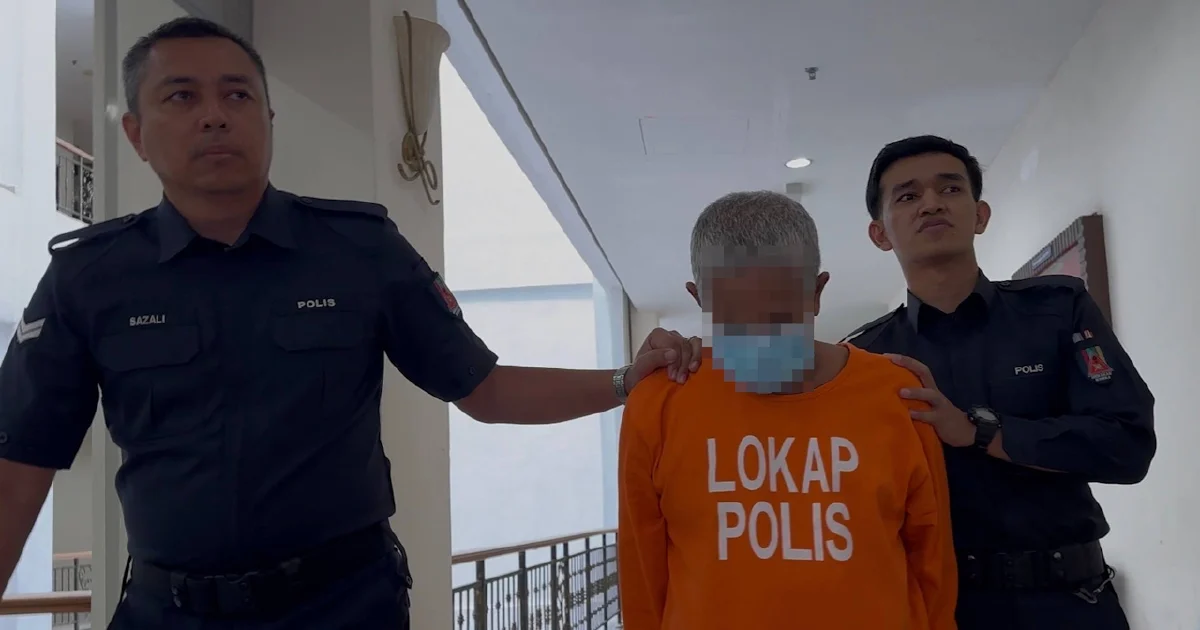
A 67-year-old retiree has been handed a lengthy custodial sentence and corporal punishment by the Sessions Court in Muar after acknowledging guilt to five criminal charges involving the sexual abuse of his two young granddaughters. The court imposed a total of 33 years imprisonment alongside 14 strokes of the cane, marking a significant judicial response to one of the most serious violations of trust within a family setting.
The severity of the sentence reflects the gravity of the offences and the vulnerable position of the victims, who were under the direct care and guardianship of the accused. Such cases involving the sexual exploitation of minors by close family members have become increasingly concerning across Malaysia, prompting stronger legal measures and public awareness campaigns. The courts have consistently demonstrated that crimes against children, particularly within domestic environments, warrant maximum penalties under the law.
The decision to accept the guilty pleas meant the proceedings did not require a protracted trial, allowing the survivors to avoid prolonged courtroom testimony. This procedural approach, while expediting justice, also represents an acknowledgement by the accused of the harm inflicted. Mental health professionals who work with abuse survivors note that such admissions can sometimes facilitate the healing process, though the trauma experienced by young victims of familial sexual abuse often extends far beyond legal proceedings.
Muar, a district in Johor, has been the site of several high-profile cases involving crimes against children in recent years. Local child protection agencies have called for enhanced monitoring systems in households identified as high-risk, alongside improved training for community workers and healthcare providers to recognise signs of abuse. The psychological impact on survivors of intrafamilial sexual violence is profound and long-lasting, often requiring years of specialised therapeutic intervention.
The imposition of caning in addition to imprisonment underscores the judiciary's determination to apply the full range of sentencing options available under Malaysian law. Corporal punishment remains a contentious element of the criminal justice system, with human rights organisations advocating for its abolition while authorities maintain it serves as a deterrent. This particular case demonstrates how the courts continue to utilise caning in cases deemed exceptionally heinous.
Family-based sexual abuse often goes unreported for extended periods due to complex dynamics involving shame, fear of family disintegration, and the dependent status of child victims. Social workers emphasise that disclosure frequently occurs years after the initial incidents, sometimes only when the child reaches adolescence or adulthood. The fact that these offences were brought to light and prosecuted represents a victory for those who advocate for strengthened child protection mechanisms at the grassroots level.
The sentence structure—33 years imprisonment—appears designed to ensure substantial incarceration throughout the remaining years of the offender's life expectancy. Such lengthy sentences signal to potential perpetrators that the legal consequences of child sexual abuse are irreversible and severe. They also acknowledge the permanent damage caused to survivors, whose lives are substantially altered by the trauma experienced during formative years.
Criminal justice specialists in Southeast Asia note that Malaysia's approach to prosecuting sexual crimes against children has become progressively more stringent over the past decade. Legislative amendments, increased training for law enforcement and judicial personnel, and enhanced victim support services have collectively raised prosecution rates. However, experts caution that formal punishment alone is insufficient without parallel investment in prevention, rehabilitation of offenders where appropriate, and comprehensive support systems for survivors.
The case underscores the critical need for family members and community members to remain vigilant for warning signs of abuse, including behavioural changes in children, reluctance to be alone with particular adults, and age-inappropriate sexual knowledge. Educational programmes targeting caregivers, schoolteachers, and healthcare workers have proven effective in increasing early identification of potential abuse situations. Malaysian NGOs specialising in child welfare continue to advocate for mandatory reporting laws and whistleblower protections to encourage disclosure.
Beyond the immediate penalty, the offender's conviction will result in permanent placement on the sex offenders register, restricting future movement and employment opportunities. Such post-sentence consequences, combined with the substantial prison term and caning, represent a comprehensive legal response designed to protect potential victims. Rehabilitation programmes within correctional facilities, though variable in quality, attempt to address the underlying factors contributing to offending behaviour.
The emotional and psychological burden on the granddaughters and their extended family cannot be underestimated. Survivor support organisations in Malaysia emphasise that lengthy court proceedings, media attention, and the realisation that a trusted family member perpetrated such violations create compounding trauma. Access to trauma-informed counselling and long-term psychological support remains inconsistent across Malaysian healthcare systems, particularly in smaller towns and rural areas.
This sentencing serves as a reminder that judicial systems must balance punitive measures with restorative approaches that prioritise victim recovery. While incarceration removes the immediate threat, comprehensive frameworks addressing prevention, prosecution, and survivor support remain essential for addressing the systemic nature of family violence in Malaysian society.