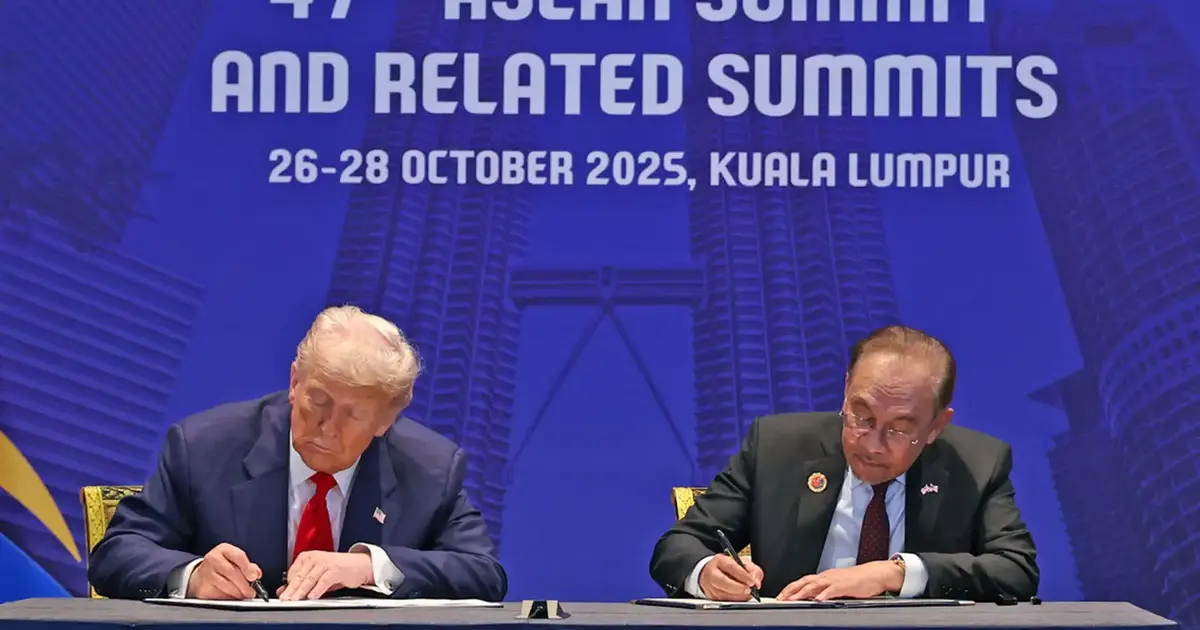
The Malaysian government under Prime Minister Anwar Ibrahim has initiated legal proceedings to have a lawsuit dismissed—one filed by opposition Members of Parliament who are contesting the validity of the reciprocal trade agreement between Malaysia and the United States. This development marks an escalation in the political dispute surrounding the trade pact, which has attracted scrutiny from lawmakers concerned about its constitutional foundation and economic implications.
The opposition MPs have filed the original suit in an apparent attempt to halt or scrutinise the implementation of the bilateral trade agreement. By seeking to strike out the case, the government is arguing that the court lacks jurisdiction or that the MPs' legal standing to challenge the deal is insufficient. This procedural manoeuvre could determine whether the substantive issues raised by the opposition are heard in court or dismissed at the threshold stage.
Parallel to their main legal challenge, the opposition MPs have also filed a separate application requesting that constitutional questions arising from the trade agreement be referred to the Federal Court. This move indicates that the lawsuit extends beyond trade policy concerns into fundamental questions about constitutional authority and parliamentary oversight. Such referrals typically occur when lower courts encounter questions about the interpretation or validity of the Federal Constitution that require the highest court's guidance.
The reciprocal trade agreement with the United States represents a significant economic and diplomatic commitment for Malaysia. Trade deals of this magnitude customarily require parliamentary scrutiny, and the opposition's legal action reflects broader concerns about the transparency and constitutional propriety of the government's trade negotiations. For Malaysian exporters and businesses, the outcome of this legal dispute could affect the timeline and certainty of market access arrangements with the world's largest economy.
From a constitutional perspective, the case touches on whether the executive branch possessed adequate authority to negotiate and enter into such agreements without explicit parliamentary approval. Malaysia's system of government places certain powers with the legislature, and trade agreements affecting citizens' rights and economic interests traditionally warrant legislative consideration. The opposition is essentially testing the boundaries of executive discretion in international treaty-making.
The timing of this legal challenge carries political weight. With the government's majority in Parliament, the ruling coalition has the votes to approve trade deals, but the opposition's recourse to the courts represents an alternative avenue through which to contest policies they believe are disadvantageous or unconstitutional. This reflects a wider pattern in Malaysian politics where opposition parties use the judiciary to challenge government decisions they cannot block legislatively.
For the regional context, Malaysia's trading relationships and agreements increasingly attract scrutiny from various stakeholders. Neighbouring nations and trading partners monitor how Malaysia manages its international commitments, and legal disputes over trade deals can affect investor confidence. The outcome of this case may also influence how other ASEAN countries structure their negotiations with major trading partners.
Business circles have watched this development carefully, as prolonged legal uncertainty surrounding trade agreements can impede market access and investment decisions. Companies planning operations in Malaysia or seeking to export Malaysian goods to the United States need clarity on whether this agreement will take effect as scheduled. The government's aggressive legal posture in seeking to strike out the case suggests confidence in its constitutional position, but the existence of a genuine constitutional question keeps the matter in flux.
The opposition's application for referral to the Federal Court indicates that their legal team believes the issues transcend ordinary commercial law and implicate fundamental constitutional principles. The Federal Court, as Malaysia's highest court, would have the final say on how the Constitution applies to government authority over trade agreements. Such a ruling could establish precedent affecting how future trade deals are negotiated and implemented.
The government's counter-application to dismiss the suit outright suggests it views the opposition's claim as legally deficient or procedurally improper. If successful, the striking out would terminate the case without addressing its substantive merits. However, if the court allows the case to proceed, it opens the door to potentially lengthy litigation and discovery processes that could reveal internal government documents and deliberations regarding the trade agreement.
The broader implications for Malaysian governance are significant. This dispute illustrates ongoing tension between executive efficiency in conducting international relations and legislative-judicial oversight of those functions. How the courts resolve this conflict will shape future practices around trade agreements and potentially other executive actions affecting citizens' interests.
Political observers note that trade policy has become an arena where opposition and government clash not merely over substance but over constitutional authority and institutional balance. The outcome of this case will likely influence how subsequent administrations approach trade negotiations and whether parliamentary approval becomes standard practice for reciprocal trade agreements. For Malaysia's international standing, resolving this dispute clearly and quickly serves national interests better than prolonged litigation, though both sides appear committed to pursuing their positions through the courts.

