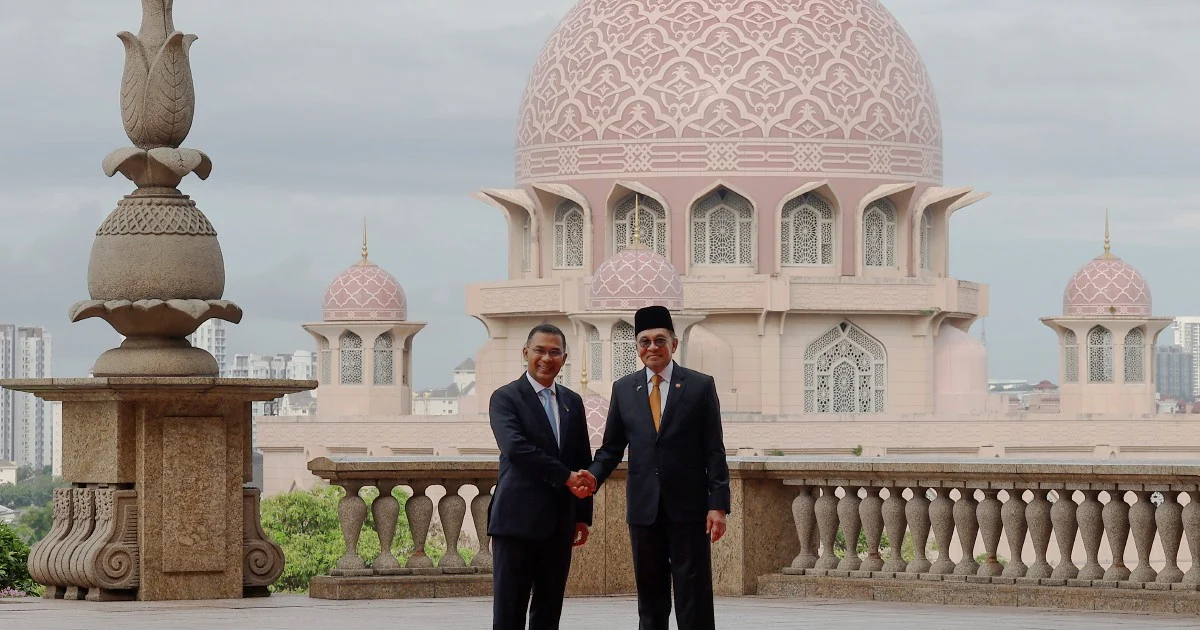
Bangladesh Prime Minister Tarique Rahman touched down in Malaysia for a significant two-day official visit, underscoring the deepening diplomatic engagement between two major South and Southeast Asian nations. The visit saw Rahman accorded a full official welcome ceremony at the Perdana Putra Complex in Putrajaya, the seat of Malaysia's federal government, signalling the high-level importance both nations attach to their bilateral relationship.
The reception at the Perdana Putra reflects Malaysia's commitment to strengthening ties with a neighbouring region that has become increasingly central to Asia's geopolitical and economic landscape. Bangladesh, with its population of over 170 million and strategic location bridging South Asia and Southeast Asia, represents a crucial partner for Malaysia's regional ambitions. The formal protocol extended to Rahman demonstrates Malaysia's recognition of Bangladesh's significance both as a fellow Muslim-majority nation and as an emerging economic powerhouse in South Asia.
Rahman's tenure as Prime Minister has coincided with Bangladesh's efforts to diversify its international partnerships and expand its diplomatic footprint beyond traditional allies. The visit to Malaysia provides an opportunity for both nations to explore expanded cooperation in trade, investment, and cultural exchange. The formal ceremony in Putrajaya serves as a diplomatic signal that Malaysia views Bangladesh as a priority partner worthy of state-level engagement.
The timing of this visit carries additional significance given the evolving regional dynamics in South and Southeast Asia. Bangladesh has been pursuing an active foreign policy aimed at strengthening relationships with countries across multiple regions. Malaysia, meanwhile, has sought to deepen its role as a bridge between South Asia and Southeast Asia, leveraging its position within ASEAN while maintaining strong relationships with South Asian powers.
Bilateral relations between Malaysia and Bangladesh have traditionally been anchored in shared Islamic heritage and cooperative frameworks within international organisations. Both nations are members of various multilateral bodies including the Organisation of Islamic Cooperation, creating additional avenues for collaboration beyond traditional diplomatic channels. The presence of significant Malaysian business interests in Bangladesh and Bangladesh communities within Malaysia adds an economic and cultural dimension to state-level relations.
During official visits of this calibre, discussions typically encompass a broad spectrum of bilateral concerns including trade promotion, investment opportunities, and regional security issues. Malaysian companies have invested in various sectors of the Bangladesh economy, while Bangladesh provides a substantial pool of skilled and semi-skilled workers to Malaysia's growing sectors. The formal welcome ceremony often precedes substantive government-to-government talks that address these practical dimensions of the bilateral relationship.
The Perdana Putra Complex, where Rahman received his official welcome, serves as the operational headquarters of Malaysia's Prime Minister and symbolises the highest level of state recognition. The decision to conduct the welcome ceremony at this venue underscores the significance attached to the Bangladesh delegation and reflects Malaysia's protocol regarding senior foreign dignitaries. Such ceremonial elements, while largely symbolic, carry real diplomatic weight in signalling the priority and respect accorded to visiting leaders.
For Malaysian policymakers, Bangladesh represents both a significant market and a strategic partner in regional affairs. The nation's rapid economic development and growing middle class present substantial opportunities for Malaysian businesses seeking expansion in South Asia. Conversely, Bangladesh's geographical position and regional influence make it a valuable ally in broader strategic considerations affecting regional stability and prosperity.
Rahman's visit occurs within the broader context of intensified South Asian-Southeast Asian engagement that has characterised recent years. Both regions have recognised the mutual benefits of closer integration, particularly in trade, investment, and security cooperation. Malaysia's role in facilitating this regional bridge is reinforced through high-level visits such as Rahman's, which create platforms for dialogue and concrete partnership arrangements.
The two-day duration of the visit suggests a comprehensive agenda covering multiple sectors and governmental departments. Beyond bilateral matters, discussions may encompass regional issues of mutual concern, including maritime security, climate change, and economic cooperation within regional frameworks. The visit provides Bangladesh with access to Malaysian expertise in areas such as Islamic finance, renewable energy, and digital infrastructure development.
From a Malaysian perspective, strengthening ties with Bangladesh contributes to the nation's broader strategic objective of maintaining robust connections across Asia. The formal welcome extended to Rahman reflects this commitment and signals Malaysia's willingness to invest diplomatic capital in relationships with rising Asian powers. Such engagement also demonstrates Malaysia's capacity to serve as a neutral, respected partner in regional affairs.

%22%2F%3E%3C%2Fpattern%3E%3C%2Fdefs%3E%3Crect%20width%3D%22100%25%22%20height%3D%22100%25%22%20fill%3D%22url(%23ph1g6lig)%22%2F%3E%3Crect%20width%3D%22100%25%22%20height%3D%22100%25%22%20fill%3D%22url(%23ph1g6lip)%22%2F%3E%3Ctext%20x%3D%2250%25%22%20y%3D%2250%25%22%20text-anchor%3D%22middle%22%20dominant-baseline%3D%22central%22%20fill%3D%22rgba(255%2C255%2C255%2C0.95)%22%20font-family%3D%22Georgia%2C%20'Times%20New%20Roman'%2C%20serif%22%20font-weight%3D%22700%22%20font-size%3D%22194%22%20letter-spacing%3D%22-0.02em%22%3EBersatu%3C%2Ftext%3E%3C%2Fsvg%3E)