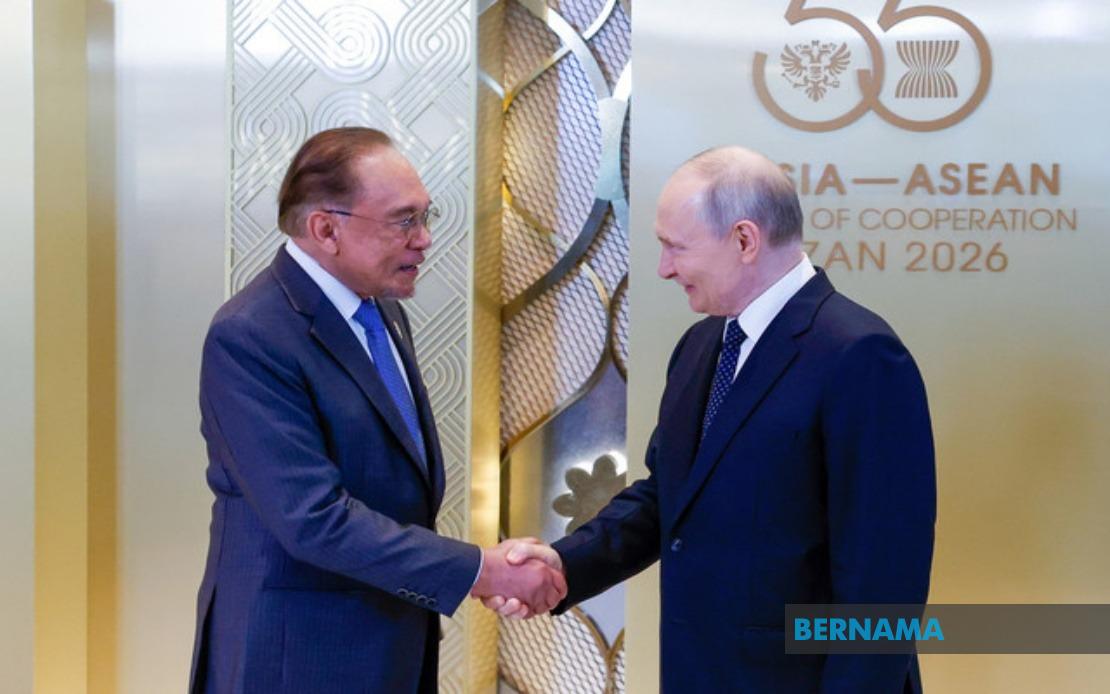
Prime Minister Datuk Seri Anwar Ibrahim's recent diplomatic missions are being viewed as strategically vital to Malaysia's economic prospects, with observers across academia and civil society expressing confidence that his international engagement will translate into tangible commercial and investment benefits. The visits to Kazan, Russia, and Turkmenistan represent a broader strategy to position Malaysia as an attractive destination for capital and partnerships while insulating the nation's economy from the volatility of global geopolitical tensions. For a Southeast Asian economy dependent on trade and energy imports, such high-level engagement carries particular significance in an era of shifting great-power dynamics and unpredictable international markets.
Dr Mohd Ramlan Mohd Arshad, a senior lecturer at Universiti Teknologi MARA's Faculty of Administrative Science and Policy Studies, contends that Anwar's diplomatic overtures open concrete pathways for Malaysia to strengthen its economic resilience through market diversification. According to his analysis, the visits have created conditions for expanded cooperation spanning trade, investment, energy security, agricultural partnerships, and technological development. These channels could collectively enhance Malaysia's standing as a nation capable of securing mutually beneficial arrangements with major powers. The timing is particularly significant given the fragmentation of global supply chains and the scramble among Asian nations to secure reliable energy sources and investment corridors.
The substance of Malaysia's engagement reflects a pragmatic foreign policy philosophy. Rather than adhering rigidly to traditional alignments, Anwar's approach emphasises building bridges with diverse partners while maintaining national interests. This strategy appears to resonate with observers who see Malaysia's middle-power position as best served through independence and flexibility. Siranjeev Ram, a policy analyst with the Malaysian Indian Youth Council, emphasises that Malaysia's leaders must leverage international respect to create concrete opportunities for businesses, entrepreneurs, and emerging generations. The emphasis here is crucial: diplomatic prestige possesses value only when it translates into jobs, contracts, and pathways for prosperity.
The energy sector represents a particularly consequential dimension of Malaysia's renewed international engagement. Russia has committed to supplying petroleum, oil, and gas through long-term arrangements that offer greater stability compared to previous annual or seasonal purchasing frameworks. This shift addresses a structural vulnerability in Malaysia's energy security, where dependency on seasonal contracts introduces price volatility and supply uncertainty. The draft agreement, currently undergoing final refinement through collaboration between Petronas and Tatarstan, represents the kind of structural arrangement that insulates Malaysia from sudden market shocks. For a country where energy costs directly influence manufacturing competitiveness and domestic inflation, such stability carries macroeconomic importance.
Turkmenistan has emerged as another crucial partner in Malaysia's energy diversification strategy. Petronas' three-decade operational presence in Central Asia provides institutional foundations for deeper engagement. The recent visit witnessed Petronas secure full participating interest in exploring hydrocarbon resources across Offshore Blocks 19 and 20 in the Caspian Sea, expanding Malaysia's exposure to one of the world's most significant energy reserves. This exploration right provides future revenue streams and reinforces Malaysia's position as a sophisticated regional energy player capable of competing for premium international assets. The geographic distance between Malaysia and Central Asia makes such arrangements particularly valuable, as they provide leverage in negotiating energy terms with other suppliers.
The Galkynysh Gas Field represents perhaps the most strategically significant element of Malaysia's Turkmenistan engagement. As one of the planet's largest gas deposits, securing a framework to explore development opportunities and downstream activities positions Petronas at the forefront of global energy projects. Gas processing capabilities and downstream investment create employment and technological spillovers throughout Malaysia's economy. These arrangements differ fundamentally from simple purchase contracts; they embed Malaysian expertise within international energy infrastructure, creating durable competitive advantages and revenue diversification.
Observers from the private sector view these diplomatic achievements through the lens of leadership credibility. Fiona Lim, a media marketing specialist, contends that respected leaders do more than command global attention—they enhance their nation's perceived value and potential in international markets. When Malaysian representatives negotiate from positions of respect and credibility, counterparts recognise Malaysia as a serious, reliable partner rather than a transactional actor. This distinction influences the terms of agreements, the scope of partnerships, and the long-term commitment of foreign investors. A nation whose leader is regarded as visionary and pragmatic attracts different quality of engagement than one perceived as unreliable or inconsistent.
Dental professional Dr Lim Yu Xiang voiced pragmatic support for the government's international strategy, noting that favourable trade deals with Russia and Turkmenistan would generate tangible benefits. His observation reflects a broader sentiment among Malaysian professionals that international diplomacy succeeds or fails ultimately through economic outcomes. The respect Anwar commands on the global stage remains secondary to whether such engagement produces jobs, business opportunities, and rising living standards. This ground-level perspective ensures that diplomatic achievements are assessed against material standards rather than abstract prestige metrics. For Malaysia's public, the real measure of diplomatic success lies in whether international partnerships strengthen the economy and improve household welfare.
The timing of these initiatives against the backdrop of global uncertainty amplifies their strategic value. With tensions between major powers creating supply disruptions and investment volatility, Malaysia's success in securing long-term energy arrangements and exploration rights provides crucial buffers against external shocks. Countries overly dependent on volatile commodity markets face boom-bust cycles that destabilise government budgets and employment. By locking in multi-year energy supply arrangements and securing profitable exploration opportunities, Malaysia reduces its exposure to sudden geopolitical disruptions. This structural resilience supports macroeconomic stability across government finances, corporate planning horizons, and household confidence.
The diplomatic initiatives also carry implications for Southeast Asian regional dynamics. Malaysia's ability to conduct independent negotiations with Russia and Turkmenistan demonstrates that ASEAN nations need not choose between exclusive great-power alignments. Instead, Malaysia exemplifies a diversified approach where engagement with multiple partners enhances bargaining power and reduces dependency on any single relationship. This model holds relevance for regional peers navigating comparable pressures and opportunities. As the geopolitical environment grows more complex, nations demonstrating capacity for independent, pragmatic diplomacy attract investment and partnership from diverse sources.
Analysts emphasise that maintaining momentum matters significantly. The framework agreements signed represent starting points rather than conclusions. Transforming diplomatic commitments into flowing capital, energy supplies, and technology transfer requires sustained attention and institutional capacity. Malaysia's ability to deliver on these agreements—completing refinements to the Russia energy pact, advancing Caspian exploration, and developing the Galkynysh opportunity—will determine whether 2024's diplomatic initiatives generate sustained economic dividends or fade as symbolic gestures.
The broader question concerns whether Malaysia can sustain the international respect and strategic positioning that makes such arrangements possible. Domestic political stability, consistent policy implementation, and transparent governance ultimately determine whether trading partners regard Malaysia as a reliable long-term partner. The diplomatic achievements of recent months rest upon foundations of institutional credibility and predictable governance. Maintaining these foundations requires continuing attention to economic management, rule of law, and political stability. Anwar's international stature provides temporary advantage, but translating that advantage into structural economic advancement demands institutional excellence extending far beyond diplomatic skill.

%22%2F%3E%3C%2Fpattern%3E%3C%2Fdefs%3E%3Crect%20width%3D%22100%25%22%20height%3D%22100%25%22%20fill%3D%22url(%23ph1g6lig)%22%2F%3E%3Crect%20width%3D%22100%25%22%20height%3D%22100%25%22%20fill%3D%22url(%23ph1g6lip)%22%2F%3E%3Ctext%20x%3D%2250%25%22%20y%3D%2250%25%22%20text-anchor%3D%22middle%22%20dominant-baseline%3D%22central%22%20fill%3D%22rgba(255%2C255%2C255%2C0.95)%22%20font-family%3D%22Georgia%2C%20'Times%20New%20Roman'%2C%20serif%22%20font-weight%3D%22700%22%20font-size%3D%22194%22%20letter-spacing%3D%22-0.02em%22%3EBersatu%3C%2Ftext%3E%3C%2Fsvg%3E)