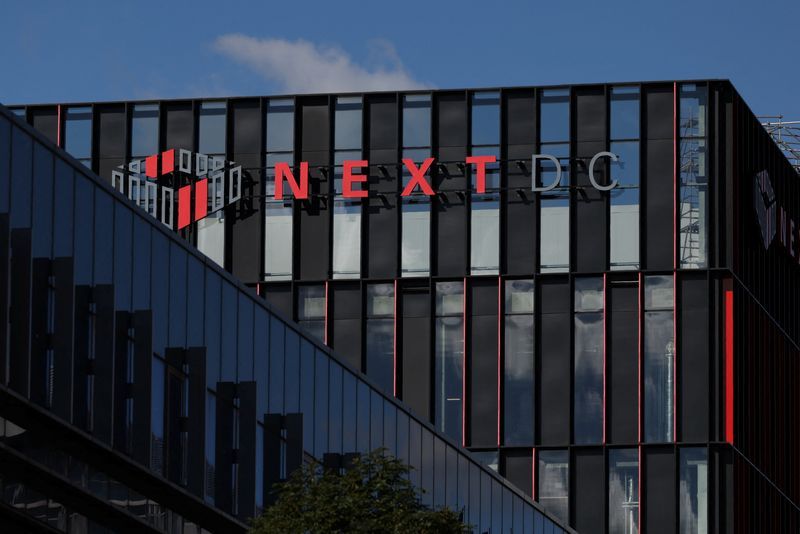
Australia's data centre landscape faces mounting scrutiny over resource consumption as NextDC, the nation's dominant infrastructure provider, reported a significant deterioration in its environmental metrics despite delivering record profits. The company disclosed that its water usage effectiveness ratio climbed to 2.40 litres per kilowatt-hour for the year ending June 2024, up from 2.25 the previous year, while its power usage effectiveness metric—a key indicator of how much electricity is required for cooling and auxiliary systems—rose to 1.49 from 1.44. The sequential worsening of both measurements over three consecutive years has sparked fresh concerns among policymakers about whether the explosive growth in data centre capacity can be sustained without straining critical national infrastructure.
The performance metrics released by NextDC carry particular significance for Australia and the broader Southeast Asian region, where governments are grappling with how to balance economic opportunities from the artificial intelligence and cloud computing revolution against environmental and social costs. Water scarcity remains a pressing challenge across much of Australia, with many regions already experiencing prolonged drought conditions. Energy demand from data centres is simultaneously putting pressure on electricity grids that are undergoing significant transition toward renewable sources. These dual pressures have transformed what was once a technical efficiency discussion into a matter of national policy concern, with regulators now treating data centre resource consumption as equivalent to water and energy security issues.
NextDC attributed the rising consumption figures to several operational factors, suggesting that the deterioration was not necessarily reflective of permanently worsened efficiency. The company explained that newly commissioned capacity was operating cooling systems at full capacity before information technology infrastructure had been fully deployed, creating a temporary mismatch between cooling capability and actual computing load. Additionally, NextDC conducted an extensive reconciliation and validation exercise across its water data portfolio, uncovering previously undetected leaks, utility meter anomalies, and discrepancies between site-level measurements and utility company records. This reconciliation process, while improving data accuracy, resulted in upward revisions to historical consumption figures, effectively pushing the reported ratios higher than previous estimates had suggested.
Despite the environmental headwinds, NextDC delivered financial results that substantially exceeded market expectations, underscoring the intense commercial demand driving data centre expansion across the region. The company generated revenue growth of 16 percent and swung to a net profit of A$82.1 million for the financial year, compared with a A$60.5 million loss recorded in the prior corresponding period. While an accounting change that recognized gains on property valuations contributed meaningfully to the bottom-line result, underlying earnings before interest, tax, depreciation and amortization increased 15 percent to A$248.8 million, comfortably exceeding consensus analyst forecasts compiled by Visible Alpha. The financial performance reinforced investor confidence, with NextDC shares trading 3.3 percent higher by mid-session trading on the day results were released.
The strengthening financial position of NextDC reflects broader market dynamics propelling data centre construction throughout Australia and Southeast Asia. The explosive adoption of artificial intelligence applications, cloud migration by businesses of all sizes, and the data-intensive requirements of modern digital services have created unprecedented demand for computing capacity. This demand has been sufficiently robust to support substantial capital expenditure programs at major data centre operators, including NextDC's well-capitalized competitors Blackstone-owned AirTrunk and Infratil-owned CDC. However, the efficiency deterioration disclosed by NextDC suggests that rapid expansion of capacity may be outpacing improvements in operational efficiency, a pattern that could become increasingly problematic if current growth trajectories persist.
Canberra's regulatory response to these environmental concerns is intensifying, with policymakers considering mandatory, nationally consistent standards to govern how data centres select locations, consume energy, and utilize water resources. Most significantly, the Australian government has proposed requiring data centre operators to construct new renewable energy generation capacity rather than simply drawing power from existing grid infrastructure. This approach represents a substantial shift in how the sector might be regulated, effectively making individual data centre operators responsible for underwriting the energy transition rather than relying on gradual grid decarbonization. Such requirements could materially increase capital costs for new facilities and reshape competitive dynamics within the industry.
The regulatory posture being developed in Australia reflects a global pattern of government intervention becoming more pronounced around data centre development. An expanding array of jurisdictions—including multiple U.S. states, parts of Europe, and several developed Asian economies—have implemented or are actively considering restrictions, moratoriums, or outright bans on new data centre construction. These policy responses have emerged from multiple constituencies expressing concern about mounting electricity costs affecting consumers, depletion of limited water supplies in water-stressed regions, competition for available land in developed areas, and broader impacts on local communities adjacent to large infrastructure facilities. The convergence of these concerns has elevated data centre policy from a narrow infrastructure matter to one intersecting with energy security, environmental sustainability, and social equity.
For Malaysia and other Southeast Asian nations observing Australia's regulatory evolution, the trajectory carries significant implications for their own policy development. Several countries in the region have actively pursued positioning themselves as preferred data centre hubs, emphasizing competitive advantages such as lower operating costs, favorable climate conditions, and increasingly reliable electricity grids. However, as major operators like NextDC expand their environmental disclosure standards, Southeast Asian regulators will face mounting domestic pressure to implement comparable transparency requirements and efficiency standards. The environmental credentials of data centres could become a competitive factor influencing technology investment decisions by multinational corporations and major cloud service providers, potentially rewarding jurisdictions that move earlier to implement stringent standards.
NextDC's disclosure also illuminates the challenge that even well-capitalized, professionally managed operators encounter when attempting to balance rapid capacity expansion with environmental stewardship. The company's three-year deterioration in efficiency metrics, combined with the discovery of previously undetected leaks and measurement anomalies, suggests that rapid scaling of data centre infrastructure creates operational complexity that may outstrip management capacity. This pattern implies that governments pursuing aggressive data centre expansion strategies without simultaneously developing robust regulatory frameworks and environmental management capabilities risk creating facilities that consume resources inefficiently and generate ongoing community opposition.
The intersection of NextDC's financial success and environmental deterioration underscores a fundamental tension in the data centre sector that will likely intensify as artificial intelligence applications proliferate. The commercial case for data centre expansion remains compelling—the company's profit turnaround and strong earnings growth demonstrate the financial viability of the business model. Simultaneously, the deteriorating efficiency metrics signal that current expansion approaches may be unsustainable at scale. This dynamic suggests that future growth in the sector will increasingly depend on technological innovations improving efficiency, regulatory frameworks that incentivize rather than merely prohibit expansion, and business models that more fully internalize environmental costs rather than externalizing them onto host communities and nations.
As NextDC and its competitors continue their expansion programs, their demonstrated ability—or inability—to reverse the three-year deterioration in efficiency metrics will become an important bellwether for the sector's environmental trajectory. Investors, regulators, and communities across Australia and Southeast Asia will be closely monitoring whether the infrastructure investments currently under way generate improvements in water and energy efficiency or whether the efficiency gains achievable through better management are inadequate to offset the environmental impact of accelerating capacity growth. The answer to this question will substantially influence how receptive policymakers remain to further data centre development, making environmental performance metrics increasingly central to the sector's long-term viability and social license to operate.

