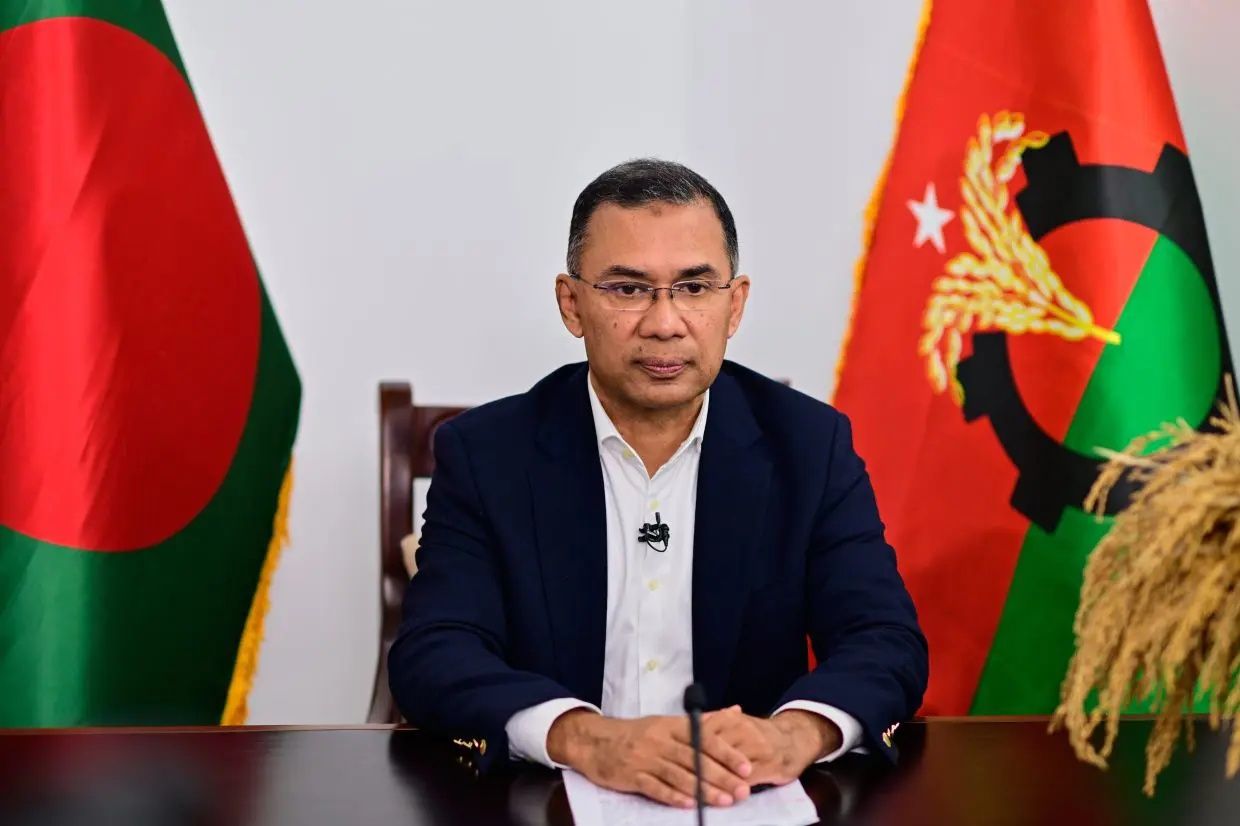
Bangladesh's newly elected Prime Minister Tarique Rahman is stepping onto the international stage this weekend with a carefully choreographed diplomatic debut that signals a significant reorientation of his government's foreign policy priorities. Rather than following the traditional path of neighbouring countries by visiting India first—the nation that dominates Bangladesh's borders and historically wielded enormous influence over Dhaka—Rahman is instead heading to Malaysia on Sunday before proceeding to China the following day. This calculated choice of inaugural destinations represents far more than mere scheduling; it reflects the dramatic political realignment that has gripped the region since last year's popular uprising and the subsequent February elections that brought Rahman to power.
The new premier's decision to prioritise Malaysia underscores the critical importance of Southeast Asian labour markets and investment flows to Bangladesh's economy. Malaysia hosts approximately 800,000 Bangladeshi workers, a figure that accounts for more than one-third of Malaysia's entire foreign workforce. These expatriate communities represent a vital economic lifeline for millions of Bangladeshi families who depend on remittances sent home from manufacturing plants, construction sites, and service sectors across the Malaysian peninsula. By visiting Kuala Lumpur first, Rahman sends a tangible message to both the Malaysian government and the Bangladeshi diaspora that his administration takes seriously the economic welfare and integration of its citizens abroad. Beyond labour diplomacy, the Malaysian leg of the tour will likely involve discussions on bilateral trade, investment promotion, and potentially enhanced cooperation frameworks that could benefit both nations.
The subsequent visit to China carries even weightier implications for Bangladesh's long-term development trajectory. According to foreign ministry officials cited by the state news agency, trade and infrastructure initiatives will dominate discussions in Beijing, with particular focus on Beijing's potential support for the Teesta River project—a transformative but long-stalled initiative aimed at restoring and managing one of Bangladesh's most vital waterways through comprehensive dredging, embankment reinforcement, and irrigation development. This project has languished for years, caught in regional complexities and funding constraints, but Chinese backing could provide the financial and technical resources necessary to finally move from conception to implementation. Such infrastructure investments represent precisely the kind of tangible development gains that Rahman's administration needs to demonstrate to its population in the critical early months of governance.
The diplomatic significance of Rahman's itinerary cannot be separated from the tumultuous events that preceded his election. The 2024 uprising that toppled his predecessor, Sheikh Hasina, fundamentally altered Bangladesh's relationship with India, the nation that had been Hasina's closest regional ally. Hasina, who fled across the border to India as the revolution erupted, remains in hiding there, and Bangladesh has repeatedly demanded her extradition—a request that New Delhi has consistently rebuffed. This outstanding issue, combined with Hasina's legacy of close ties to Indian interests, has created substantial friction between the two neighbours that cannot simply be overcome through diplomatic niceties.
Border relations have deteriorated markedly since Hasina's ouster, with India accused of sending individuals it classifies as illegal migrants across the frontier into Bangladesh, straining an already-contested boundary that runs through densely populated areas. The flow of people across the porous border has historically been an issue between the nations, but its intensification under the current circumstances suggests deeper tensions rooted in Delhi's apparent dissatisfaction with the political upheaval in Dhaka. By turning eastward toward Malaysia and China rather than westward toward India, Rahman may be attempting to create diplomatic space to reset relations on terms more favourable to his government rather than appearing to capitulate to Indian pressure.
The strategic context of Rahman's foreign tour extends beyond bilateral relationships to encompass the broader competition for influence that defines South Asian geopolitics. India has long maintained deep reservations about China's expanding regional footprint and the competition between the world's two most populous nations for primacy in South Asian affairs. Bangladesh's pivot toward Beijing, even if primarily motivated by genuine development needs, nonetheless signals to India that Dhaka intends to diversify its partnerships and reduce its dependence on Indian goodwill. This diversification represents a form of strategic autonomy that resonates across Southeast Asia, where nations have increasingly sought to balance relationships among major powers rather than align predominantly with a single partner.
The characterisation of these visits as a major diplomatic initiative aimed at strengthening Bangladesh's economic partnerships reflects official recognition that the government's legitimacy will ultimately depend on delivering tangible improvements to citizens' livelihoods. A nation of 170 million people with substantial development challenges cannot afford prolonged diplomatic isolation or economic stagnation. By engaging Malaysia on labour and trade matters and China on infrastructure investment, Rahman demonstrates pragmatic focus on the immediate economic challenges facing his administration. These are not ideologically driven choices but rather calculations grounded in Bangladesh's material interests and the government's need to show early policy wins.
The timing of Rahman's tour also matters considerably. His government consolidated power in February following the interim administration's stewardship since Hasina's departure. That several months have elapsed before undertaking this first foreign visit suggests careful preparation and internal consolidation—the new administration wanted to present unified, coherent policy positions to international partners rather than project uncertainty or disarray. The sequence of destinations also reflects diplomatic hierarchy: Malaysia first as an important partner in the labour and regional trade sphere, followed by China as the major power with substantial capacity to support Bangladesh's long-term infrastructure ambitions. This ordering suggests Rahman has absorbed lessons from his predecessor's apparent over-dependence on any single relationship.
For Malaysian observers and policymakers, Rahman's visit carries particular significance given Malaysia's substantial economic stake in Bangladesh through its large Bangladeshi worker population and growing bilateral trade. The visit provides an opportunity to deepen cooperation on skills development, worker protections, and potentially labour market initiatives that could benefit both nations. Additionally, as Malaysia itself navigates its own balancing act between major powers, Bangladesh's explicit outreach offers potential opportunities for enhanced Southeast Asian coordination on regional issues from trade to security.
The broader implications extend to how Bangladesh will position itself within the region during this transitional period. By demonstrating openness to partnerships with Malaysia and China while managing difficult relations with India, Rahman is essentially signalling that his government intends to chart an independent course. Whether this independent trajectory can be sustained will depend on Rahman's ability to manage expectations, deliver developmental gains, and navigate the complex web of regional interests that have historically constrained Bangladeshi autonomy. What seems clear is that the days of Bangladesh's unquestioning alignment with any single partner may be ending, replaced by a more transactional, pragmatic approach to foreign policy that prioritises economic outcomes and infrastructural development.
%22%2F%3E%3C%2Fpattern%3E%3C%2Fdefs%3E%3Crect%20width%3D%22100%25%22%20height%3D%22100%25%22%20fill%3D%22url(%23ph5vj8xg)%22%2F%3E%3Crect%20width%3D%22100%25%22%20height%3D%22100%25%22%20fill%3D%22url(%23ph5vj8xp)%22%2F%3E%3Ctext%20x%3D%2250%25%22%20y%3D%2250%25%22%20text-anchor%3D%22middle%22%20dominant-baseline%3D%22central%22%20fill%3D%22rgba(255%2C255%2C255%2C0.95)%22%20font-family%3D%22Georgia%2C%20'Times%20New%20Roman'%2C%20serif%22%20font-weight%3D%22700%22%20font-size%3D%22136%22%20letter-spacing%3D%22-0.02em%22%3EEx-Federal%3C%2Ftext%3E%3C%2Fsvg%3E)

%22%2F%3E%3C%2Fpattern%3E%3C%2Fdefs%3E%3Crect%20width%3D%22100%25%22%20height%3D%22100%25%22%20fill%3D%22url(%23phc4y2g)%22%2F%3E%3Crect%20width%3D%22100%25%22%20height%3D%22100%25%22%20fill%3D%22url(%23phc4y2p)%22%2F%3E%3Ctext%20x%3D%2250%25%22%20y%3D%2250%25%22%20text-anchor%3D%22middle%22%20dominant-baseline%3D%22central%22%20fill%3D%22rgba(255%2C255%2C255%2C0.95)%22%20font-family%3D%22Georgia%2C%20'Times%20New%20Roman'%2C%20serif%22%20font-weight%3D%22700%22%20font-size%3D%22272%22%20letter-spacing%3D%22-0.02em%22%3EMedia%3C%2Ftext%3E%3C%2Fsvg%3E)