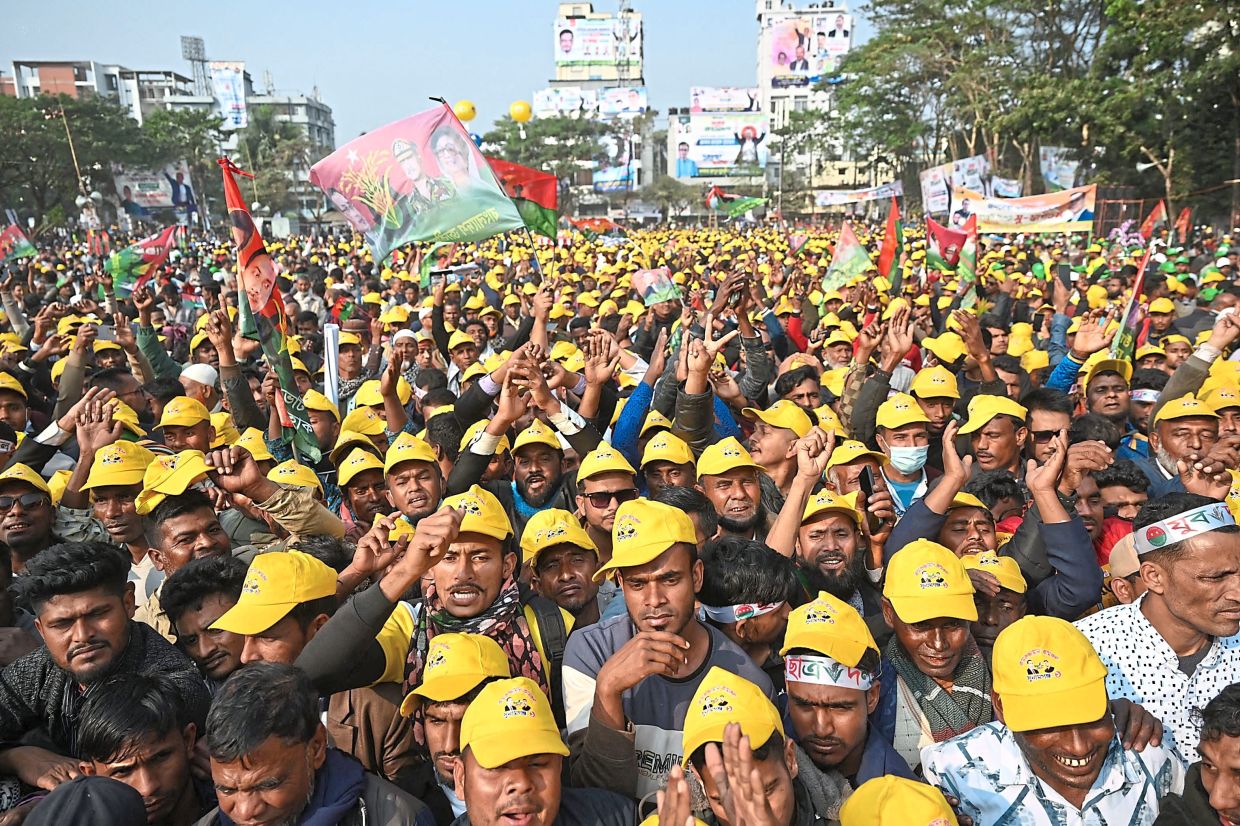
Bangladesh's parliament is preparing to elect a new president on Thursday, with Mirza Fakhrul Islam Alamgir, the 78-year-old secretary general of the ruling Bangladesh Nationalist Party (BNP), widely expected to secure the largely ceremonial post in an unopposed race. The vote marks another significant development in Bangladesh's political reconstruction following the tumultuous revolution of 2024, which fundamentally reshaped the country's leadership hierarchy and institutional priorities.
Alamgir, who also serves as local government minister in Prime Minister Tarique Rahman's cabinet, is anticipated to win comfortably in the afternoon ballot for the five-year presidential term. His anticipated elevation to the presidency represents recognition of his role in stewarding the BNP through years of suppression and marginalisation, emerging as a steady institutional presence when the party's formal leadership faced severe constraints. In remarks to journalists earlier this week, Alamgir expressed humility about the prospect, attributing his trajectory to both his party's backing and divine providence whilst reaffirming his commitment to grassroots engagement despite assuming the nation's highest ceremonial office.
The timing of this presidential election reflects the political momentum generated by the BNP's overwhelming performance in February's general elections, the first democratic polling since the revolution that toppled Sheikh Hasina's administration. That electoral victory demonstrated significant public endorsement for Rahman's leadership and provided the parliamentary supermajority necessary to navigate the presidential succession smoothly. The preceding president, Mohammed Shahabuddin, had tendered his resignation in July citing health concerns, though political analysts observed that his departure appeared connected to broader efforts to distance the new administration from Hasina's era and its associated governance controversies.
Shahabuddin, aged 76, had served as president since his election in 2023 whilst maintaining close personal and political ties to Hasina. His abbreviated tenure—ending before the scheduled 2028 expiration—underscored the discontinuity between the previous regime and the current political settlement. The former president's exit was precipitated partly by mounting pressure from civil society and reform-oriented factions within the new government structure, reflecting determinations to reshape Bangladesh's institutional landscape in ways that signalled departure from the preceding administration's governance model.
Meanwhile, Sheikh Hasina herself remains in India, having fled the country as the revolution gained momentum. Her refusal to return for her trial in Dhaka, where she was convicted in absentia in November on crimes against humanity charges and sentenced to capital punishment, exemplifies the irreversible political consequences of the 2024 upheaval. International human rights organisations had extensively documented allegations against Hasina's government involving extrajudicial killings of political adversaries, systematic suppression of the BNP and other opposition entities, compromised judicial proceedings, and electoral manipulation that undermined democratic norms throughout her tenure.
Alamgir's political evolution reflects a generation of Bengali nationalist leadership shaped by anti-colonial struggle and democratic activism. Born on January 26, 1948, he demonstrated early political engagement whilst pursuing economics studies at Dhaka University, playing instrumental roles in the 1969 mass uprising that challenged Pakistan's military dictatorship. This foundational experience positioned him within the nationalist cohort that would eventually shepherd Bangladesh through its independence struggle and the subsequent construction of republican institutions.
Following an intermediate career in economic academia and public administration, during which he held ministerial responsibility for agriculture, aviation and tourism portfolios, Alamgir emerged as a prominent opposition voice during Hasina's extensive period of predominance. Critically, he maintained organisational continuity within the BNP whilst Khaleda Zia, the party's nominal leader, endured imprisonment and her son Rahman faced exile—circumstances that might have occasioned the party's institutional disintegration without determined stewardship. Alamgir's sustained engagement with grassroots party structures and commitment to maintaining political visibility despite formidable state pressure earned him multiple arrests on charges that observers characterised as politically weaponised prosecution.
The BNP has emphasised Alamgir's resilience in preserving party cohesion through what party representatives describe as the most challenging period in Bangladesh's post-independence political history. His recognition within the organisation reflects not charismatic magnetism but rather steadfast institutional management and demonstrated loyalty to democratic principles even whilst experiencing direct persecution from the state apparatus. These credentials, according to party narratives, position him appropriately for a role that, whilst constitutionally constrained, carries significant symbolic weight in representing the revolution's ideological commitments to democratic restoration.
Alamgir faces a single challenger in the form of Oli Ahmed, nominated by an eleven-party opposition coalition led by Jamaat-e-Islami, though Alamgir's overwhelming parliamentary support renders any substantive competition essentially theoretical. The opposition alliance, whilst constituting a meaningful political force within Bangladesh's reformed parliament, lacks the numerical strength to contest the presidency against the BNP's commanding legislative position. This electoral architecture reflects the February results' decisive rejection of the previous ruling configuration.
Personally, Alamgir maintains a stable family structure with his spouse, Rahat Ara Begum, a retired financial administrator, and two daughters, presenting a conventional biographical profile consistent with Bangladesh's upper-middle-class professional milieu from which much of the country's post-colonial political elite has historically emerged.
The presidential election occurs as Bangladesh navigates complicated processes of institutional reform, reconciliation with its recent past, and international reengagement following the dramatic political rupture of 2024. Alamgir's assumption of the presidency will symbolically anchor this transition, positioning him as titular head of state during a period when Bangladesh confronts substantive questions about accountability, constitutional revision, and the recalibration of civilian-military relations that persist beneath the surface of parliamentary proceedings.

