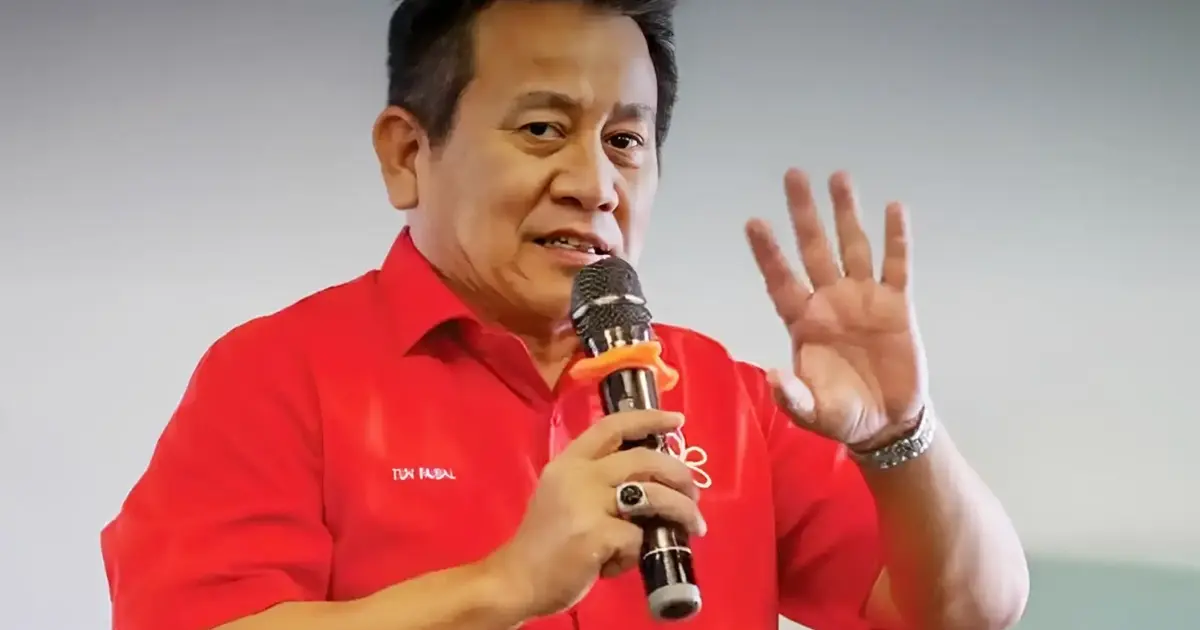
Tun Faisal Ismail Aziz, a senior figure within Bersatu, has raised fundamental questions about the operational structure of Perikatan Nasional, suggesting that the coalition's emergency meetings may lack substantive purpose if their outcomes require further validation. The remarks underscore deepening tensions within the PN alliance over governance procedures and the distribution of decision-making power among its constituent political organisations.
The Bersatu leader's critique focuses on a structural contradiction that appears to plague the coalition's administrative framework. When the Supreme Council convenes to address urgent political matters, the conclusions it reaches ostensibly represent the collective will of PN's affiliated parties. However, if those determinations must subsequently be submitted to each component party for formal approval before implementation, the Supreme Council's authority becomes largely ceremonial. This procedural redundancy raises questions about whether convening such meetings represents an efficient use of political leadership's time and attention.
This challenge reveals underlying friction within PN regarding how decisions ought to be made and by whom. The coalition brought together multiple political parties with distinct organisational cultures and decision-making traditions. Bersatu, derived from a split within the United Malays National Organisation, carries its own institutional practices. Other PN components similarly maintain their own governance structures, creating an inherently complex federation of political entities. Harmonising these different approaches into a coherent coalition apparatus has proven elusive.
The questioning of meeting protocols may reflect broader anxieties about whether PN functions as a genuinely unified political force or merely as a temporary electoral arrangement. Strong coalitions typically exhibit clear hierarchies of decision-making authority, with apex bodies possessing genuine power to bind all constituent members. If PN's Supreme Council cannot issue binding directives, it suggests the coalition remains fragmented at a foundational level, with individual parties maintaining effective veto power over collective decisions.
For Malaysian observers, this dispute illustrates a persistent challenge in coalition politics domestically. Following the 2022 elections, multiple attempts at coalition-building have encountered similar structural weaknesses. Perikatan Nasional emerged as an alternative political bloc to the Barisan Nasional-Pakatan Harapan nexus, yet its internal architecture appears to replicate rather than resolve the coordination problems that have historically plagued Malaysian multi-party alliances. The necessity for re-approval of Supreme Council decisions by component parties suggests PN may be more properly understood as a loose confederation than a tightly integrated coalition.
Tun Faisal's intervention also carries implications for PN's ability to respond rapidly to political developments. Coalition politics in Malaysia often requires swift reactions to unexpected circumstances—leadership changes, defections, or shifts in parliamentary dynamics. If every Supreme Council decision must be recycled through multiple party approval processes, PN's capacity to act decisively diminishes substantially. This structural inefficiency could disadvantage PN against more hierarchically organised rivals, particularly if rapid political manoeuvres become necessary.
The criticism reflects legitimate governance questions that extend beyond partisan considerations. When political coalitions operate effectively, their component parties accept certain constraints on independent action in exchange for the benefits of collective political power. Those benefits might include greater electoral viability, enhanced parliamentary influence, or stronger bargaining positions in government formation. If members retain the ability to reject or modify Supreme Council decisions unilaterally, the coalition structure offers diminished compensatory advantages for accepting those constraints.
Within the broader Southeast Asian context, Malaysian coalition politics offers cautionary lessons. The region has witnessed numerous coalition experiments that faltered due to structural ambiguities regarding decision-making authority and the binding nature of collective agreements. PN's apparent procedural weaknesses place it in a lineage of regional political formations that struggled to operationalise effective internal governance mechanisms.
Bersatu's position in PN adds additional weight to this critique. As one of PN's more significant component parties, Bersatu carries substantial voting strength within coalition deliberations. The party's questioning of procedural legitimacy may indicate dissatisfaction with how PN functions operationally, or it might signal calculation that streamlined decision-making mechanisms would advantage parties like Bersatu with clearer leadership structures relative to other PN components characterised by more distributed authority.
Resolving these governance questions requires PN leadership to clarify whether the coalition intends to function as a genuine unified political entity or maintain its existing structure as a loose alliance of distinct parties. Choosing the former path would necessitate surrendering certain prerogatives to collective control and accepting that Supreme Council decisions become binding. The latter path accepts that PN remains fundamentally a coordination mechanism rather than an integrated organisation. Neither approach is inherently problematic, but the ambiguity between them creates precisely the kind of operational friction that Tun Faisal's remarks identify.
The controversy also highlights that Malaysian political coalitions must address institutional design questions that many take for granted elsewhere. Political science literature on coalition governance emphasises that clarity regarding decision-making authority, binding obligations, and dispute resolution mechanisms fundamentally determines whether coalitions function effectively or descend into procedural paralysis. PN appears to occupy an uncomfortable middle ground, maintaining enough collective structure to require coordination meetings whilst retaining enough individual autonomy to render those meetings somewhat toothless.
%22%2F%3E%3C%2Fpattern%3E%3C%2Fdefs%3E%3Crect%20width%3D%22100%25%22%20height%3D%22100%25%22%20fill%3D%22url(%23ph4paxcg)%22%2F%3E%3Crect%20width%3D%22100%25%22%20height%3D%22100%25%22%20fill%3D%22url(%23ph4paxcp)%22%2F%3E%3Ctext%20x%3D%2250%25%22%20y%3D%2250%25%22%20text-anchor%3D%22middle%22%20dominant-baseline%3D%22central%22%20fill%3D%22rgba(255%2C255%2C255%2C0.95)%22%20font-family%3D%22Georgia%2C%20'Times%20New%20Roman'%2C%20serif%22%20font-weight%3D%22700%22%20font-size%3D%22194%22%20letter-spacing%3D%22-0.02em%22%3EHaaland%3C%2Ftext%3E%3C%2Fsvg%3E)
%22%2F%3E%3C%2Fpattern%3E%3C%2Fdefs%3E%3Crect%20width%3D%22100%25%22%20height%3D%22100%25%22%20fill%3D%22url(%23phrd62g)%22%2F%3E%3Crect%20width%3D%22100%25%22%20height%3D%22100%25%22%20fill%3D%22url(%23phrd62p)%22%2F%3E%3Ctext%20x%3D%2250%25%22%20y%3D%2250%25%22%20text-anchor%3D%22middle%22%20dominant-baseline%3D%22central%22%20fill%3D%22rgba(255%2C255%2C255%2C0.95)%22%20font-family%3D%22Georgia%2C%20'Times%20New%20Roman'%2C%20serif%22%20font-weight%3D%22700%22%20font-size%3D%22320%22%20letter-spacing%3D%22-0.02em%22%3EPM%3C%2Ftext%3E%3C%2Fsvg%3E)