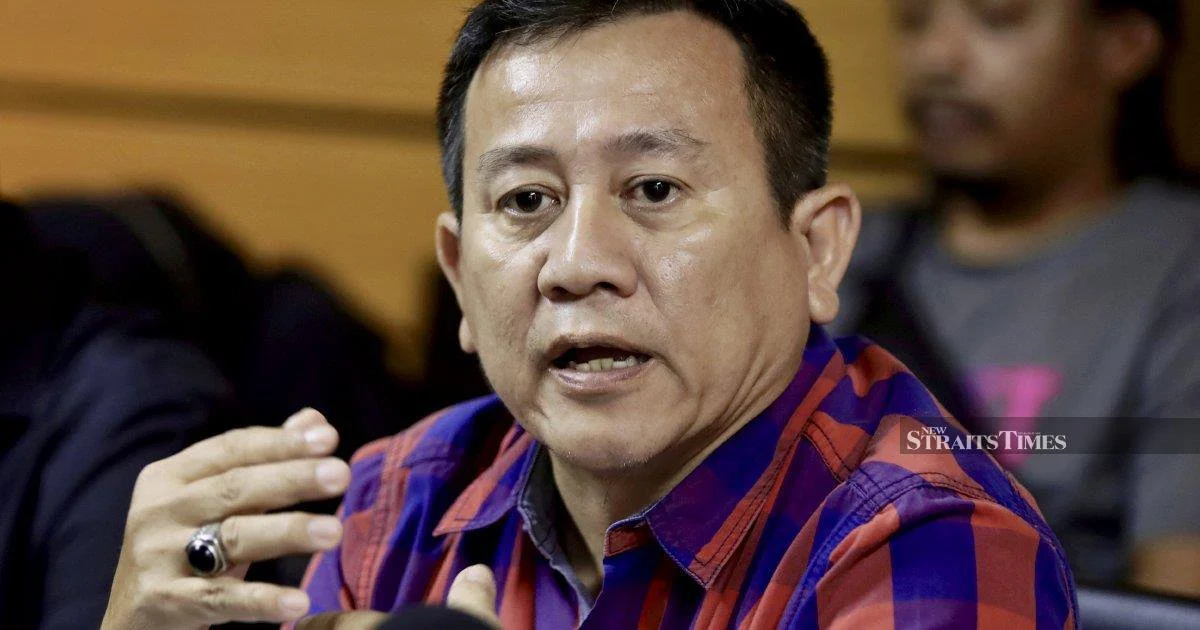
Bersatu has stepped forward to underscore its pivotal role in creating Perikatan Nasional (PN), reasserting the coalition's historical origins as tensions simmer between alliance members. The party leadership has specifically highlighted Tan Sri Muhyiddin Yassin's instrumental contribution to forging PN, signalling that the broader political alliance did not materialise spontaneously but through deliberate political strategy by the party's founder and former prime minister.
The reassertion comes at a delicate juncture for Malaysia's opposition coalition, which has struggled to maintain unified messaging and cohesion across its ideologically diverse membership. Bersatu's public reminder of its foundational role suggests underlying friction with Pas, the Islamic party that has become increasingly dominant within PN's parliamentary presence. This manoeuvre reflects a common dynamic in Malaysian coalition politics: as component parties vie for influence and positioning, they frequently invoke historical grievances or original agreements to bolster their claims to leadership authority.
The timing of Bersatu's statement carries particular weight given the broader political landscape in Malaysia. Since PN's inception, the coalition has undergone significant evolution, with Pas expanding its footprint substantially while Bersatu's membership and parliamentary representation have faced volatility. The party's explicit reference to Muhyiddin Yassin's role appears designed to remind both Pas and the wider Malaysian electorate that institutional memory matters in coalition politics, and that founding contributions should not be overshadowed by subsequent demographic shifts in party strength.
Penikatan Nasional itself emerged during a turbulent period in Malaysian politics, offering an alternative political framework distinct from both the long-governing Barisan Nasional and the opposition Pakatan Harapan. The coalition's formation reflected calculations by multiple parties that their interests could be better served through independent political positioning. Bersatu's invocation of Muhyiddin Yassin's central role underscores how the coalition was conceptualised as something greater than the sum of its individual component parties—a political vehicle with its own identity and strategic vision.
However, the party's need to reiterate this foundational narrative suggests that consensus within PN may be eroding. In Malaysian coalition dynamics, historical claims to legitimacy often become proxies for contemporary power struggles. When parties must actively remind their allies of their foundational contributions, it frequently indicates that current arrangements—whether regarding seat allocation, policy direction, or symbolic leadership—are being contested or perceived as unfair. Bersatu's statement thus signals not merely a historical reminder but a contemporary assertion of relevance within the coalition structure.
The relationship between Bersatu and Pas has long contained both synergies and tensions. Both parties represent alternatives to established political establishments, yet they approach governance and policy from distinctly different philosophical frameworks. Pas's Islamist orientation contrasts with Bersatu's more pragmatic, multi-ethnic political positioning under Muhyiddin Yassin's leadership. These fundamental differences have occasionally erupted into public disputes over policy direction, candidate selection, and strategic decisions affecting the coalition's overall trajectory.
For Malaysian observers and regional political analysts, Bersatu's move carries implications beyond internal coalition management. PN's stability directly affects the broader Malaysian political balance, particularly given its evolving role in parliamentary politics and its potential as an alternative governing coalition. When component parties must publicly defend their institutional standing, it suggests the coalition's underlying social contract may require recalibration. This proves especially consequential in Malaysia's federal system, where state-level coalition governance often precedes or prefigures national political configurations.
The assertion of founding primacy also reflects how Malaysian political parties leverage narrative and historical framing as strategic assets. Rather than engaging in direct confrontation over policy or resource allocation, Bersatu has chosen to invoke institutional origins and conceptual leadership. This rhetorical approach allows the party to stake a claim to PN's overall direction without immediately triggering the kind of open conflict that might precipitate coalition breakdown. It serves simultaneously as a reassurance to party loyalists and a cautionary signal to coalition partners that Bersatu remains a consequential actor in determining PN's future orientation.
Muhyiddin Yassin's continued centrality to Bersatu's political identity underscores the party's reliance on personalistic leadership in Malaysian politics. By anchoring the coalition's legitimacy to Yassin's original vision, Bersatu positions itself as custodian of PN's foundational principles. This strategy helps consolidate support within the party while simultaneously attempting to influence how internal coalition disputes are resolved—invoking the original architect's authority as a means of settling contemporary disagreements.
Looking forward, Bersatu's reaffirmation of its founding role raises questions about whether PN can sustainably accommodate its component parties' divergent ambitions. Coalition politics in Malaysia historically requires constant management and periodic recalibration of power-sharing arrangements. The necessity for Bersatu to publicly assert its historical contributions suggests such recalibration may be overdue, potentially foreshadowing either deeper institutionalisation of PN's coalition framework or increased volatility in internal negotiations over political spoils and strategic direction.
%22%2F%3E%3C%2Fpattern%3E%3C%2Fdefs%3E%3Crect%20width%3D%22100%25%22%20height%3D%22100%25%22%20fill%3D%22url(%23ph3cdu7g)%22%2F%3E%3Crect%20width%3D%22100%25%22%20height%3D%22100%25%22%20fill%3D%22url(%23ph3cdu7p)%22%2F%3E%3Ctext%20x%3D%2250%25%22%20y%3D%2250%25%22%20text-anchor%3D%22middle%22%20dominant-baseline%3D%22central%22%20fill%3D%22rgba(255%2C255%2C255%2C0.95)%22%20font-family%3D%22Georgia%2C%20'Times%20New%20Roman'%2C%20serif%22%20font-weight%3D%22700%22%20font-size%3D%22320%22%20letter-spacing%3D%22-0.02em%22%3EData%3C%2Ftext%3E%3C%2Fsvg%3E)

%22%2F%3E%3C%2Fpattern%3E%3C%2Fdefs%3E%3Crect%20width%3D%22100%25%22%20height%3D%22100%25%22%20fill%3D%22url(%23ph1nj3dg)%22%2F%3E%3Crect%20width%3D%22100%25%22%20height%3D%22100%25%22%20fill%3D%22url(%23ph1nj3dp)%22%2F%3E%3Ctext%20x%3D%2250%25%22%20y%3D%2250%25%22%20text-anchor%3D%22middle%22%20dominant-baseline%3D%22central%22%20fill%3D%22rgba(255%2C255%2C255%2C0.95)%22%20font-family%3D%22Georgia%2C%20'Times%20New%20Roman'%2C%20serif%22%20font-weight%3D%22700%22%20font-size%3D%22151%22%20letter-spacing%3D%22-0.02em%22%3ETraveller%3C%2Ftext%3E%3C%2Fsvg%3E)