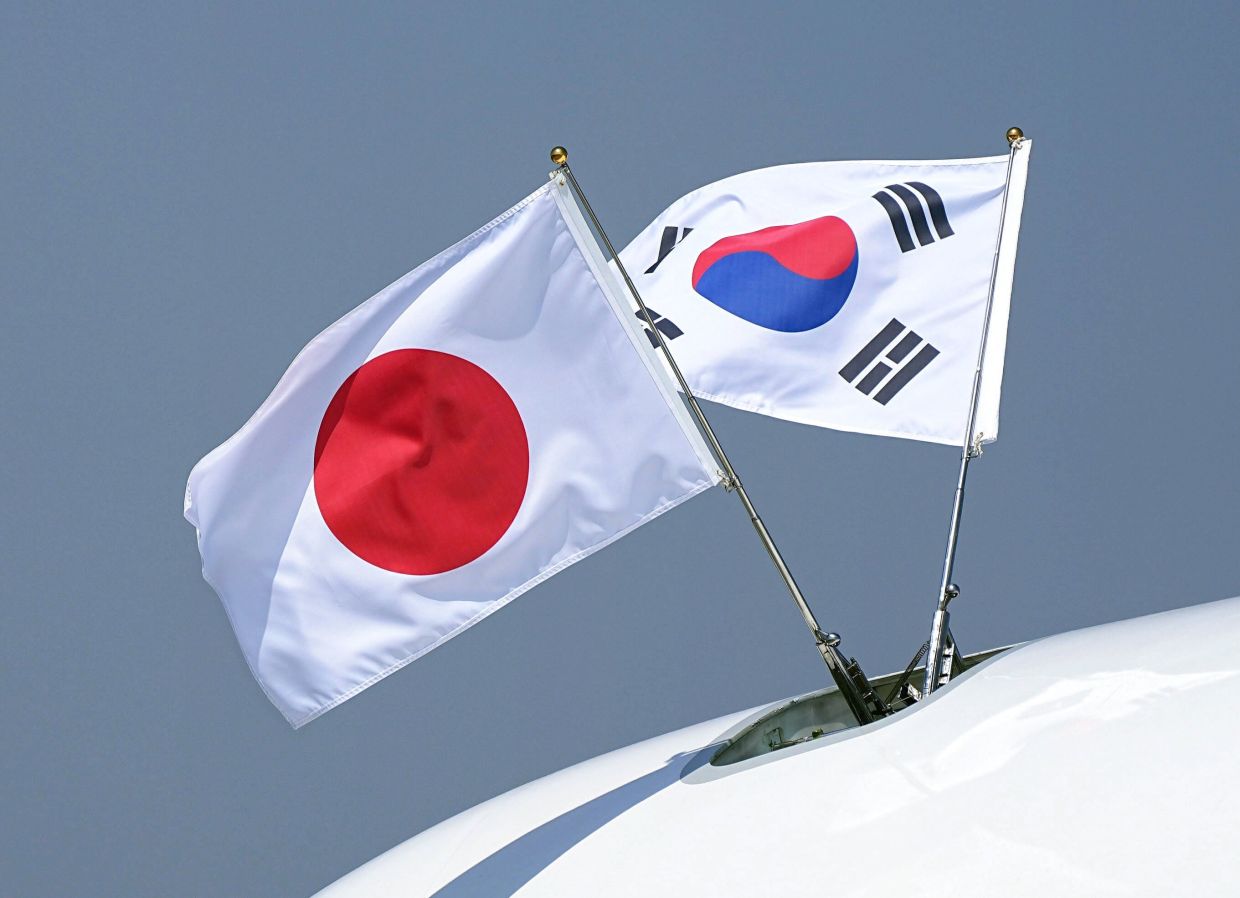
Strategic elites in Japan and South Korea remain largely opposed to nuclear weapons development, according to a comprehensive survey released this week by the Center for Strategic and International Studies, yet this consensus could unravel swiftly should either nation or a regional rival alter its nuclear calculus. The findings underscore a fragile equilibrium in Northeast Asia's security architecture, where public sentiment diverges sharply from elite opinion in South Korea, and where perceptions of American commitment play an outsized role in policy preferences.
The survey, conducted through October and led by CSIS President of Geopolitics and Foreign Policy Victor Cha and Senior Adviser Kristi Govella, sampled current and former government officials, parliamentarians, academics, think tank experts, and corporate leaders across both countries. Results showed that approximately 75 per cent of South Korean strategic elites and nearly 80 per cent of their Japanese counterparts either oppose nuclear weapons acquisition or remain uncertain about pursuing such a path. These proportions suggest a substantial measure of restraint among the policy-making classes most likely to influence government decisions on this sensitive issue.
The apparent consensus among elites masks a striking disconnection in South Korea between what leaders think and what the broader public wants. A 2024 poll by the Chey Institute for Advanced Studies and Gallup found that over 72 per cent of ordinary South Koreans favour their country obtaining nuclear weapons—a gap of nearly 50 percentage points compared to elite opinion. Japan presents a markedly different picture; Govella noted that public opinion there aligns more closely with elite sentiment, with roughly 80 per cent of Japanese citizens also opposing nuclear armament. This suggests that media narratives about mounting momentum for Japanese nuclear weapons among decision-makers have likely overstated the actual appetite for such a shift within Tokyo's establishment.
Yet the survey's most troubling finding concerns the brittle nature of this restraint. Researchers determined that if either Japan or South Korea changed course on nuclear weapons, support for similar moves in the neighbouring country could rise precipitously. The implications for regional stability are serious, as such a cascade effect might outpace the destabilizing potential of any reduction in United States troop levels—a scenario that experts at CSIS flagged as potentially severe for the military balance across Northeast Asia. The mechanism resembles a security dilemma, wherein one nation's perceived defensive action spurs others toward offsetting measures.
Different motivations drive those who do support nuclear weapons in each country. South Korean advocates are primarily concerned with deterring North Korea and managing the existential threat posed by Pyongyang's own arsenal. Japanese proponents, by contrast, worry chiefly about the durability and credibility of the American security umbrella. This distinction matters considerably: it suggests that reassuring Japanese elites requires sustained signals of Washington's long-term commitment to its alliance obligations, whereas addressing South Korean anxieties demands credible deterrence against Pyongyang. The United States has responded by deepening bilateral nuclear cooperation discussions, holding meetings in Seoul and Tokyo this month to advance consultations on deterrence initiatives.
China has seized on these diplomatic manoeuvres as evidence of Japanese remilitarization, repeatedly accusing Tokyo of pursuing nuclear weapons as part of a broader geopolitical realignment. Beijing's rhetoric adds pressure to the already tense environment, potentially accelerating the very proliferation dynamics that policymakers in both capitals hope to prevent. The Chinese government has also maintained its stance of refusing to join any arms control framework that would constrain its own nuclear modernization programme, further complicating multilateral efforts to manage regional weapons competition.
Meanwhile, the United States is intensifying its own nuclear posture in ways that could influence calculations across Asia. Brandon Williams, the Department of Energy's Under Secretary for Nuclear Security, announced that the US plans to spend USD$600 million on artificial intelligence this year to accelerate the digitalisation of nuclear weapons design and production, aiming to compress the current 10–15 year development cycle for new weapons. The acceleration of American nuclear capabilities serves Washington's strategic competition with China, but it also potentially heightens regional nervousness and could create additional impetus for Japan and South Korea to reconsider their non-nuclear postures.
Experts at CSIS have also argued that the United States should reconsider its policy of arming hypersonic weapons exclusively with conventional warheads, and instead develop nuclear-tipped hypersonic missiles. Heather Williams, director of the CSIS project on nuclear issues, contended that nuclear hypersonic weapons should be part of America's force mix to complicate adversary calculations and expand Washington's strategic options. This proposal directly relates to the survey findings, as Williams noted that a more credible and diverse American nuclear arsenal would strengthen reassurance to allies—and research suggests that adequately assured allies are less likely to pursue independent nuclear programmes.
The survey data align with this reasoning: allies confident in US security guarantees appear less driven to acquire their own nuclear deterrents. This logic underpins much of Washington's recent diplomatic outreach to Tokyo and Seoul. Yet the effectiveness of this strategy depends on sustained American commitment and continuous demonstration of resolve. Any suggestion that Washington might reduce its presence or downgrade its commitment to regional defence could quickly shift the political landscape in both countries, potentially transforming the survey's current consensus into majority support for nuclear weapons development.
For Malaysia and other Southeast Asian nations, these developments carry important implications. A nuclear-armed Japan or South Korea would fundamentally alter the security dynamics of East and Southeast Asia, complicating regional stability and potentially drawing the Association of Southeast Asian Nations into new strategic calculations. The region has long benefited from the security architecture underpinned by American primacy and non-nuclear status of key allies. Any breakdown of that arrangement could accelerate broader arms buildups across the Indo-Pacific and elevate the risk of miscalculation during periods of tension.
The path forward requires sustained diplomatic engagement among the United States, Japan, and South Korea to maintain confidence in existing security arrangements while addressing each nation's distinct security concerns. For Japan, this means convincing policymakers that American commitment is unwavering; for South Korea, it demands credible mechanisms to deter North Korean aggression without resort to nuclear weapons. The failure to manage these dynamics risks unleashing a cascade of proliferation across Asia, with consequences extending far beyond the region itself.