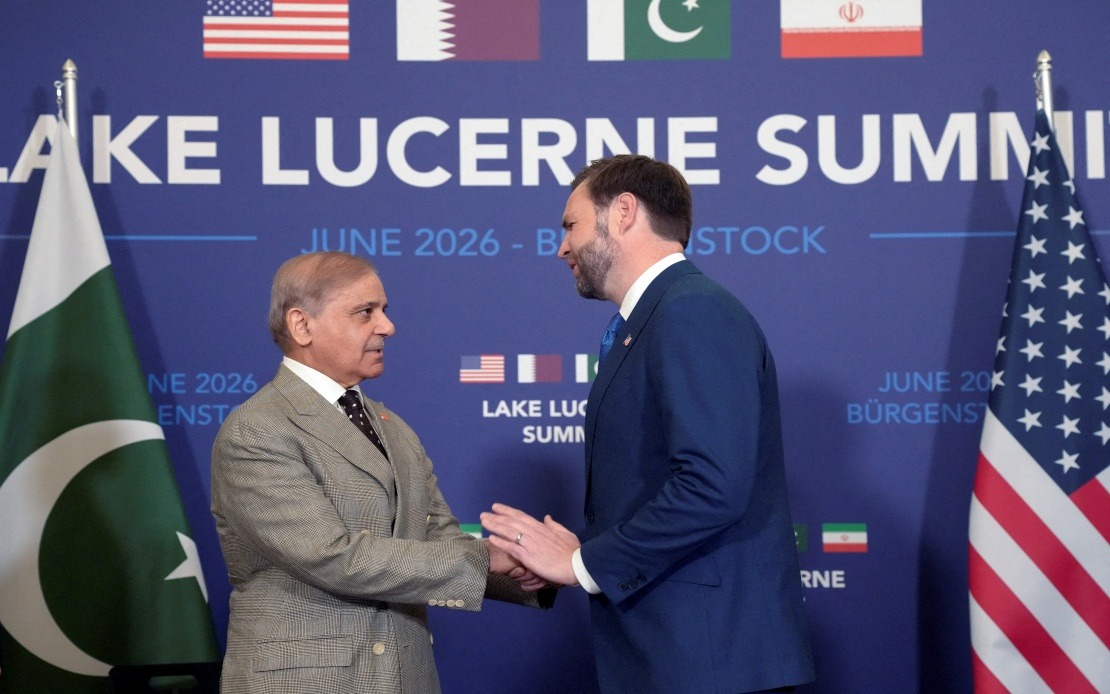
A significant diplomatic gathering took place at the Swiss mountain resort of Burgenstock on Sunday, bringing together top-level representatives from the United States and Pakistan in a bid to strengthen bilateral relations and coordinate positions on regional security concerns. Vice President JD Vance welcomed Pakistan's Prime Minister Shehbaz Sharif and Pakistan Army Chief Field Marshal Asim Munir, alongside US special envoys Steve Witkoff and Jared Kushner, according to reports from the White House press pool. The timing of this meeting, conducted on the sidelines of broader international negotiations, underscores the strategic importance both Washington and Islamabad place on maintaining alignment as tensions in the Middle East evolve.
The encounter occurred as technical-level delegations representing Iran, the United States, and mediating nations Pakistan and Qatar prepared to commence substantive negotiations at the same venue. These closed-door talks were designed to advance arrangements stemming from a significant development that unfolded just days earlier: the signing of a memorandum between Iran and the US that formally concluded the military conflict that had erupted on February 28. The agreement represents a major diplomatic shift in a region where the US and Iran have remained at loggerheads for decades, and it carries profound implications for Pakistan, which shares a long border with Iran and plays a crucial mediating role in the region.
The memorandum itself contains several pivotal provisions that will reshape the geopolitical landscape. Central to the agreement is a sequenced withdrawal of US military pressure, specifically the lifting of America's naval blockade that has severely constrained Iran's maritime commerce. In reciprocal fashion, Iran has committed to restoring shipping operations in the Strait of Hormuz, a waterway of immense global significance through which roughly one-third of world seaborne oil passes daily. For Southeast Asian energy-dependent economies like Malaysia, Thailand, and Indonesia, the reopening of this critical passage promises relief from disrupted supply chains and potentially moderating energy costs that have rippled through regional inflation.
Nuclear dimensions of the accord represent a watershed moment in international non-proliferation efforts. Tehran has formally committed to forgoing the acquisition of nuclear weapons, a concession that resolves one of the most contentious issues in decades of diplomatic wrangling. However, the detailed architecture governing Iran's civilian nuclear programme remains to be finalised through a separate negotiating track. The two sides have established a 60-day window to conclude these discussions, a compressed timeline that reflects the urgency both parties perceive in cementing the broader settlement before domestic political opposition in either capital can derail progress.
For Iran, the ultimate prize lies in the comprehensive lifting of economic sanctions that have throttled its oil exports and isolated its financial sector from global markets. This prospect carries secondary effects throughout Asia, where Iranian oil once supplied a significant portion of regional demand before sanctions implementation. The restoration of Iranian exports could introduce fresh competition into Asian energy markets, potentially exerting downward pressure on crude prices—a development welcome to import-dependent nations but challenging for exporters like Malaysia and Brunei. The sanctions relief also portends increased Iranian commercial and diplomatic engagement with Asian economies, creating both opportunities and complications for nations seeking to balance ties with Washington against economic opportunities in Tehran.
Pakistan's elevation to a prominent role in these negotiations reflects its unique geopolitical position. As a nation contending with complex relationships with both Iran and the United States, and as a country whose stability hinges significantly on regional peace, Islamabad has positioned itself as an indispensable intermediary. The presence of Prime Minister Sharif and Field Marshal Munir—representing both civilian and military dimensions of Pakistani governance—suggests that these discussions encompass not merely diplomatic niceties but substantive matters of strategic interest to the Pakistani state. The country's military establishment, in particular, maintains longstanding concerns about instability emanating from Iran-US confrontation, as any escalation in that theatre could destabilise Pakistan's already fragile security environment.
The decision to conduct these talks in neutral Switzerland, rather than in either regional capital or Washington, carries symbolic weight. It signals commitment to an equitable, good-faith negotiating process unmarred by the optics of either side hosting the other in its own territory. Burgenstock, a resort destination rather than a formal diplomatic venue, further underscores the informal, exploratory character of these exchanges—a recognition that building trust after decades of hostility requires space for candid conversation beyond the constraints of ceremonial diplomacy.
For the broader Asia-Pacific region, the ramifications of these negotiations extend beyond the immediate Iran-US context. Pakistan's stabilisation through reduced external security pressures could allow it to redirect resources toward economic development and countering internal militancy. The normative shift toward negotiated resolution of major international disputes carries resonance for other regional hotspots where military confrontation and economic coercion have dominated recent years. Malaysia and other Southeast Asian nations, many of which have invested diplomatically in maintaining balanced relationships across the Indo-Pacific, may find new space for economic cooperation and reduced security anxieties as Middle Eastern tensions abate.
The technical negotiations that commenced on Sunday will determine whether the broad political agreement can withstand the implementation challenges ahead. Nuclear verification protocols, sanctions unwinding mechanisms, and timeline sequencing all present opportunities for disagreement even among parties committed to the accord's overall framework. Pakistan's continued involvement in these talks positions Islamabad as a custodian of the peace process, a role that demands sophisticated diplomacy and sustained commitment from both Sharif's civilian administration and Munir's military hierarchy. The coming weeks will reveal whether the momentum established at Burgenstock can carry through to a durable, verifiable settlement that reshapes regional security architecture for years to come.
%22%2F%3E%3C%2Fpattern%3E%3C%2Fdefs%3E%3Crect%20width%3D%22100%25%22%20height%3D%22100%25%22%20fill%3D%22url(%23ph4paxcg)%22%2F%3E%3Crect%20width%3D%22100%25%22%20height%3D%22100%25%22%20fill%3D%22url(%23ph4paxcp)%22%2F%3E%3Ctext%20x%3D%2250%25%22%20y%3D%2250%25%22%20text-anchor%3D%22middle%22%20dominant-baseline%3D%22central%22%20fill%3D%22rgba(255%2C255%2C255%2C0.95)%22%20font-family%3D%22Georgia%2C%20'Times%20New%20Roman'%2C%20serif%22%20font-weight%3D%22700%22%20font-size%3D%22194%22%20letter-spacing%3D%22-0.02em%22%3EHaaland%3C%2Ftext%3E%3C%2Fsvg%3E)
%22%2F%3E%3C%2Fpattern%3E%3C%2Fdefs%3E%3Crect%20width%3D%22100%25%22%20height%3D%22100%25%22%20fill%3D%22url(%23phrd62g)%22%2F%3E%3Crect%20width%3D%22100%25%22%20height%3D%22100%25%22%20fill%3D%22url(%23phrd62p)%22%2F%3E%3Ctext%20x%3D%2250%25%22%20y%3D%2250%25%22%20text-anchor%3D%22middle%22%20dominant-baseline%3D%22central%22%20fill%3D%22rgba(255%2C255%2C255%2C0.95)%22%20font-family%3D%22Georgia%2C%20'Times%20New%20Roman'%2C%20serif%22%20font-weight%3D%22700%22%20font-size%3D%22320%22%20letter-spacing%3D%22-0.02em%22%3EPM%3C%2Ftext%3E%3C%2Fsvg%3E)