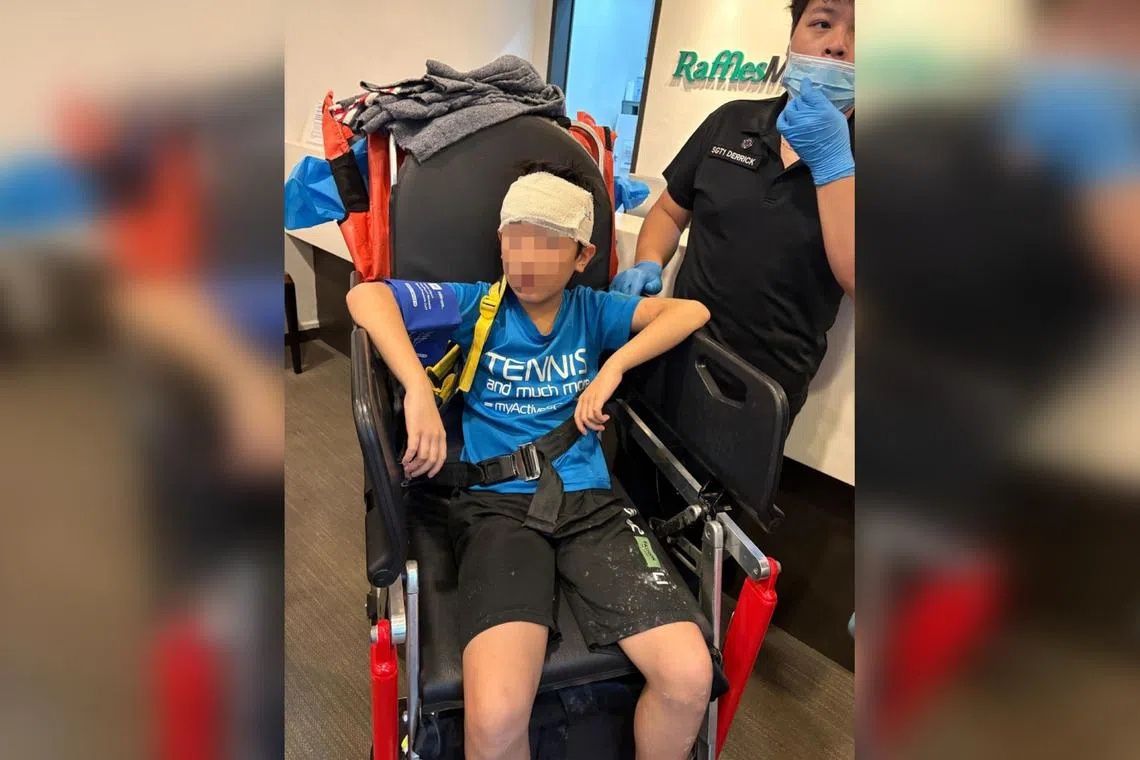
A child was rushed to hospital after a signboard gave way at a Food Junction restaurant located within Rivervale Mall in Singapore's Sengkang district on Saturday morning, prompting an immediate response from emergency services and raising fresh concerns about structural safety in public shopping facilities across the island state.
The Singapore Civil Defence Force confirmed that it received a distress call at approximately 10.30am on June 20 and transported one person to KK Women's and Children's Hospital for medical evaluation and treatment. Details about the child's condition following hospital assessment remain limited, though a Food Junction representative indicated the youngster has since returned home and is recovering from the incident.
Food Junction, which operates numerous quick-service dining outlets across Singapore and the region, acknowledged the accident in a statement released to the media. The company emphasised that its team mobilised swiftly upon learning of the emergency, coordinating with both Rivervale Mall's management and professional emergency responders to attend to the injured customer. The response highlights how incidents within shopping malls trigger coordinated protocols involving multiple stakeholders, from property management teams to healthcare providers.
Following the collapse, Food Junction undertook a comprehensive review and formal investigation to establish what caused the structural failure. The company stated that it has subsequently reinforced safety protocols across its operations, ensuring full compliance with requirements laid down by the relevant Singapore authorities. Such measures typically include improved signage installation standards, regular maintenance schedules, and enhanced structural inspections. The company added an apology for the distressing situation, acknowledging the concern generated among customers and the public.
Operations at the Food Junction outlet within the mall have resumed normalcy, indicating that authorities cleared the location for continued business once immediate hazards were addressed. This decision suggests the collapse was localised to the specific signboard rather than indicative of broader structural deficiencies affecting the entire establishment. The mall itself continued functioning, with other retailers and outlets operating without interruption.
Social media footage distributed on TikTok provided members of the public with visual documentation of the scene. Videos captured debris scattered across the entrance to the Food Junction outlet, with portions of the food court's ceiling appearing partially compromised. Onlookers in the footage maintained safe distance from the collapsed materials, reflecting public awareness of the ongoing hazard posed by unstable structures immediately after failure.
The outlet operates on the ground floor of Rivervale Mall, a location that typically experiences high foot traffic during operating hours. Signage failures in high-traffic zones carry heightened risk potential due to the volume of customers moving through such spaces. This geographical detail underscores why swift emergency response becomes critical in such incidents—ground floor collapses can affect multiple people simultaneously, particularly during peak shopping periods.
The Straits Times, Singapore's leading newspaper, confirmed the Food Junction location's position within the mall following on-site checks and subsequently sought additional details from both Rivervale Mall's management team and Singapore's Building and Construction Authority, the statutory body responsible for regulating construction standards and structural safety across the republic. Such regulatory oversight systems represent an important layer of consumer protection in densely built urban environments where shopping complexes host thousands of visitors daily.
The incident carries implications for broader Southeast Asian retail safety standards. Many shopping malls across Malaysia, Indonesia, and other regional economies operate under similar structural conditions and visitor volumes. While this particular incident occurred in Singapore, where building codes rank among Asia's most stringent, the episode serves as a reminder that even well-regulated jurisdictions experience occasional safety failures. Retailers throughout the region may review their own signage installation and maintenance protocols in response to heightened public awareness generated by this event.
For Malaysian shoppers accustomed to visiting both domestic and cross-border retail facilities, such incidents underscore the importance of remaining alert to one's surroundings within commercial spaces. While catastrophic failures remain statistically uncommon given the sheer number of shopping visits undertaken daily across the region, the principle of structural vigilance applies universally. Parents and guardians, particularly those accompanying children in crowded malls, benefit from awareness of potential hazards and proximity to emergency exits.
This accident also illustrates how social media now plays a substantive role in documenting public safety incidents. Video footage shared instantaneously through platforms like TikTok reaches far wider audiences than traditional media alone, generating immediate public discussion about structural standards and risk management. Such transparency can accelerate official responses and motivate businesses to implement enhanced safety measures to protect both customers and their corporate reputation.
The coordination between Food Junction, mall management, emergency responders, and medical facilities demonstrated in this instance reflects established protocols for managing such crises. However, the incident prompts reflection on whether regular audits of signage structural integrity occur with sufficient frequency across retail establishments. Preventative maintenance regimens that identify loose or corroding fixtures before catastrophic failure becomes possible represent the most effective safety strategy, ultimately protecting both the public and businesses themselves from the human and financial costs of preventable accidents.
%22%2F%3E%3C%2Fpattern%3E%3C%2Fdefs%3E%3Crect%20width%3D%22100%25%22%20height%3D%22100%25%22%20fill%3D%22url(%23ph3cdu7g)%22%2F%3E%3Crect%20width%3D%22100%25%22%20height%3D%22100%25%22%20fill%3D%22url(%23ph3cdu7p)%22%2F%3E%3Ctext%20x%3D%2250%25%22%20y%3D%2250%25%22%20text-anchor%3D%22middle%22%20dominant-baseline%3D%22central%22%20fill%3D%22rgba(255%2C255%2C255%2C0.95)%22%20font-family%3D%22Georgia%2C%20'Times%20New%20Roman'%2C%20serif%22%20font-weight%3D%22700%22%20font-size%3D%22320%22%20letter-spacing%3D%22-0.02em%22%3EData%3C%2Ftext%3E%3C%2Fsvg%3E)

%22%2F%3E%3C%2Fpattern%3E%3C%2Fdefs%3E%3Crect%20width%3D%22100%25%22%20height%3D%22100%25%22%20fill%3D%22url(%23ph1nj3dg)%22%2F%3E%3Crect%20width%3D%22100%25%22%20height%3D%22100%25%22%20fill%3D%22url(%23ph1nj3dp)%22%2F%3E%3Ctext%20x%3D%2250%25%22%20y%3D%2250%25%22%20text-anchor%3D%22middle%22%20dominant-baseline%3D%22central%22%20fill%3D%22rgba(255%2C255%2C255%2C0.95)%22%20font-family%3D%22Georgia%2C%20'Times%20New%20Roman'%2C%20serif%22%20font-weight%3D%22700%22%20font-size%3D%22151%22%20letter-spacing%3D%22-0.02em%22%3ETraveller%3C%2Ftext%3E%3C%2Fsvg%3E)