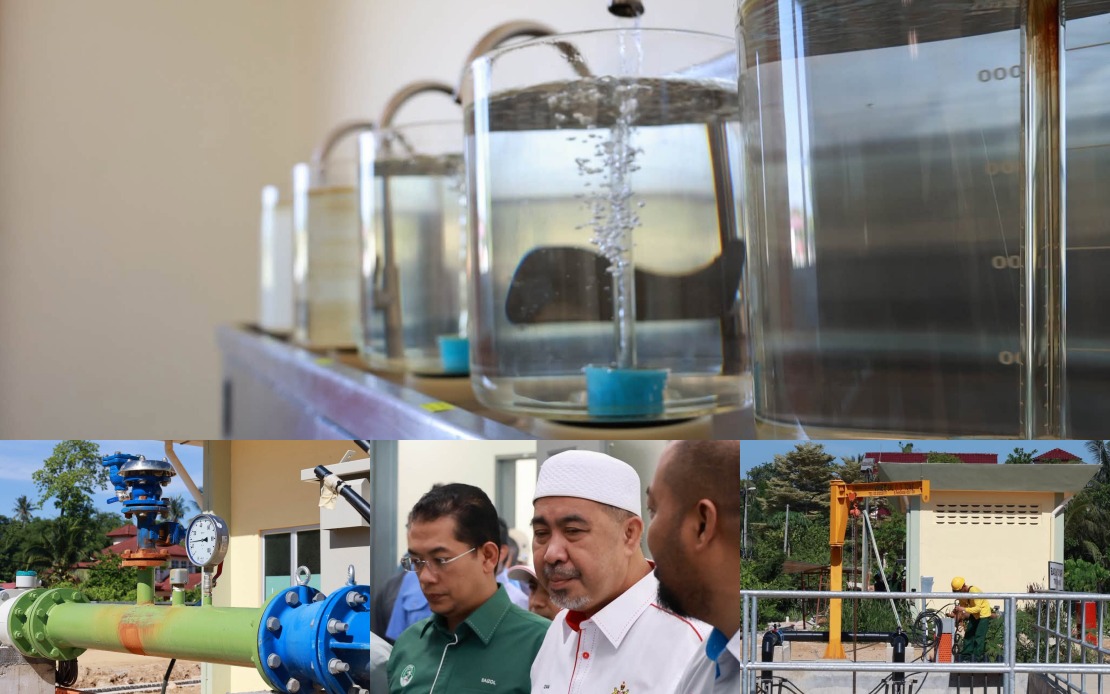
The Chicha 2 Water Treatment Plant in Pasir Hor, on the outskirts of Kota Bharu, is approaching its final stages of construction and will commence full operations next month, marking a significant milestone for Kelantan's water infrastructure development. The facility, which has consumed RM54.98 million in public investment since its launch in 2024, has reached 97 per cent completion, positioning it to become operational in September and immediately begin delivering treated water to thousands of households across the region.
Datak Dr Izani Husin, who heads the State Public Works, Infrastructure, Water and Rural Development Committee, revealed that the plant will directly benefit more than 13,000 consumers residing in Pasir Hor, Telipot, Kota Seribong, Mulong and Tunjong. The geographical spread of beneficiaries underscores the strategic importance of this infrastructure investment to rural and semi-rural communities in Kelantan that have historically faced challenges in accessing reliable water supplies. The plant's location in Pasir Hor makes it a central hub for water distribution across multiple administrative divisions in the state.
Designed with a daily production capacity of 20 million litres, the Chicha 2 WTP represents a substantial addition to Kelantan's treated water supply infrastructure. The facility employs an innovative approach to water sourcing by tapping into groundwater reserves accessed through a 100-metre-deep excavation process, combined with an aeration system that ensures water quality standards are met. This groundwater-based model provides an alternative to conventional surface water sources and offers greater resilience against seasonal fluctuations and environmental contamination that may affect river-based supplies.
The aeration water treatment methodology deployed at Chicha 2 represents a technological first for Kelantan, according to state officials. The technique, which improves water quality through oxidation and removal of dissolved gases and impurities, has demonstrated efficiency in similar applications across other Malaysian states and Southeast Asia. Officials have indicated that the success of this approach may encourage its adoption at other water treatment facilities throughout Kelantan, potentially creating a standardised solution for the state's broader water quality challenges.
One particularly significant outcome of the plant's activation will be the reactivation of approximately 10,000 consumer accounts that have remained dormant across the five districts. These inactive accounts represent households and businesses that previously lacked access to reliable treated water supplies or had discontinued service due to supply inconsistencies. The reopening of these accounts suggests that community confidence in water supply reliability has improved sufficiently to warrant renewed demand, reflecting the tangible impact of infrastructure investments on public perception and adoption of utility services.
Kelantan's persistent water supply challenges stem from multiple systemic issues that extend beyond simple supply capacity constraints. The state currently experiences a non-revenue water rate exceeding 50 per cent, meaning that more than half of treated water produced is lost before reaching consumers. This extraordinarily high loss rate reflects widespread infrastructure deterioration, including corroded and leaking pipes that have aged beyond optimal functional lifespan, recurring underground pipe ruptures that occur without warning, and malfunctioning water meters that fail to accurately measure consumption or detect leaks. These infrastructure deficiencies represent accumulated maintenance backlogs stretching across decades.
State authorities have articulated an ambitious timeline for comprehensively addressing Kelantan's water supply deficiencies, targeting 2030 as the year when these longstanding issues should be fully resolved. This decade-long framework acknowledges that water infrastructure rehabilitation cannot be accomplished through single large projects alone but demands a coordinated, multi-phased approach involving numerous simultaneous initiatives. The strategy encompasses construction of additional water treatment plants, systematic pipe replacement programmes, network rehabilitation in high-loss areas, and installation of advanced metering infrastructure to improve demand management and leak detection.
The phased implementation approach reflects both budgetary constraints and the practical realities of large-scale infrastructure work in a state spanning geographically dispersed settlements with varying topographies and existing infrastructure conditions. By spreading investments across multiple years, authorities can prioritise interventions in areas experiencing the most acute supply shortages while simultaneously rebuilding network capacity to handle current and future demand. This methodology also allows for incorporation of lessons learned from completed projects into subsequent phases, improving overall project outcomes and cost efficiency.
Reducing non-revenue water from its current levels to internationally acceptable standards below 15 per cent will require substantial capital investment in pipe replacement and network modernisation. Beyond the physical infrastructure work, achieving this reduction demands implementation of better maintenance protocols, more frequent monitoring systems, and enhanced coordination between state water authorities and local councils responsible for street management and construction permits that may inadvertently damage underground utilities. The complexity of this undertaking explains why Kelantan authorities have emphasised the need for public patience and understanding as improvements unfold gradually.
For Malaysian water consumers facing similar challenges in other states and regions, the Chicha 2 project offers both encouraging precedent and sobering lessons about infrastructure timelines. The project demonstrates that investment in groundwater-based treatment systems can provide viable solutions to water supply limitations, particularly in areas where surface water resources are insufficient or subject to contamination. Simultaneously, the decision to frame 2030 as the realistic target year for comprehensive resolution suggests that states across Malaysia should prepare for extended investment cycles and acknowledge that eliminating water supply deficiencies accumulated over decades requires sustained commitment and substantial financial resources.
The successful completion of Chicha 2 by September will provide immediate relief to communities that have endured chronic water supply inconsistencies, potentially restoring service to thousands of dormant consumer accounts and improving overall supply stability across the Kota Bharu region. However, this single facility, while significant, represents only one component within a broader strategic framework that state authorities are implementing to systematically address Kelantan's water infrastructure challenges. The project's completion will serve as both a tangible achievement and a reminder of the ongoing work required to bring the state's water systems to contemporary standards of reliability and efficiency.

