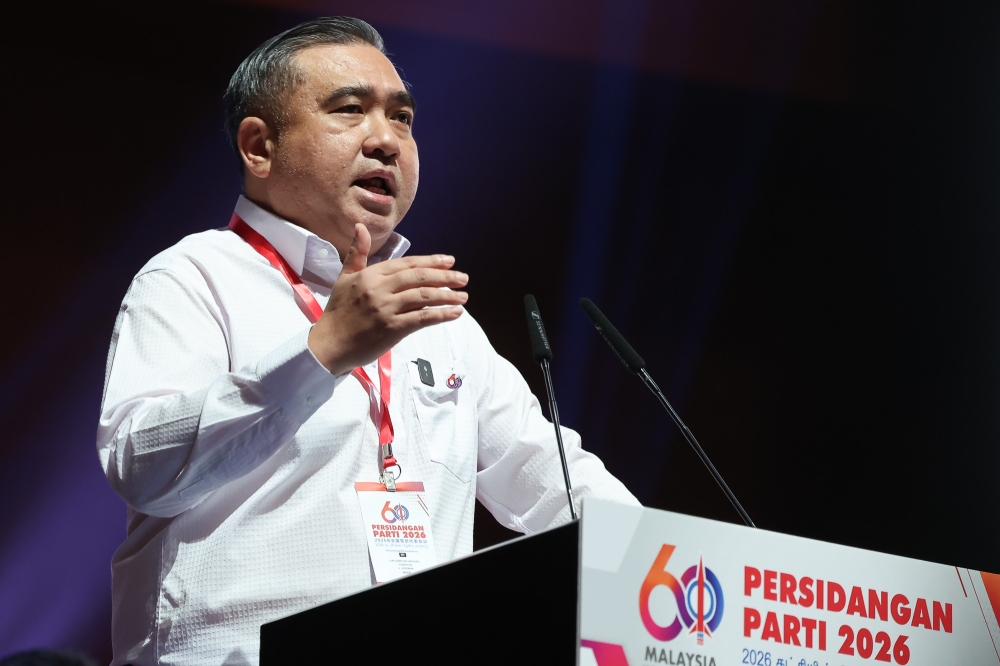
The Democratic Action Party has committed itself entirely to supporting Prime Minister Datuk Seri Anwar Ibrahim's plan to abolish AUKU, the administrative law that has long constrained civil servants' political engagement and freedoms of expression. However, party leadership warns that removing this decades-old restriction represents merely the opening salvo in a larger campaign to reshape Malaysia's governance structures and democratic practices.
Transport Minister Anthony Loke, speaking in Putrajaya on Friday, articulated the party's position with characteristic directness. While DAP views the abolition of AUKU as a positive development aligned with its longstanding commitment to democratic expansion, the party contends that dismantling this single piece of legislation cannot address the full scope of institutional rigidities that constrain Malaysia's civil service and broader political system. The remarks underscore growing recognition within the government coalition that piecemeal amendments, however welcome, fall short of the comprehensive restructuring that Malaysia's administrative machinery requires.
AUKU, formally known as the Administrative Regulations (Political Activities) Ordinance 1953, has shaped Malaysian civil service culture for seven decades. The law essentially cordons off the 1.6 million strong civil service workforce from participation in partisan politics, restricting their rights to campaign, hold office, or engage in overt political activity. While designed originally to insulate public administration from political interference and maintain institutional neutrality, the statute has become emblematic of constraints on individual freedoms and expressions that activists, reform groups, and now increasingly mainstream political parties view as outdated for a maturing democracy.
Anwar's initiative to abolish AUKI reflects broader momentum within his administration toward liberalizing governance structures. Since taking office in late 2022, the Prime Minister has championed several democratic reforms, from institutional transparency measures to legislative updates on sedition and other restrictive ordinances. The AUKI abolition fits within this trajectory, though it remains subject to parliamentary procedures and potential constitutional considerations that could complicate its passage.
Loke's insistence that reform must transcend mere AUKU abolition points toward DAP's longer-term vision for Malaysian governance transformation. The party has consistently advocated for restructuring how the civil service operates, how institutional hierarchies function, and how power concentrates within Malaysia's administrative apparatus. From this perspective, allowing civil servants to vote, campaign, and express political preferences represents necessary but insufficient reform. The conversation must expand to encompass civil service remuneration structures, promotion pathways that reward merit rather than seniority, modernization of archaic administrative procedures, and mechanisms ensuring genuine accountability to the public.
DAP's position also reflects its minority status within the ruling Pakatan Harapan coalition. As the predominantly Chinese-supported party in an alliance where Keadilan and PKR hold greater numerical strength, DAP leverages its vocal advocacy for institutional modernization and democratic expansion to maintain relevance and deliver tangible benefits to its constituency. Supporting AUKU abolition while simultaneously demanding broader reforms allows the party to demonstrate both coalition loyalty and independent principled stance—a delicate political balance that DAP leadership has grown skilled at maintaining.
The civil service itself constitutes a complex stakeholder in this debate. Serving as both administrator and potential beneficiary of AUKU abolition, civil servants have expressed mixed perspectives. Some view removal of political restrictions as overdue recognition of citizenship rights and personal freedoms. Others worry that opening civil service ranks to partisan activity could undermine institutional independence, create patronage vulnerabilities, or introduce political factionalism into administrative hierarchies. These concerns, while sometimes overstated, reflect legitimate questions about how Malaysia manages the relationship between political neutrality and democratic participation.
From a regional perspective, Malaysia's experience with AUKU abolition may offer instructive lessons for neighbouring democracies grappling with similar questions about civil service politicization. Singapore, Indonesia, and Thailand each maintain varying restrictions on state employee political activity, reflecting different historical experiences and institutional philosophies. Malaysia's approach to gradual liberalization, undertaken through democratic processes and coalition negotiation rather than imposed through crisis or external pressure, demonstrates one model for democratic deepening within established administrative systems.
Implementation poses practical challenges that extend beyond legislative passage. If AUKU is abolished, Malaysia requires new protocols governing potential conflicts of interest, rules preventing partisan pressure on administrative decisions, and safeguards ensuring that civil service neutrality persists even as individual civil servants gain political freedom. These implementation questions remain largely unaddressed in current public discourse, though they will prove critical to whether AUKU abolition produces genuine institutional improvement or inadvertently compromises civil service integrity.
Looking forward, DAP's demand for accompanying reforms alongside AUKU abolition will likely shape how the government structures and sequences policy changes. Whether this translates into comprehensive civil service modernization or remains symbolically important but practically limited depends on broader coalition dynamics and the Prime Minister's political capital—itself contingent on managing competing demands from different coalition partners with divergent reform priorities and constituencies.

