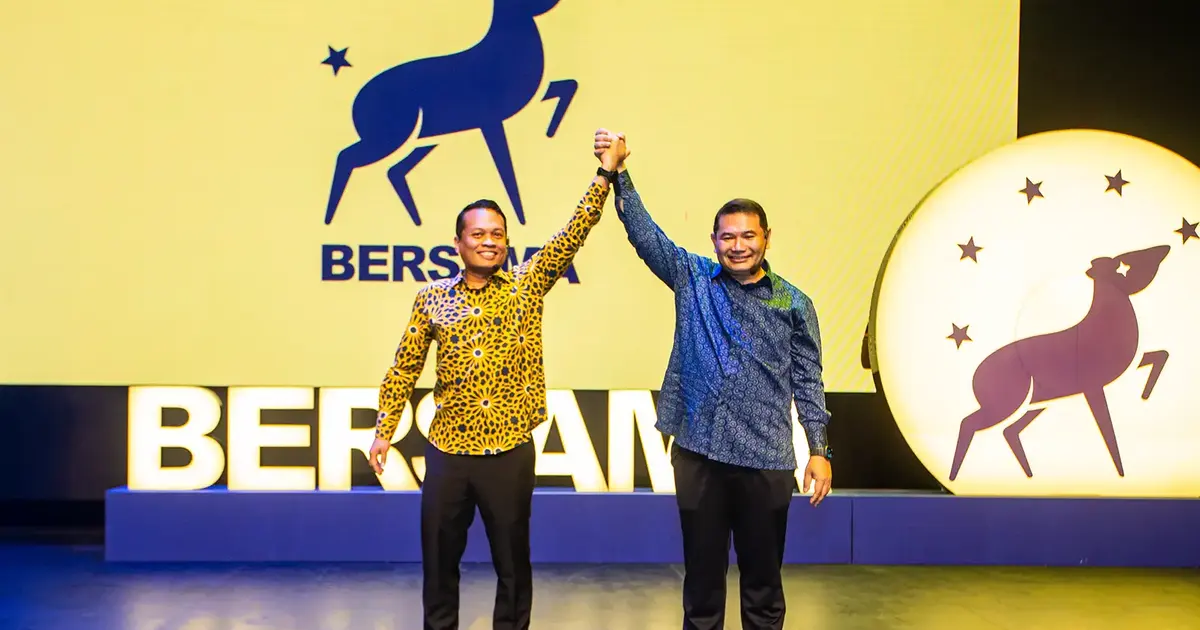
Bersama is drawing substantial interest from former senior civil servants willing to contest in the forthcoming Johor and Negeri Sembilan state elections, according to party leadership. The development reflects a strategic recruitment push by the relatively nascent political party to field candidates with government experience and established administrative credentials.
The influx of interest from retired bureaucrats represents a calculated effort to enhance Bersama's credibility in state-level contests. Former civil servants bring institutional knowledge, administrative pedigree, and established networks that can prove valuable in electoral campaigns, particularly in constituencies where voters prioritise competent governance. The party's appeal to this demographic suggests confidence in the marketability of experienced administrators as political candidates.
Johor and Negeri Sembilan represent strategically significant battlegrounds for Bersama's electoral ambitions. Both states present distinct political dynamics: Johor remains a traditionally strong Barisan Nasional stronghold, while Negeri Sembilan has witnessed competitive contests between various coalitions. For a newer entrant like Bersama, these contests offer opportunities to establish credible opposition presence and build voter recognition ahead of future electoral cycles.
The recruitment of former top-tier civil servants addresses a common perception among Malaysian voters that political newcomers lack the administrative acumen necessary for effective state governance. By fielding candidates with proven track records in managing government bureaucracies, Bersama positions itself as a pragmatic alternative to established parties. This strategy capitalises on public sentiment favouring competence-based governance over purely ideological appeals.
The civil service background of potential candidates also carries implications for party discipline and organisational coherence. Former senior bureaucrats typically bring hierarchical thinking, procedural rigour, and institutional loyalty—qualities that can strengthen party cohesion. However, these same characteristics might present challenges in adapting to the more fluid, grassroots-oriented dynamics of electoral politics.
Bersama's success in attracting experienced administrators suggests broader shifts in Malaysian political recruitment patterns. Political parties increasingly recognise that technical expertise and administrative experience resonate with voters concerned about economic management, public service delivery, and institutional integrity. This represents a departure from earlier patterns where political credentials and ideological alignment dominated candidate selection.
The timing of this recruitment effort carries significance given the current state of Malaysian politics. With established coalitions facing credibility challenges and voter trust in institutions fluctuating, a political party combining fresh political identity with experienced personnel could capture a specific voter segment seeking competent alternatives. Former civil servants, by virtue of their non-partisan backgrounds, offer Bersama a pathway to appeal beyond traditional partisan constituencies.
For Johor specifically, fielding candidates with civil service pedigree may help Bersama establish meaningful electoral presence in a state where administrative efficiency directly impacts economic activity and investor confidence. Given Johor's role as an industrial and commercial hub, candidates capable of articulating governance priorities around infrastructure, investment facilitation, and public service efficiency could gain traction among business-oriented voters and professionals.
Negeri Sembilan presents a different electoral landscape where coalition dynamics have shifted more frequently. The state's smaller voter base and competitive multi-way contests create opportunities for new political actors to establish foothold. Former senior civil servants with experience navigating complex federal-state relationships and resource allocation frameworks could address voter concerns about the state's capacity to maximise development opportunities and compete effectively for federal funding.
The broader implication extends beyond immediate electoral calculations. Bersama's attraction of experienced administrators reflects recognition that Malaysian voters increasingly prioritise governance competence and administrative capacity. This trend could reshape how political parties approach candidate selection across the country, potentially elevating the profile of technical expertise in electoral contests and challenging older patterns based primarily on political connections or hereditary succession.
For Southeast Asia's broader political context, Malaysia's evolving recruitment patterns merit observation. As regional democracies grapple with voter demands for effective governance amid economic challenges and institutional pressures, the tendency to field candidates with technical and administrative credentials represents a significant development. It suggests voters across the region may be reassessing their electoral priorities toward competence-centred governance rather than purely ideological or personality-driven political choices.
The success or failure of Bersama's candidacy strategy in Johor and Negeri Sembilan will likely influence other emerging political actors across Malaysia and potentially the wider Southeast Asian region. Should the party achieve competitive results by deploying former civil servants, other new entrants may adopt similar recruitment approaches, fundamentally altering how Malaysian politics selects and presents leadership candidates.
%22%2F%3E%3C%2Fpattern%3E%3C%2Fdefs%3E%3Crect%20width%3D%22100%25%22%20height%3D%22100%25%22%20fill%3D%22url(%23phje2hg)%22%2F%3E%3Crect%20width%3D%22100%25%22%20height%3D%22100%25%22%20fill%3D%22url(%23phje2hp)%22%2F%3E%3Ctext%20x%3D%2250%25%22%20y%3D%2250%25%22%20text-anchor%3D%22middle%22%20dominant-baseline%3D%22central%22%20fill%3D%22rgba(255%2C255%2C255%2C0.95)%22%20font-family%3D%22Georgia%2C%20'Times%20New%20Roman'%2C%20serif%22%20font-weight%3D%22700%22%20font-size%3D%22320%22%20letter-spacing%3D%22-0.02em%22%3E70%3C%2Ftext%3E%3C%2Fsvg%3E)