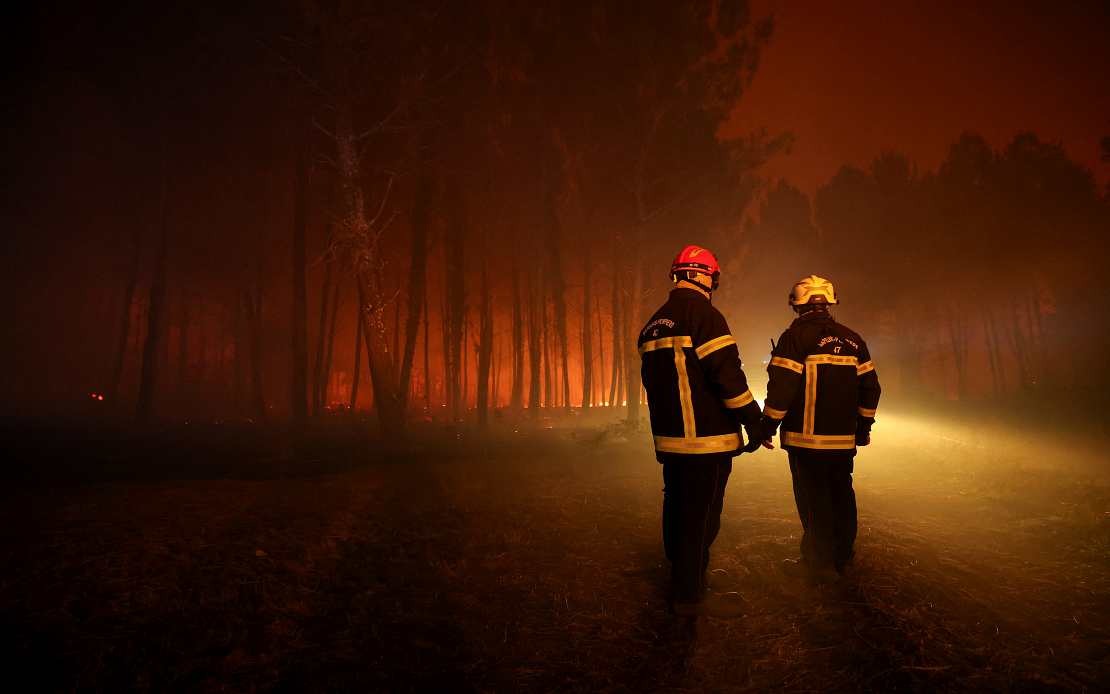
A fifteen-year-old French boy has been formally charged over the fire in Merignac, a town near Bordeaux airport, that resulted in the deaths of two firefighters last month. The minor appeared before a judge on Thursday and was subsequently remanded to a closed educational facility pending trial. His arrest followed that of his 22-year-old brother, who was detained on Wednesday but has since been released after the teenager accepted responsibility for initiating the fire.
The circumstances surrounding the incident paint a picture of a tragic accident triggered by a moment of carelessness. According to reporting by French media outlet Sud Ouest, the two brothers had stopped in the area and were both smoking cigarettes. While the older brother disposed of his cigarette in the parking lot, the teenager allegedly threw his onto nearby grass, inadvertently sparking the blaze that would claim two lives. What began as a discarded cigarette butt escalated into a major emergency that exposed the dangers firefighters face when responding to building fires.
The fire broke out on July 21 in Merignac, and two firefighters lost their lives while attempting to extinguish the flames. Tragedy struck when their emergency response vehicle became trapped by the advancing fire, leaving them unable to escape. The incident sent shockwaves through the French emergency services community and beyond, raising fresh questions about fire safety protocols and prevention measures. The Bordeaux prosecutor's office initiated a formal investigation into both the circumstances of the incident and the underlying cause of the fire.
For Malaysian readers, this case underscores broader European concerns about accidental fire causation and youth responsibility in safety matters. France, like many developed nations, has stringent laws regarding negligence that results in fatalities, even when the initial action appears unintentional. The charging of a minor in such a case reflects the seriousness with which authorities treat deaths arising from carelessness. Young people throughout Southeast Asia should consider this a sobering reminder of how quickly dangerous situations can develop from momentary lapses in judgment.
The role of cigarette disposal in fire incidents remains a persistent public health challenge across many countries. Discarded cigarettes rank among the leading causes of unintentional fires worldwide, particularly in outdoor settings where vegetation can ignite rapidly. This incident in Merignac demonstrates that even in developed nations with advanced fire prevention infrastructure, such accidents continue to occur. The grass where the teenager discarded his cigarette presumably provided ideal conditions for ignition and rapid spread.
The decision to charge the younger brother while releasing the older sibling suggests that investigators determined the teenager bore primary responsibility for the catastrophic outcome. This distinction is legally and morally significant, as it indicates that while both were present, only one committed the act that directly triggered the fire. The teenager's acceptance of responsibility likely facilitated this prosecutorial decision, though French law will ultimately determine the appropriate consequences for his actions.
The loss of two firefighters carries profound implications for emergency services across Europe and beyond. Firefighters accept extraordinary risks as part of their professional duties, yet tragic incidents such as this highlight how quickly situations can spiral beyond their control. When response vehicles become trapped by advancing flames, personnel face life-threatening circumstances with limited escape options. This case will undoubtedly inform discussions about firefighter safety protocols and the resources allocated to rescue operations in France and internationally.
The placement of the teenager in a closed educational centre rather than a conventional detention facility suggests French authorities are balancing accountability with rehabilitation considerations appropriate for his age. Such facilities typically combine security with educational and psychological support services. The approach reflects modern juvenile justice philosophy in France, which seeks to address underlying behavioral issues while holding young offenders accountable for serious consequences of their actions. Whether this ultimately proves effective in preventing similar incidents depends on the quality of programming and follow-up supervision provided to the teenager.
For Southeast Asia, where urbanization and building density continue increasing, fire safety awareness campaigns targeting young people deserve greater emphasis. Malaysia, Indonesia, Thailand, and other regional nations should consider whether their own youth education programs adequately address the dangers of careless fire-starting behavior. The Merignac tragedy provides a stark illustration of how individual decisions can have catastrophic community-wide consequences, particularly in populated areas where emergency services may struggle to respond effectively if conditions deteriorate rapidly.
The investigation by the Bordeaux prosecutor's office will likely examine not only the immediate cause but also broader questions about whether additional warning signs or barriers might have prevented the fire. This could include considerations about smoking restrictions in the area, vegetation management, or public awareness campaigns. Such inquiries often extend beyond individual culpability to identify systemic improvements that could prevent similar tragedies in the future.

