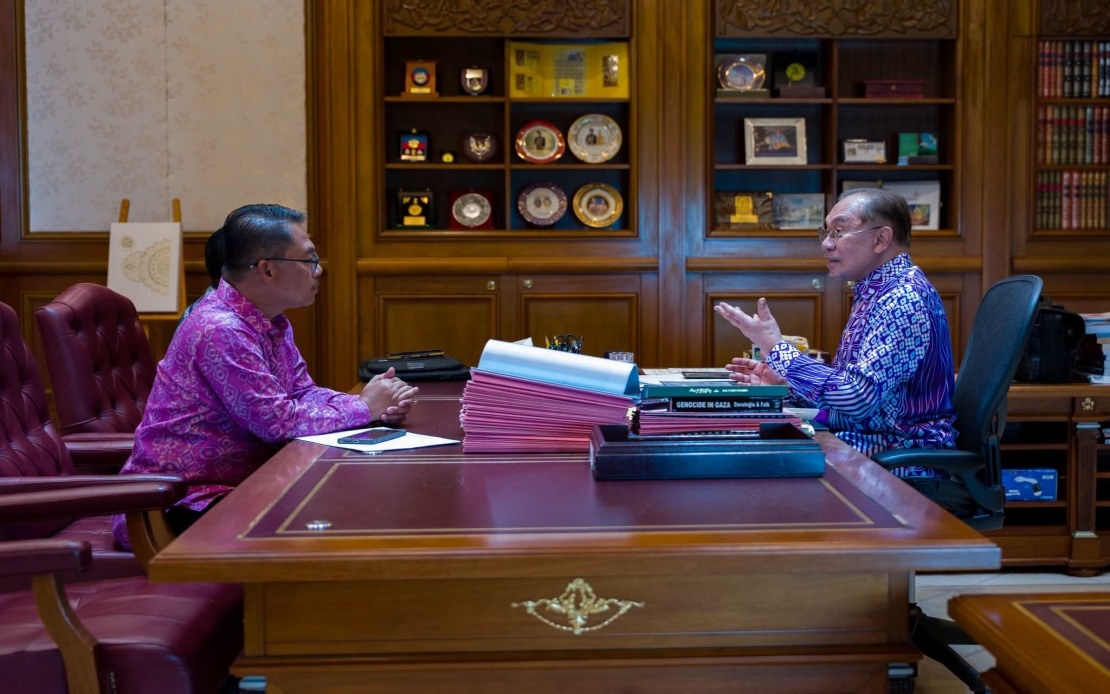
Malaysia's government has committed to fine-tuning the implementation of targeted fuel subsidies across Sabah and Sarawak, incorporating input gathered directly from communities and local stakeholders. Datuk Mustapha Sakmud, the Minister in the Prime Minister's Department overseeing both East Malaysian states, signalled that ongoing dialogue with residents, state authorities, and federal agencies would shape how the subsidy scheme evolves to meet local needs without compromising living standards, particularly in remote districts.
The BUDI Diesel initiative, which commenced nationwide on July 1, represents a significant shift in how Malaysia distributes fuel subsidies. Rather than a blanket approach that previously subsidised fuel for all consumers, the new system targets support to eligible private diesel vehicle owners. These drivers receive a baseline monthly allocation of 200 litres at the reduced price of RM2.10 per litre—substantially lower than market rates. Those operating registered sports utility vehicles and pickup trucks may request an additional 100 litres monthly, provided they satisfy specific eligibility requirements set by the government.
This targeted approach reflects broader fiscal considerations facing Malaysia's Treasury. By narrowing subsidy access, policymakers aim to redirect funds toward other development priorities while protecting vulnerable consumers who depend on vehicles for livelihood purposes. The mechanism also attempts to discourage wasteful consumption patterns by capping allocations rather than offering unlimited subsidised supplies. However, the transition to this system has generated considerable adjustment challenges, particularly across Sabah's dispersed rural communities where personal vehicles represent essential infrastructure for accessing services and markets.
Prime Minister Datuk Seri Anwar Ibrahim has personally engaged with residents regarding implementation difficulties, demonstrating executive-level attention to grassroots concerns. This direct engagement suggests the administration recognises that fuel subsidies carry significant political and social implications in East Malaysia, where geographical constraints make private transportation indispensable. The willingness to listen and adapt reflects a governance philosophy emphasising responsiveness to citizen feedback as a legitimate input into policymaking.
Sabah and Sarawak occupy distinct positions within Malaysia's economic and social landscape. Both states have lower population densities, greater distances between settlements, and weaker public transportation networks compared to peninsular regions. These structural realities mean that many residents face genuine hardship if fuel becomes prohibitively expensive, since alternatives for personal mobility are limited. Rural residents often travel considerable distances to access healthcare, education, employment, and market opportunities, making fuel costs a direct factor in household budgeting and economic participation.
The consultation process reflects recognition that top-down policy design, regardless of technical soundness, can fail if it disregards local realities. Grassroots communities understand their circumstances better than federal planners and can identify unintended consequences or implementation obstacles that emerge when policies encounter actual conditions. By creating formal channels for feedback, the government signals that such input is valued and will genuinely influence refinements to the scheme.
Stakeholder involvement extends beyond ordinary residents to include state governments, which retain significant autonomy under Malaysia's federal structure, and federal agencies responsible for administering fuel distribution networks. These organisations operate at the interface between policy intent and practical delivery, and their insights prove invaluable for identifying bottlenecks or design flaws that emerged during the rollout phase. Close coordination ensures that refinements reflect both community needs and administrative feasibility.
The government's framing of subsidy reforms within the MADANI framework—emphasising that the administration will prioritise public welfare and maintain responsiveness to citizen voices—establishes clear expectations about future governance conduct. This rhetorical commitment carries implicit promises that citizen feedback mechanisms will remain open and that demonstrated problems will trigger policy adjustments. Should the government subsequently ignore public input or prove unresponsive to documented difficulties, credibility would suffer significantly, potentially undermining future policy initiatives that depend on public cooperation.
For Malaysian readers, particularly those in Sabah and Sarawak, the policy refinement process offers a practical example of how sustained advocacy and organised feedback can shape government action. Rather than accepting initial implementation as final, affected communities have opportunities to engage officials and propose adjustments. This dynamic reflects broader patterns in Southeast Asian governance, where governments increasingly recognise that sustainable policy implementation requires adaptation to local conditions and genuine incorporation of affected populations' perspectives into decision-making processes.
The BUDI Diesel initiative itself represents Malaysia's broader transition toward more fiscally sustainable and better-targeted social protection mechanisms. As governments across Southeast Asia grapple with commodity price volatility, fiscal constraints, and competing development priorities, moving away from universal subsidies toward targeted programmes has become standard practice. However, Malaysia's experience demonstrates that such transitions require careful sequencing, clear communication, and genuine responsiveness to implementation challenges that emerge once policies encounter diverse, distributed populations with varying circumstances.
Looking forward, the success of refined fuel subsidy arrangements in Sabah and Sarawak will likely influence similar policy discussions in peninsular Malaysia. Both states function as policy laboratories where innovations can be tested and refined before potential nationwide expansion. If consultative approaches to subsidy administration prove effective in improving both policy outcomes and public satisfaction across East Malaysia, such models might inform future reforms in other domains, from agriculture support to infrastructure development.

