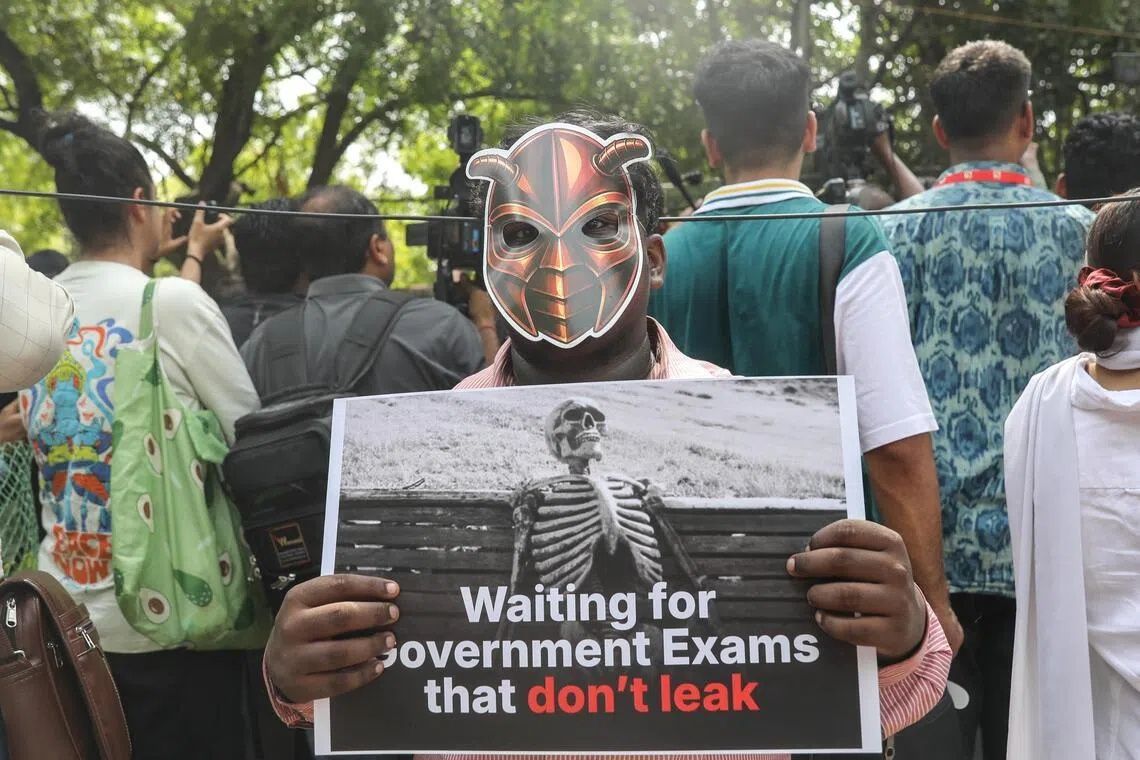
India's attempt to restore credibility to its crucial medical education selection process began on Sunday as 2.2 million aspiring physicians sat for a rescheduled entrance examination under the most stringent security protocols the country has deployed for any academic test. The retest became necessary after authorities scrapped the original examination in May following evidence that question papers had leaked, an incident that unleashed a torrent of public fury and triggered calls for the resignation of Education Minister Dharmendra Pradhan.
The compromised examination exposed deep vulnerabilities in India's testing infrastructure and sparked broader concerns about the integrity of the country's education system. Beyond the medical entrance test failure, a parallel marking crisis plagued examinations taken by nearly two million high school students, where allegations of grade miscalculations and instances of results being assigned to wrong candidates compounded public distrust. Together, these twin controversies catalysed youth-led protests demanding accountability and reform, while social media gave voice to candidates who felt cheated by a system they had invested enormous time and resources to navigate.
Authentication procedures for Sunday's examination represented a marked escalation in monitoring intensity. The National Testing Agency implemented biometric identity verification, deployed artificial intelligence-powered surveillance cameras throughout testing centres, and employed GPS tracking systems to monitor the physical movement of question paper bundles from distribution points to examination halls. These layered safeguards reflected official determination to prevent the kind of breach that had shaken public confidence in India's national testing apparatus.
The scale of security deployment underscored how seriously authorities treated the need to restore legitimacy. Authorities mobilised more than 200,000 officials, comprising police personnel and civil servants, to oversee the examination across multiple states. In a more controversial measure, authorities imposed a week-long restriction on Telegram, the encrypted messaging application widely used by examination fraud networks to disseminate leaked materials to candidates willing to pay for illicit access. The messaging app ban reflected authorities' assessment that digital platforms had become essential infrastructure for cheating rackets.
Telegram's head Pavel Durov publicly disputed the effectiveness of restricting his platform, arguing that test paper leaks merely migrated to alternative applications rather than disappearing entirely. He shifted focus to what he identified as the fundamental problem: insiders within the examination system itself who were willing to breach confidentiality for financial gain. This analysis highlighted that technological solutions alone could not address the institutional corruption enabling fraud, a point that resonated with critics demanding structural reforms rather than temporary restrictions.
Investigations revealed the disturbing extent of the cheating network's sophistication and reach. The Central Bureau of Investigation arrested a chemistry lecturer identified as the alleged mastermind orchestrating the paper leak, suggesting that corruption extended into the teaching profession itself. The case demonstrated how India's intensely competitive education system, where successful candidates gain access to prestigious medical colleges that effectively guarantee lucrative careers, creates economic incentives that corrupt individuals exploit. Organised criminal networks have built entire business models around facilitating examination fraud, knowing that desperate candidates and their families will pay substantial sums for leaked materials or other forms of assistance.
The National Eligibility cum Entrance Test represents the gateway determining access to approximately 100,000 undergraduate medical seats across India. The annual competition attracts millions of candidates competing for places in a system where credentials directly translate into professional status and financial security. This extreme scarcity of positions relative to applicant numbers has spawned an enormous coaching industry that claims to enhance test performance, but has also created fertile ground for unscrupulous operators offering guaranteed results through fraud.
The May examination cancellation proved traumatic for candidates who felt their preparations and aspirations had been invalidated through no fault of their own. Particularly distressing were reports of examination candidates, including teenagers, taking their own lives following the announcement that results would be invalidated. These tragedies transformed the examination scandal from an institutional failure into a public health crisis, galvanising demand for not merely administrative accountability but genuine structural change.
For Malaysian and broader Southeast Asian observers, India's examination crisis carries instructive lessons about the vulnerabilities that emerge when educational selection becomes excessively centralised, hyper-competitive, and economically consequential. Countries across the region grappling with similar pressures around university entrance examinations and professional licensing may recognise troubling parallels. The scandal illustrates how technological sophistication in test administration cannot substitute for institutional integrity and suggests that robust solutions require addressing the underlying economic incentives driving corruption rather than simply deploying more surveillance.
Public outrage manifested in unexpected cultural forms. A satirical political movement called the "Cockroach People's Party" emerged on social media in May and rapidly accumulated millions of followers, channelling youth frustration into dark humour targeting the education ministry. This phenomenon demonstrated how examination failures became proxies for broader anxieties about institutional competence and official accountability, attracting adherents beyond those directly affected by testing failures.
The retest represented India's opportunity to demonstrate that its examination apparatus could function with genuine security and fairness. Yet observers recognised that a successful retest, while necessary, would constitute merely a tactical victory unless accompanied by strategic institutional reform. Authorities acknowledged they had deployed comprehensive security frameworks, yet critics argued that the fundamental issue—insiders willing to compromise examination integrity—required investigation into recruitment practices, incentive structures, and oversight mechanisms throughout the testing agency.
%22%2F%3E%3C%2Fpattern%3E%3C%2Fdefs%3E%3Crect%20width%3D%22100%25%22%20height%3D%22100%25%22%20fill%3D%22url(%23ph3cdu7g)%22%2F%3E%3Crect%20width%3D%22100%25%22%20height%3D%22100%25%22%20fill%3D%22url(%23ph3cdu7p)%22%2F%3E%3Ctext%20x%3D%2250%25%22%20y%3D%2250%25%22%20text-anchor%3D%22middle%22%20dominant-baseline%3D%22central%22%20fill%3D%22rgba(255%2C255%2C255%2C0.95)%22%20font-family%3D%22Georgia%2C%20'Times%20New%20Roman'%2C%20serif%22%20font-weight%3D%22700%22%20font-size%3D%22320%22%20letter-spacing%3D%22-0.02em%22%3EData%3C%2Ftext%3E%3C%2Fsvg%3E)

%22%2F%3E%3C%2Fpattern%3E%3C%2Fdefs%3E%3Crect%20width%3D%22100%25%22%20height%3D%22100%25%22%20fill%3D%22url(%23ph1nj3dg)%22%2F%3E%3Crect%20width%3D%22100%25%22%20height%3D%22100%25%22%20fill%3D%22url(%23ph1nj3dp)%22%2F%3E%3Ctext%20x%3D%2250%25%22%20y%3D%2250%25%22%20text-anchor%3D%22middle%22%20dominant-baseline%3D%22central%22%20fill%3D%22rgba(255%2C255%2C255%2C0.95)%22%20font-family%3D%22Georgia%2C%20'Times%20New%20Roman'%2C%20serif%22%20font-weight%3D%22700%22%20font-size%3D%22151%22%20letter-spacing%3D%22-0.02em%22%3ETraveller%3C%2Ftext%3E%3C%2Fsvg%3E)