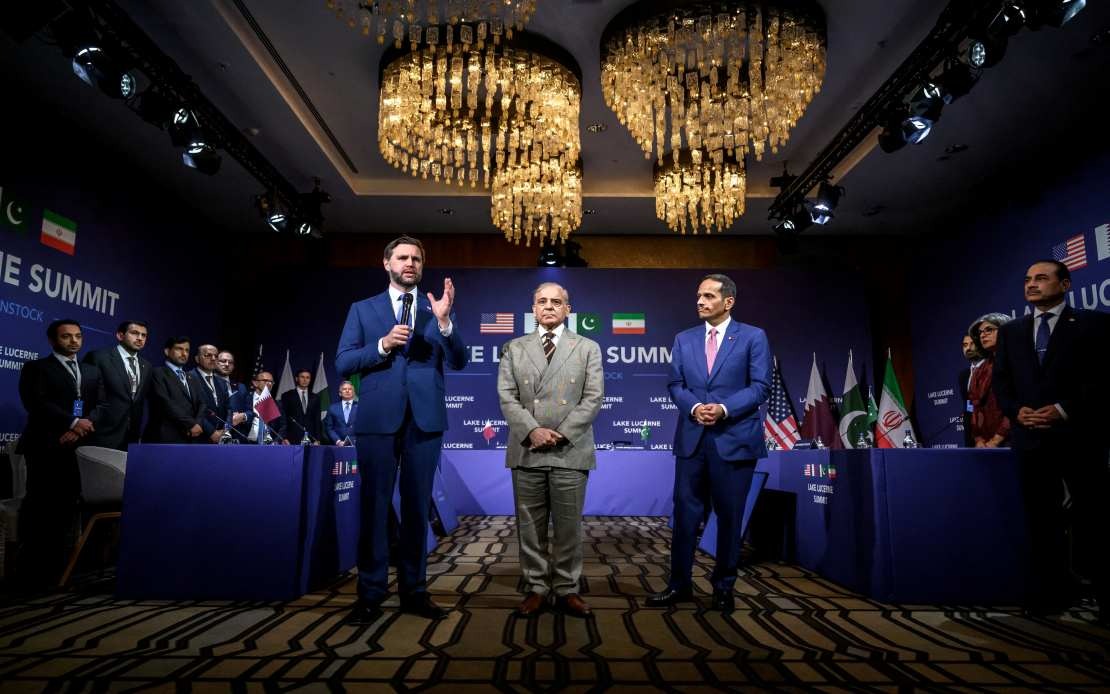
Delegates representing Iran and the United States have wrapped up their inaugural round of direct negotiations in Switzerland, marking a significant diplomatic development in regional tensions. The talks, which took place in Bürgenstock and involved mediators from Qatar and Pakistan, concluded after approximately 80 minutes of substantive discussion, according to sources close to the Iranian negotiating team. This opening session represents the first concrete step toward implementing an interim agreement signed earlier in the week, intended to address the prolonged conflict affecting West Asia and the critical shipping corridor through the Strait of Hormuz.
The composition of the negotiating teams underscores the high-level commitment both nations have invested in these discussions. The American delegation is headed by US Vice President JD Vance, a significant appointment that signals Washington's serious intent at the bargaining table. Iran's representation is equally senior, with Parliament Speaker Mohammad Bagher Qalibaf and Foreign Minister Abbas Araghchi leading the Iranian contingent. The involvement of these prominent political figures suggests both sides recognise the gravity of achieving a sustainable resolution to their standoff.
Qatar and Pakistan's roles as mediators reflect the delicate diplomatic choreography required to bring these historically adversarial parties into productive dialogue. Qatar, a longtime mediator in Middle Eastern disputes with established diplomatic channels to both Washington and Tehran, brings significant credibility to the process. Pakistan's participation adds another dimension to the mediation effort, given its own strategic interests in regional stability and its historically balanced relationships across the Persian Gulf. This two-mediator structure provides flexibility and allows each party to maintain separate communication channels with the facilitators.
The announcement of these talks on Sunday came from Qatar, which disclosed that negotiations would focus specifically on implementing the memorandum of understanding that both delegations had signed just days earlier on Wednesday. This preliminary agreement appears to have established a framework addressing immediate concerns, particularly regarding the reopening of the Strait of Hormuz, one of the world's most critical energy chokepoints through which roughly a quarter of global seaborne oil trade passes. Any prolonged disruption to shipping through these waters carries serious implications for energy markets worldwide, including for regional economies dependent on stable oil flows.
The decision to suspend talks after 80 minutes to allow delegations internal consultation time reveals the negotiators' preference for a measured, deliberative approach. Rather than rushing toward agreements under artificial time pressures, both teams are taking opportunity to consolidate their positions, brief their respective capitals, and recalibrate their negotiating posture before subsequent sessions. This measured rhythm suggests a recognition that durable solutions require careful consideration rather than hasty compromises that might unravel once scrutinised by domestic audiences and parliamentary bodies.
For Southeast Asian observers, particularly Malaysia, the significance of these Iran-US negotiations extends beyond the immediate bilateral relationship. The stability of the Persian Gulf region directly influences global oil prices and shipping costs, factors that ripple through Malaysian trade networks and energy security calculations. Malaysia, as a major trading nation dependent on open sea lanes and stable energy supplies, has a vested interest in seeing these tensions resolved through peaceful negotiation rather than escalating into broader regional conflict. The resumption of Hormuz shipping normalcy would benefit Malaysian importers and exporters who rely on these routes for their international commerce.
The lack of immediate details regarding the schedule for subsequent negotiation rounds leaves considerable uncertainty about the pace of progress. Neither delegation has announced when they will reconvene, suggesting that the timeline will depend on how substantively each side can address the underlying issues during their internal consultations. This opacity is fairly typical in high-stakes international negotiations, where premature public commitments can constrain negotiators' flexibility and create domestic political difficulties if announced positions must subsequently be adjusted.
The interim agreement signed earlier in the week represents the culmination of behind-the-scenes diplomatic work that likely extended back several weeks or months. The fact that both parties agreed to a preliminary memorandum before these face-to-face talks commenced suggests that Qatari and Pakistani mediators had successfully narrowed the range of disagreement on several core issues. However, the transition from preliminary understanding to a comprehensive, implementation-ready accord typically involves extensive technical negotiations and potential areas of renewed contention.
Regional observers note that the months-long conflict referenced in the original announcement had created significant instability across West Asia, with ramifications extending into global security calculations. The decision by both Iran and the United States to engage in structured dialogue through this format indicates a mutual recognition that continued escalation served neither side's long-term interests. For Malaysian policymakers monitoring regional developments, this diplomatic initiative offers potential relief from the uncertainty that has characterised recent West Asian geopolitical dynamics.
The involvement of parliament and foreign ministry representatives on the Iranian side suggests that any agreements emerging from these talks will need to navigate Iran's complex domestic political structures. Abbas Araghchi, as Foreign Minister, carries direct responsibility for international relations, while Mohammad Bagher Qalibaf's presence as Parliament Speaker ensures that legislative considerations are factored into negotiating positions from the outset. This institutional representation may slow progress but could enhance the durability of any eventual accord.
As these negotiations proceed through subsequent rounds, Malaysian observers should monitor developments closely given the potential implications for shipping, energy markets, and regional stability. The successful implementation of the interim agreement could significantly reduce geopolitical risk premiums currently affecting international oil prices and maritime insurance costs. Conversely, any breakdown in these talks could precipitate renewed escalation with serious consequences for global trade and the Malaysian economy's integration into international commerce networks.
%22%2F%3E%3C%2Fpattern%3E%3C%2Fdefs%3E%3Crect%20width%3D%22100%25%22%20height%3D%22100%25%22%20fill%3D%22url(%23phje2hg)%22%2F%3E%3Crect%20width%3D%22100%25%22%20height%3D%22100%25%22%20fill%3D%22url(%23phje2hp)%22%2F%3E%3Ctext%20x%3D%2250%25%22%20y%3D%2250%25%22%20text-anchor%3D%22middle%22%20dominant-baseline%3D%22central%22%20fill%3D%22rgba(255%2C255%2C255%2C0.95)%22%20font-family%3D%22Georgia%2C%20'Times%20New%20Roman'%2C%20serif%22%20font-weight%3D%22700%22%20font-size%3D%22320%22%20letter-spacing%3D%22-0.02em%22%3E70%3C%2Ftext%3E%3C%2Fsvg%3E)