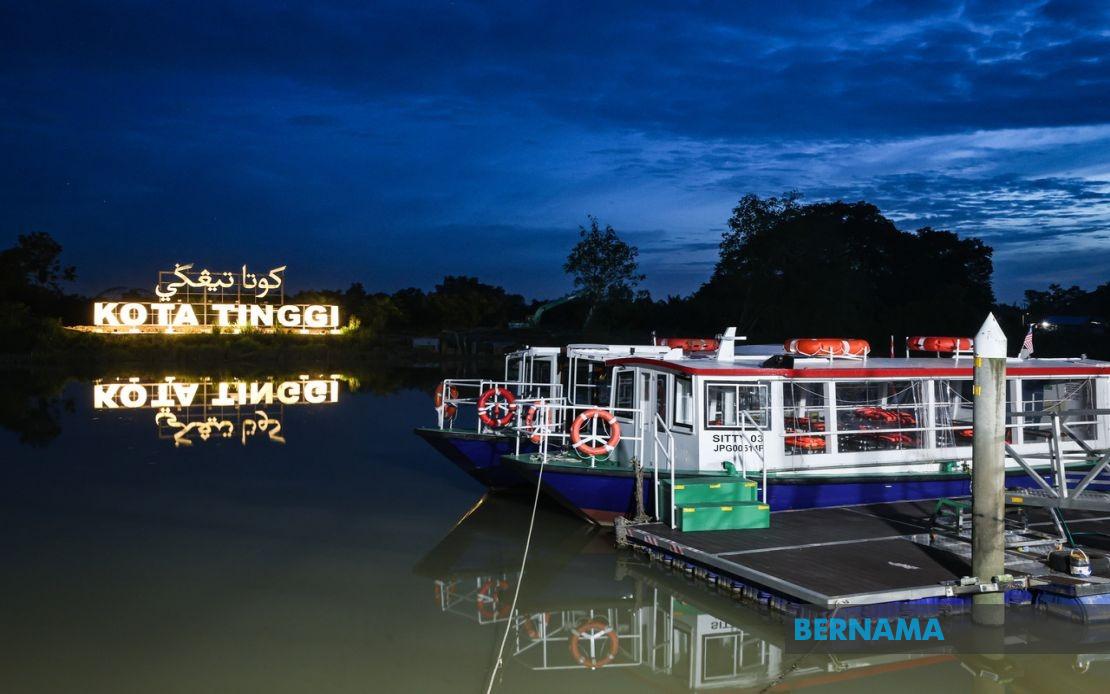
Sungai Johor is experiencing a renaissance as a tourism destination, with the launch of dedicated river cruises that navigate both its natural splendour and layered historical significance. The waterway, which winds through Kota Tinggi in southern Johor, has transitioned from a largely overlooked regional river into a magnetic draw for domestic and international visitors seeking authentic cultural encounters paired with environmental immersion. This transformation underscores a broader Southeast Asian trend toward heritage-based and nature-focused tourism products that generate economic value while preserving ecosystems and historical narratives.
Kota Tinggi River Cruise operates a 6.7-kilometre route that departs from Pangkalan Kota Jetty, whisking passengers away from the commercial frenzy of town life into an environment dominated by riverine vegetation and wildlife. The operator, which began commercial services within the Visit Johor 2026 promotional campaign, has recorded remarkable early adoption figures. According to KTRC operations manager Aiman Haikal Mohd Azmi, the venture attracted more than 10,000 passengers during its initial seven months of operation, a metric that suggests strong market appetite for differentiated tourism experiences beyond conventional shopping mall and beach-focused itineraries.
The historical dimension of the cruise offering carries particular weight within Malaysia's tourism narrative. Sungai Johor served as the foundational corridor for the Johor-Riau Sultanate following the Portuguese conquest of Malacca in the 16th century. Rather than treating this epoch as abstract historical knowledge, KTRC embeds sultanate narratives directly into the cruise experience through audio commentary and trained guides who recount tales of legendary figures including Sultan Mahmud Mangkat Dijulang and Laksamana Bentan. The river itself becomes a living archive, with passengers observing ruins of historic riverside settlements including Johor Lama and Kampung Makam, burial sites of several former sultans that link contemporary visitors to centuries-old dynastic continuity.
The daytime cruise package incorporates several engineered attractions designed to enhance visitor satisfaction and photographic opportunities. Titian Laksamana, a pedestrian suspension bridge, and the Johor River Barrage both feature prominently on the itinerary. These landmarks serve dual purposes: they function as visual anchors that break the monotony of extended river viewing, and they provide the textured backgrounds that social media users seek when documenting travel experiences. For a regional operator conscious of word-of-mouth marketing dynamics, such photogenic waypoints carry disproportionate strategic value in driving repeat visitation and recommendation patterns.
The operational model extends beyond daytime sightseeing, with KTRC offering specialized evening experiences calibrated to different traveller preferences. The Mesmerising Fireflies package capitalizes on Sungai Johor's nocturnal ecosystem, transforming thousands of bioluminescent insects into a natural spectacle that contrasts sharply with artificial urban lighting. This offering demonstrates sophisticated product segmentation—the operator recognizes that visitors possess varying tolerance levels for daylight outdoor activity and seeks to monetize evening hours through experiences unavailable in conventional terrestrial attractions. Similarly, the Dining Cruise package represents an attempt to position river-based recreation as a social gathering venue rather than purely educational or leisure-oriented activity.
Pricing architecture reflects an attempt to balance accessibility with revenue optimization. Adult day cruise tickets are set at RM20, with reduced rates for children (RM15), senior citizens, and persons with disabilities (RM10). Evening packages command modest premiums, with adult sunset and firefly cruises priced at RM23. This tiered structure acknowledges Malaysia's heterogeneous income distribution while maintaining profit margins. The willingness to offer differential pricing for vulnerable demographic groups—particularly persons with disabilities—suggests either genuine inclusive values or strategic positioning within the increasingly scrutinized corporate social responsibility landscape.
Operational scheduling reflects demand forecasting assumptions and capacity management considerations. Weekday operations run from 9 am to 7 pm with hourly departure intervals, while Friday-to-Sunday hours extend until 10 pm, presumably accommodating weekend leisure travel and extended evening experiences. This scheduling pattern implies management confidence in Friday-Sunday demand sufficient to justify extended labour and operational costs, a reasonable assumption given Malaysian work-week structures and weekend recreational patterns among urban demographics.
Aiman Haikal has articulated an expansive vision for river-based tourism within Johor's development strategy, framing ecotourism and heritage products as mutually reinforcing public goods. His perspective emphasizes dual outcomes: ecosystem preservation alongside economic distribution to local communities. This framing attempts to transcend the extractive tourism model that has characterized Southeast Asian development in earlier decades, wherein environmental degradation and community displacement frequently accompanied tourism expansion. Whether KTRC and similar initiatives genuinely achieve sustainable outcomes or represent rhetorical positioning remains subject to longitudinal environmental and socioeconomic assessment.
The broader significance of Sungai Johor's tourism development extends beyond Kota Tinggi's immediate commercial interests. Johor maintains strategic importance within Malaysia's tourism hierarchy, competing against Penang, Kuala Lumpur, and Sabah-Sarawak for both domestic and international visitor expenditure. The Visit Johor 2026 campaign positions ecotourism and cultural heritage as differentiation vectors—alternative draws to established leisure shopping and coastal resort models. River-based experiences offer particularly compelling value propositions for regional visitors from Singapore and Brunei, whose geographic proximity to Johor enables weekend excursions, and for Indonesian tourists for whom sultanate narratives carry regional cultural resonance.
The ecotourism positioning also addresses environmental governance questions that have long shadowed Sungai Johor's reputation. Historical pollution, encroachment, and inadequate water quality management rendered the river an object of environmental concern rather than pride. By monetizing riverine conservation through tourism, KTRC creates financial incentives aligned with ecological restoration. Local stakeholders and state authorities benefit from economic activity tied explicitly to environmental preservation, a reversal of the development-versus-conservation dichotomy that has plagued Malaysian resource management. Whether actual conservation investments match promotional rhetoric requires independent verification, yet the structural incentive alignment represents conceptual progress.
For Malaysian tourism authorities and regional policymakers, the KTRC model offers replicable insights. Multiple Southeast Asian rivers—the Chao Phraya in Bangkok, the Mekong across Laos and Cambodia, the Rajang in Sarawak—possess equivalent historical and ecological attributes yet remain substantially underutilized within formal tourism offerings. The Kota Tinggi demonstration suggests that modest capital investment in boats, interpretive training, and marketing infrastructure can rapidly catalyze demand for heritage-river experiences. The 10,000-visitor benchmark within seven months provides a quantifiable proof-of-concept that justifies further similar ventures.
Looking forward, KTRC's sustainability depends on maintaining visitor satisfaction and managing supply-side constraints. Crowding, environmental degradation from increased boat traffic, and guide training quality represent foreseeable risks. The operator's success in avoiding these pitfalls will determine whether the venture represents a durable contribution to Johor's tourism portfolio or a short-cycle novelty. Continued state government support—particularly regarding river maintenance, pollution control, and ancillary infrastructure development—will prove essential. For regional observers monitoring Malaysia's capacity to develop tourism products balancing economic extraction with genuine sustainability, Sungai Johor's trajectory merits sustained attention.

