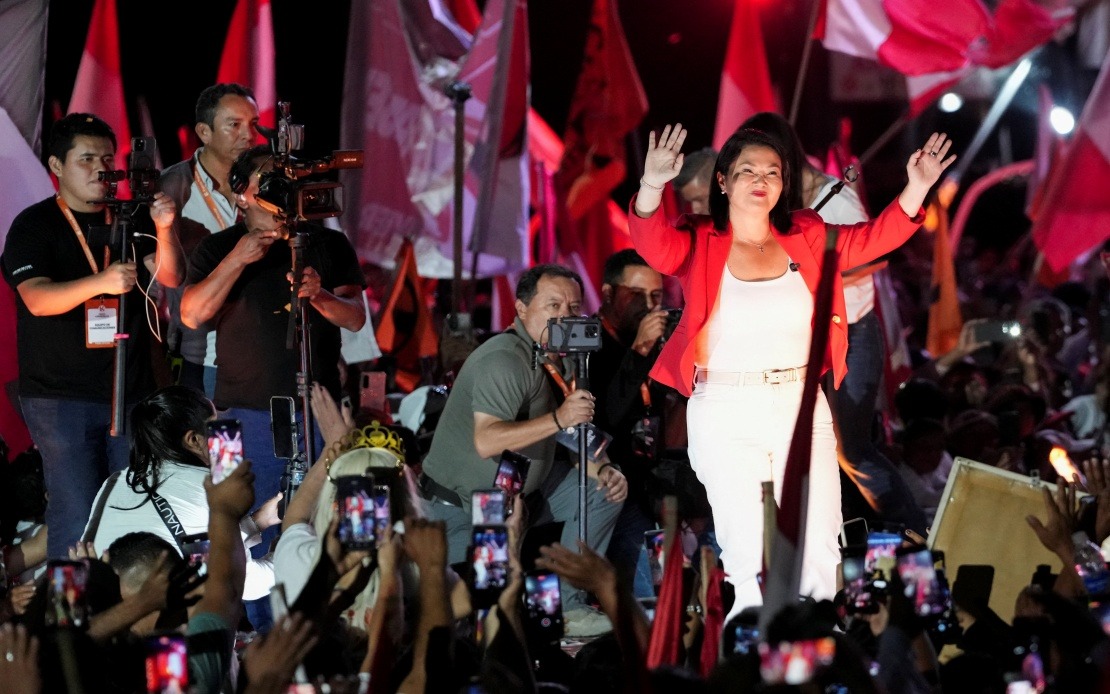
Keiko Fujimori has secured victory in Peru's presidential election, capturing 50.135 per cent of valid votes according to the complete official tally released by the National Office of Electoral Processes (ONPE). The final count, which processed all 92,766 tally sheets from the June 7 election, marks the conclusion of a tightly contested race that saw Fujimori edge past her closest rival by fewer than 50,000 votes, positioning the right-wing candidate for her first presidential triumph after three previous unsuccessful bids.
Fujimori's final vote total of 9,223,396 ballots exceeded that of her opponent Roberto Sanchez of the Together for Peru coalition, who garnered 9,173,755 votes representing 49.865 per cent of the valid count. This paper-thin margin of 49,641 votes underscores the deeply polarized nature of Peruvian politics and the difficulty in building broad consensus among voters. The closeness of the contest reflects fundamental divisions within Peruvian society regarding economic direction, governance style, and the role of traditional political families in shaping the nation's future.
Fujimori's lineage carries significant weight in Peruvian political history and contemporary discourse. As daughter of former President Alberto Fujimori, who governed the country from 1990 to 2000, she represents continuity with a controversial yet economically transformative era. Her father's tenure remains divisive: supporters credit him with stabilizing Peru's economy and defeating left-wing insurgencies, while critics point to authoritarian practices and accusations of human rights abuses. This contested legacy has shaped perceptions of Fujimori throughout her political career and likely influenced voter behaviour in this election.
In contrast, Sanchez represents a different political trajectory and recent governance experience. Serving as a minister under then-President Pedro Castillo from 2021 to 2022, Sanchez embodied continuity with the leftist administration that voters ultimately rejected through constitutional mechanisms and political instability. Castillo's presidency ended turbulently with his failed self-coup attempt in December 2022, creating deep skepticism among many Peruvians about left-leaning administrations and their ability to provide stable governance. Sanchez's association with this troubled period appears to have cost him crucial support among voters seeking predictability and institutional competence.
The electoral framework itself proved robust in delivering a definitive result despite the narrow margin. Peru's electoral authorities demonstrated capacity to process nearly 93,000 tally sheets and produce a complete, verified count, establishing transparency through the ONPE's real-time vote-counting platform. This institutional functionality stands in contrast to broader governance challenges that have plagued Peru in recent years, including political instability, institutional weakness, and public frustration with traditional political processes. The successful electoral administration provided at least one area where democratic procedures functioned effectively.
Fujimori's victory carries implications extending beyond Peru's borders and into the broader Latin American political landscape. Her election continues a regional trend toward centre-right and right-wing leadership in major economies, as voters across the continent have increasingly rejected left-wing and socialist alternatives. This pattern, evident in recent elections across Colombia, Chile, and Argentina, suggests evolving voter preferences shaped by economic performance, inflation concerns, and governance effectiveness. Fujimori's narrow victory nevertheless indicates that this rightward shift remains contested and contingent on specific national circumstances rather than representing an overwhelming ideological realignment.
The path to formal proclamation of results extends slightly beyond the initial count. Roberto Burneo, president of the National Jury of Elections, indicated that official proclamation of the results was anticipated for the Friday following the June 30 announcement. This additional procedural step reflects standard electoral protocols designed to ensure legitimacy and provide final opportunity for any formal challenges before inaugurating the elected president. The brief interval between completion of the official count and formal proclamation allows both campaigns to review results and submit any objections through proper channels.
For Southeast Asian observers and Malaysian readers following Peruvian developments, this election illustrates broader democratic patterns and challenges facing democracies globally. The extreme closeness of the contest demonstrates how evenly divided modern electorates have become, how vulnerable electoral outcomes remain to marginal shifts in voter preference, and how institutional legitimacy depends on transparent processes. Malaysia's own experience with closely contested elections and regional electoral patterns provides comparative context for understanding Fujimori's narrow but decisive victory and the political stakes involved in such tight races.
Looking forward, Fujimori assumes leadership of a nation facing substantial economic and institutional challenges. Peru has confronted inflation, economic slowdown, security threats from organized crime, and deep political fragmentation that will constrain her ability to implement an ambitious agenda. Her right-wing platform emphasizing market-oriented economics and institutional reform will face immediate tests as she attempts to build governing coalitions within a fragmented congress. The narrowness of her electoral mandate suggests that her government will require political skill and consensus-building to achieve substantive policy objectives despite her formal electoral victory.

