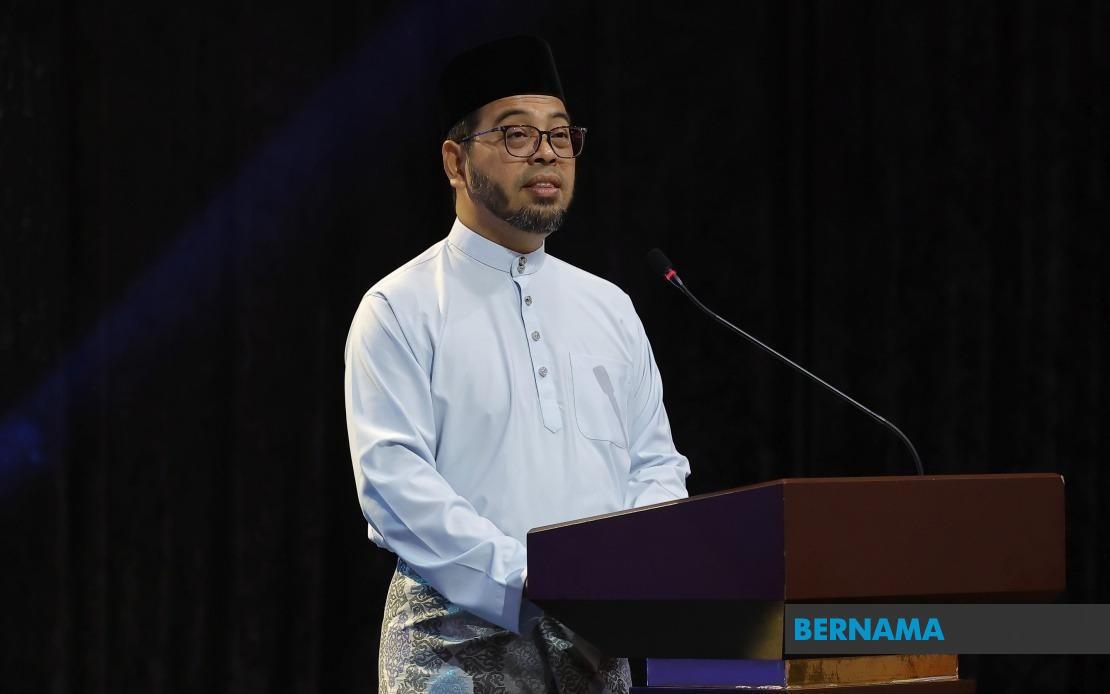
Malaysia's commitment to tahfiz education is entering a new chapter under the MADANI Government, with Minister in the Prime Minister's Department (Religious Affairs) Dr Zulkifli Hasan signalling that Islamic memorisation programmes will be strengthened in tandem with the country's conventional education system. Speaking at the 34th convocation ceremony of Darul Quran (DQ) JAKIM here on July 4, Zulkifli rejected the notion that tahfiz institutions exist in isolation from mainstream education, instead framing them as complementary streams designed to nurture multiple dimensions of student development.
The minister's remarks come at a significant juncture, as Darul Quran marks its Diamond Jubilee—six decades of operation since its founding in 1966. This milestone provides the government an opportunity to reassess the role of tahfiz schools in Malaysia's broader educational landscape and clarify its strategic direction for Islamic learning. For a nation where religious education sits at the intersection of cultural identity, social stability, and spiritual development, the government's messaging carries weight among both educational constituencies and religious communities.
Zulkifli articulated a vision of tahfiz education that extends well beyond rote memorisation of the Quran. Instead, he positioned these institutions as character-building academies tasked with developing individuals equipped with intellectual rigour, moral fortitude, and practical skills applicable to professional work. This reframing acknowledges ongoing debates about whether tahfiz graduates possess sufficient grounding in subjects like science, technology, and contemporary skills to function effectively in modern employment sectors. By emphasising that tahfiz curricula should produce professionals, not merely religious specialists, the government appears to be addressing longstanding concerns about graduate employability and integration into the broader workforce.
The scale of Darul Quran's contribution to Malaysia's Islamic education ecosystem is substantial. Over six decades, the institution has produced 12,633 huffaz—individuals who have memorised the entire Quran—who now work across multiple sectors including education, the Islamic judiciary, religious outreach, academic research, administration, and professional services. This diversified deployment suggests that tahfiz graduates increasingly occupy mainstream institutional roles, a trend that the government's latest messaging seeks to normalise and amplify. The distribution across these sectors indicates that Islamic memorisation credentials are increasingly viewed as compatible with, rather than antagonistic to, secular professional pathways.
This year's convocation saw 700 graduates receive credentials across multiple qualification tiers. The graduation cohort comprised 37 Bachelor's degree recipients in partnership with Universiti Sains Islam Malaysia (USIM), 454 diploma holders in Quranic studies and Qiraat recitation, 204 certificate-level tahfiz programme graduates, and five basic tahfiz certificate holders. The tiered structure reflects a deliberate effort to create pathways at different educational levels, potentially widening access while maintaining rigorous standards. The collaboration with USIM, which offers degree-level accreditation, signals institutional efforts to integrate tahfiz studies within Malaysia's formal higher education framework, lending academic legitimacy to what has historically been viewed as a specialised, non-mainstream educational track.
Zulkifli framed the 60-year milestone not as a celebration of historical achievement alone, but as a launching pad for institutional transformation. His exhortation to "let the legacy of 60 years inspire us to build the next 60 years with greater excellence" suggests the government recognises that tahfiz education must evolve to remain relevant. This could encompass curriculum updates, pedagogical innovation, integration of digital tools, or expanded offerings in complementary subjects. For Malaysian policymakers, the challenge lies in maintaining the traditional spiritual and memorisation functions of tahfiz schools while equipping graduates with competencies demanded by a rapidly changing economy.
The government's messaging also reflects broader demographic and social considerations. Malaysia's Muslim-majority population includes millions of parents seeking educational options that blend Islamic values with contemporary skill development. By positioning tahfiz institutions as equally valid educational pathways alongside secular schools, the government legitimises parental choices while asserting that Islamic learning complements rather than competes with conventional education. This dual-track framing could reduce social friction between different educational constituencies and foster greater cohesion in how diverse learning paths are perceived culturally and institutionally.
Darul Quran's historical mission—to produce huffaz who would serve as knowledge custodians, community leaders, and builders of Islamic civilisation rooted in Quranic principles—remains unchanged. However, the contemporary iteration of this mission appears more attuned to producing versatile professionals who can translate religious scholarship into tangible contributions across sectors. The government's emphasis on producing individuals capable of "contributing to national development" indicates that tahfiz education is now explicitly framed as serving Malaysia's broader development objectives, not merely spiritual or religious purposes in isolation.
The timing of this announcement carries significance for Malaysia's educational policy landscape. As the nation grapples with curriculum reforms, skills development initiatives, and questions about religious education's place in pluralistic society, the government's commitment to strengthening tahfiz education signals that Islamic learning institutions remain integral to national educational strategy. This stance also reflects demographic realities: thousands of Malaysian families enrol children in tahfiz schools annually, making these institutions substantial stakeholders in the education sector that cannot be marginalised or deprioritised without broader social implications.
Zulkifli's emphasis on producing "well-rounded individuals with knowledge, strong character and skills" suggests the government is aware of criticisms that some tahfiz graduates lack exposure to diverse subject matter or secular professional competencies. By publicly committing to holistic development, the minister signals openness to curriculum broadening and pedagogical innovation. This could eventually translate into policy directives requiring tahfiz institutions to incorporate English language instruction, science and mathematics, digital literacy, or entrepreneurship training alongside core religious studies—an approach already adopted by some leading tahfiz schools regionally.
For Southeast Asian observers, Malaysia's approach to tahfiz education carries broader implications. As other Muslim-majority nations in the region wrestle with balancing Islamic education with modernisation imperatives, Malaysia's model of institutionally integrating tahfiz schools within formal education frameworks while upgrading their academic credentials offers a potential template. The government's public commitment to dual-track education suggests a strategic choice to invest in Islamic learning institutions rather than marginalise them, potentially reducing social tensions between secular and religious constituencies.
The recognition of Darul Quran's achievements, coupled with the government's forward-looking statements about transformation, indicates that tahfiz education in Malaysia is transitioning from a specialised niche to an acknowledged component of national educational provision. Whether this translates into substantive policy changes—including curriculum revision, enhanced teacher training, increased funding, or regulatory updates—will determine whether the government's rhetorical commitment translates into institutional capacity building. The next phase will likely see greater scrutiny of tahfiz school governance, academic standards, and graduate outcomes as they become increasingly integrated into Malaysia's broader educational and professional ecosystems.

