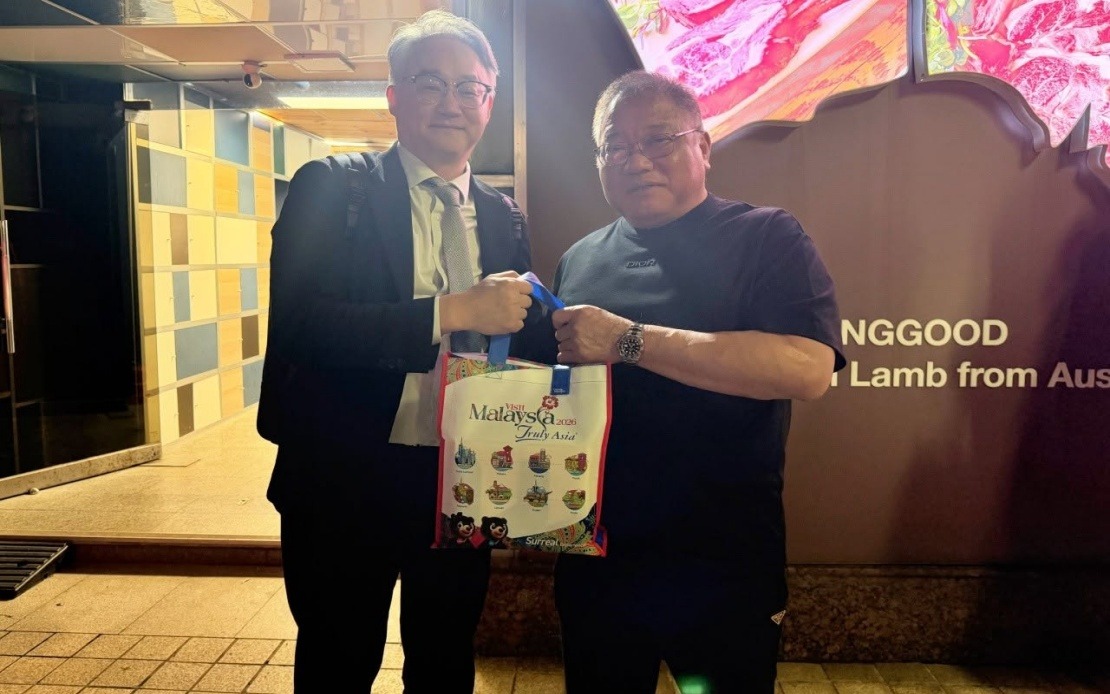
Malaysia's Tourism, Arts and Culture Minister Datuk Seri Tiong King Sing has issued a pointed reminder to MM2H Programme agents that obtaining a licence to operate domestically provides no blanket immunity from the legal requirements of other nations. Speaking after engagements with the Malaysian Association in the Republic of Korea, Tiong underscored the critical distinction between domestic authorisation and international regulatory compliance, warning that agents cannot assume their Malaysian credentials satisfy overseas jurisdictional obligations.
The warning addresses a widening gap between the aspirations of Malaysia's Malaysia My Second Home initiative and the practical realities of cross-border recruitment. Representatives from the Korean-based Malaysian Association flagged concerns that some agents licensed in Malaysia were operating with incomplete understanding of local regulatory frameworks, leading to confusion and proliferation of unauthorised intermediaries claiming to facilitate MM2H applications. This fragmentation creates vulnerability to fraud and undermines confidence among prospective participants in key markets.
Tiong's statement reflects a strategic pivot toward prioritising programme integrity over raw application numbers. He explicitly rejected a volume-driven approach, emphasising instead that the true measure of success lies in protecting applicants and fostering transparent, lawful market development. This repositioning suggests growing recognition that reputation damage from fraud or regulatory violations in destination markets could irreparably harm Malaysia's international brand and deter legitimate high-net-worth individuals from considering the programme.
The minister identified the need for formalised cooperation mechanisms between Malaysian MM2H agents and local industry partners in key markets. Such structured partnerships would establish clearer communication channels, standardised procedures, and accountability frameworks. By reducing ambiguity and preventing direct dealings between Malaysian agents and local individuals—arrangements prone to misunderstanding and exploitation—a more controlled ecosystem can be created. This approach mirrors best practices in international migration and visa programmes, where licensed agents operate under strict oversight and transparent partnerships with destination-country stakeholders.
Korea represents a particularly significant market for this recalibration. Tiong highlighted the substantial demographic potential among Korean retirees seeking a second home during winter months, a segment with both purchasing power and relatively low fraud risk. However, realising this opportunity requires embedding Malaysia's MM2H programme within Korea's regulatory environment rather than circumventing it. Korean financial authorities, immigration officials, and consumer protection agencies have established frameworks governing overseas investment promotions and residency schemes; MM2H agents must navigate these proactively.
The minister's remarks carry broader implications for Southeast Asian migration trends. As competition for affluent foreign residents intensifies across the region, countries offering similar programmes face analogous challenges. Thailand, Singapore, and Indonesia have each experienced reputational setbacks from unscrupulous agents or inadequately supervised promotional schemes. Malaysia's commitment to enforcing compliance across overseas markets could differentiate the MM2H Programme and position it as a premium, trustworthy offering attracting serious applicants rather than speculators or those vulnerable to misrepresentation.
Upon returning to Malaysia, Tiong committed to convening MM2H agent companies to reinforce compliance obligations. This high-level engagement signals that violations will not be treated as peripheral administrative matters but as threats to national interests. Licensing revocation, financial penalties, and potential criminal prosecution should feature prominently in any compliance framework, alongside positive incentives for agents demonstrating exemplary conduct in overseas markets. Such dual-track enforcement creates both deterrence and encouragement for ethical conduct.
The challenge extends beyond Korea to all jurisdictions where Malaysian agents operate. European nations, for instance, impose stringent requirements on financial advisors and immigration consultants promoting residence schemes; Australian authorities scrutinise agents marketing schemes to retirees; and Gulf Cooperation Council countries regulate foreign residential programmes meticulously. MM2H agents targeting these markets must invest in local legal expertise, understand consumer protection legislation, and establish transparent fee structures compliant with local norms. Failure to do so exposes Malaysia to diplomatic friction and regulatory sanctions.
For potential MM2H applicants, particularly those in developed markets with strong consumer protections, this recalibration should enhance confidence. An agent network operating under consistent international standards, subject to oversight in both Malaysia and the destination country, and bound by clear accountability mechanisms presents lower risk. Applicants can verify credentials more reliably and pursue recourse more effectively should disputes arise. This creates positive-sum outcomes: agents acting ethically gain competitive advantage and market share, while applicants secure their investments and plans with greater certainty.
The Korean Association's engagement with Tiong also highlights the role of diaspora communities in monitoring and advocating for programme quality. Malaysian citizens residing abroad possess direct insight into how MM2H is perceived and promoted locally. Formalising channels for their feedback—establishing advisory roles, incorporating their perspectives into policy reviews, and empowering them to report violations—transforms diaspora communities from passive observers into active guardians of the programme's reputation. Korea's community proved instrumental in flagging problems; similar mechanisms should be institutionalised across all key markets.
Moving forward, MM2H Programme leadership must harmonise Malaysian regulations with international standards rather than expecting overseas agents to improvise compliance. Publishing guidance documents in key languages, offering training to agents on major destination-country requirements, and establishing clear reporting protocols would reduce unintentional violations and deter opportunistic actors. Additionally, the government should explore bilateral agreements with major destination countries that establish mutual recognition frameworks and coordinated oversight mechanisms. Such institutional architecture transforms compliance from a burden imposed on agents into a baseline expectation embedded in programme structure.
The minister's statement ultimately reflects a mature understanding that programme success cannot be measured in isolation. MM2H's long-term viability depends on cultivating trust across multiple jurisdictions, protecting both applicants and destination communities, and maintaining Malaysia's reputation as a serious, well-governed nation. By insisting that overseas agents internalise local legal requirements rather than circumvent them, Tiong has articulated a vision of the programme as genuinely international—rooted in Malaysian hospitality and opportunity, but operating according to universal standards of transparency, accountability, and rule of law.

