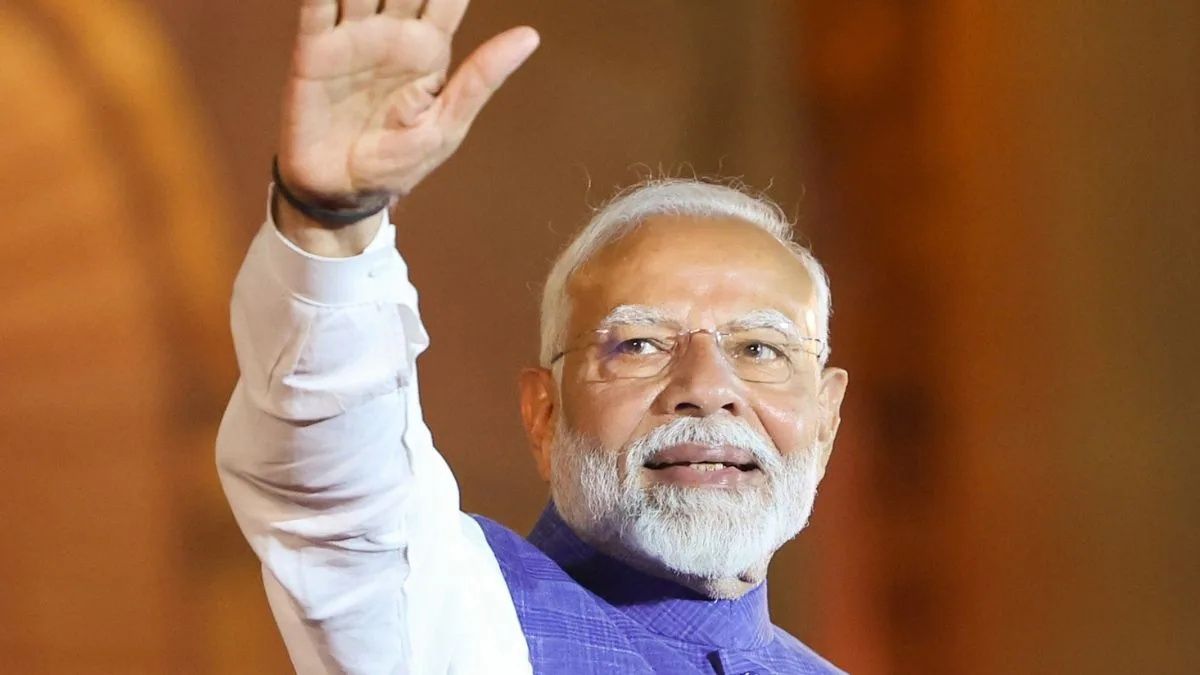
Prime Minister Narendra Modi will preside over the main celebrations of India's 12th International Day of Yoga from Kolkata's Red Road on Sunday, June 21, reinforcing his administration's focus on the integrated wellness philosophy of "Healthy Body, Healthy Mind." The event represents a significant undertaking by New Delhi, with mass demonstrations of the Common Yoga Protocol expected to draw thousands of participants, government dignitaries, and citizens to one of the eastern metropolis's most iconic public spaces.
The selection of Kolkata as the venue for India's primary National Yoga Day observance carries considerable political significance beyond its wellness messaging. The choice arrives in the immediate aftermath of the Bharatiya Janata Party's decisive victory in the West Bengal Assembly elections, a pivotal moment that saw the saffron party displace the long-ruling Trinamool Congress. Senior BJP leadership has signalled that the state will receive heightened governmental attention in the years ahead, with commitments to accelerate developmental initiatives in a region they characterise as having experienced administrative neglect.
Red Road itself holds profound meaning as a venue selection. Beyond serving as a gathering space for civic events, the historic thoroughfare embodies India's military heritage and contains ecological innovations integral to Kolkata's urban identity. As one of the city's most vibrant public zones, it represents the confluence of historical significance and contemporary civic participation—symbolism that extends the Yoga Day celebrations beyond mere health promotion into a broader narrative of national renewal and inclusive development.
The Ministry of Ayush has orchestrated an unprecedented scale of participation for this year's observance. The Yoga Sangam Portal has achieved a striking milestone with 600,000 organisational registrations, demonstrating extraordinary institutional and community enthusiasm across the nation. This figure underscores how yoga has transcended its traditional cultural boundaries to become embedded in India's contemporary institutional fabric, with schools, offices, civic groups, and wellness centres mobilising millions of participants to engage simultaneously in practice alongside the Prime Minister's ceremonial proceedings.
Globally, the movement reflects India's soft power projection through wellness diplomacy. Approximately 2,500 organised events are scheduled worldwide, with Indian diplomatic missions in 211 countries facilitating participation. This expansion demonstrates how yoga, once perceived as niche spiritual practice, has gained mainstream acceptance internationally, positioning India as an authoritative voice in holistic wellness and preventive health approaches that increasingly resonate with ageing populations across developed economies.
This year's theme, "Yoga for Healthy Ageing," carries immediate relevance for Southeast Asia and globally. Union Minister of State for Ayush Prataprao Jadhav articulated the underlying imperative: while global life expectancy has expanded considerably, the corresponding quality of those additional years remains inconsistent. Yoga provides a framework addressing this gap, operating as a comprehensive wellness pathway that simultaneously strengthens physical capacity, fortifies mental resilience, and enhances overall life quality—concerns that resonate particularly for ageing societies throughout the region and beyond.
The Ministry of Culture's parallel initiative—orchestrating yoga programmes at 100 iconic locations nationwide—demonstrates deliberate integration of wellness promotion with cultural heritage preservation. This approach positions yoga not as imported wellness commodity but as rooted expression of India's ancient knowledge systems, thereby elevating the celebrations beyond simple public health messaging into cultural affirmation with nationalist undertones.
Kolkata's mobilisation has extended into preparatory initiatives reflecting this comprehensive approach. The city witnessed substantial engagement around "Daud Se Dhyan 2026—From Movement to Stillness," an initiative organised under the Swachhata Se Swagat Programme that crystallised interconnected values: physical health, environmental cleanliness, civic responsibility, and holistic well-being. This integration suggests governmental strategy to position health development within broader sustainability and civic engagement frameworks rather than as isolated health policy concern.
The West Bengal government's directive mandating participation by all state employees represents perhaps the most explicit indicator of political prioritisation surrounding these celebrations. By requiring governmental staff to participate at designated venues or residential complexes, authorities effectively transformed optional wellness activity into institutional expectation—a move that simultaneously demonstrates governmental commitment to health promotion whilst subtly reinforcing state apparatus visibility and organisational capacity in the months following electoral transition.
For Malaysian and Southeast Asian observers, these celebrations illuminate India's evolving approach to public health communication and wellness promotion through mass cultural events. The scale of coordination required—mobilising 600,000 organisations, securing international participation across 211 diplomatic missions, and synchronising simultaneous practice across continental distances—demonstrates sophisticated capacity for nationwide institutional alignment around shared wellness objectives. This model offers instructive lessons for regional health authorities considering how to integrate traditional wellness practices with contemporary public health communication strategies.
The Yoga Day celebrations further underscore India's strategic deployment of traditional knowledge systems as contemporary policy instruments. Rather than presenting yoga as historical artefact or spiritual curiosity, governmental framing positions it as evidence-based wellness methodology addressing concrete challenges facing ageing populations—a rhetorical move that grants legitimacy to traditional practices whilst simultaneously modernising them through public health discourse familiar to international audiences.
Looking forward, the momentum generated through these celebrations will likely influence how India positions itself within regional health discussions and international wellness diplomacy. The demonstrated capacity to mobilise hundreds of thousands of institutions around shared health objectives suggests potential for scaling similar initiatives addressing broader public health challenges, from communicable disease prevention to mental health promotion. For neighbouring countries, these celebrations represent both cultural affirmation and institutional capability demonstration worthy of analytical attention.
Ultimately, the Kolkata Yoga Day celebrations embody contemporary India's approach to governance: integrating health policy with political strategy, traditional knowledge with modern institutional frameworks, and domestic wellness objectives with international soft power projection. As West Bengal transitions administratively and politically, these celebrations serve as ceremonial marker of continuity within change—affirming commitment to citizen well-being whilst simultaneously signalling new developmental priorities under transformed state leadership.