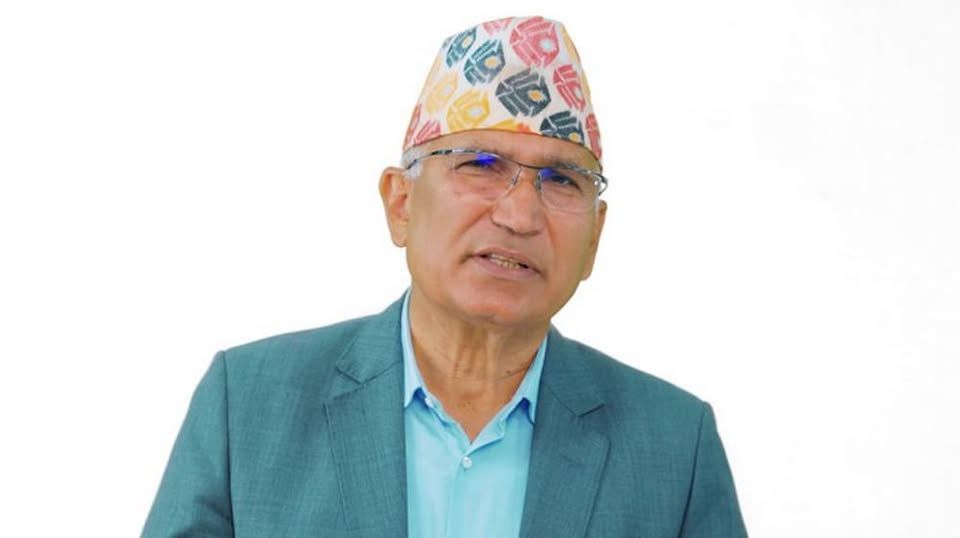
The arrest of Bishnu Paudel, a former finance minister and senior figure in Nepal's Communist CPN-UML party, signals the government's intensifying focus on tackling financial crimes in the aftermath of the country's dramatic political upheaval. Detained on Monday and confirmed by police on Tuesday, Paudel is now under investigation for alleged involvement in money-laundering activities, according to Nepal Police spokesman Abhi Narayan Kafle. The case represents the latest in a series of prosecutions targeting senior officials who served under the previous administration of KP Sharma Oli, whose government collapsed following massive public protests earlier in 2025.
Paudel's position as vice-chair of the Communist CPN-UML party underscores the political dimensions of Nepal's anti-corruption campaign. His detention comes as Prime Minister Balendra Shah, a musician-turned-political leader elected in March, fulfills campaign promises to pursue corruption cases against former officials. Shah's government has already moved against other prominent figures from Oli's administration, creating significant tension within Nepal's fractious political establishment. The timing and nature of these prosecutions have sparked accusations from opposition parties that the anti-corruption drive masks political revenge rather than genuine law enforcement.
Oli himself has dismissed Paudel's arrest as a calculated political maneuver, characterizing Shah's administration as engaging in authoritarian conduct. The former prime minister, who lost his parliamentary seat to Shah in recent elections, has become the most vocal critic of the government's anti-corruption strategy. His accusations of discriminatory behavior reflect growing concerns within opposition circles that corruption investigations are being selectively deployed against political rivals rather than applied uniformly across the political spectrum. Niraj Acharya, speaking for the CPN-UML party's publicity department, acknowledged willingness to cooperate with legal processes while simultaneously condemning what he termed the government's biased approach to combating graft.
The backdrop to these developments lies in the traumatic events of 2025, when Nepal experienced severe civil unrest that fundamentally altered the country's political trajectory. Protests initially sparked by a social media ban rapidly evolved into a broader uprising against systemic corruption and economic mismanagement. The violent crackdown that followed left at least 76 people dead and over 2,500 wounded during two days of intense clashes. This bloodshed galvanized public sentiment against Oli's administration and created political space for Shah's emergence as a reformist alternative, despite his unconventional background as a rapper-turned-politician.
Investigations into the 2025 violence have yielded arrests of multiple senior officials, including Oli himself and former interior minister Ramesh Lekhak. Detained in March immediately following Shah's inauguration, both men underwent questioning regarding their alleged culpability in the brutal suppression of protest movements. However, neither faced formal charges, and both have consistently denied involvement in authorizing or orchestrating the violent response. Their release after approximately two weeks illustrated the challenges Nepal faces in translating political will into effective prosecutions, particularly when cases involve former government leaders with substantial institutional connections.
Beyond the Paudel case, Nepal's anti-corruption apparatus has expanded its investigations into multiple alleged schemes involving senior bureaucrats and officials. The Commission for Investigation of Abuse of Authority filed charges against 16 individuals, including the passport department chief, in connection with a suspected procurement fraud scheme involving approximately $66 million. This alleged embezzlement centered on government procurement processes for e-passport systems, a critical infrastructure project with significant budgetary implications. Spokesman Suresh Neupane confirmed that investigations have determined systematic irregularities and unauthorized fund transfers within the passport procurement framework.
The scale and scope of corruption allegations currently under investigation reflect systemic vulnerabilities in Nepal's governance structures that extend beyond any single administration. Procurement fraud, money-laundering networks, and unauthorized financial transfers suggest deeply entrenched patterns of institutional dysfunction and personal enrichment among government officials. For Malaysia and other Southeast Asian nations navigating similar corruption challenges, Nepal's experience offers cautionary lessons regarding the difficulty of sustaining anti-corruption momentum amid political transitions. The selective nature of investigations risks undermining broader reform objectives if prosecution patterns become perceived as factional rather than principled.
Shah's elevation to the prime ministership in March represented a generational shift within Nepal's political landscape, bringing a figure with no traditional political background to the country's highest executive position. His campaign explicitly centered on anti-corruption commitments, resonating with voters exhausted by repeated scandals and economic stagnation. However, the rapid progression from electoral victory to aggressive prosecutions of opposition figures illustrates inherent tensions between combating genuine corruption and avoiding the appearance of political weaponization. Balancing these competing imperatives has proven challenging, with opposition parties increasingly unified in claiming that investigations serve factional interests rather than national anti-corruption objectives.
The Paudel case must be understood within Nepal's broader struggles with institutional capacity and legal infrastructure. The country's courts and investigative agencies, while theoretically independent, operate within political environments where formal authority and informal power structures often conflict. Effective anti-corruption campaigns require sustained commitment across multiple election cycles and political transitions, a standard rarely achieved in South Asian democracies. Nepal's current trajectory suggests that without deliberate efforts to establish transparent, nonpartisan prosecutorial standards, anti-corruption initiatives risk becoming delegitimized through association with factional political competition.
For Southeast Asian observers, Nepal's experience demonstrates the complexity inherent in post-crisis political transitions. The 2025 upheaval created temporary political consensus around anti-corruption imperatives, but that consensus has proven fragile as factional interests reassert themselves. The arrest of former officials may satisfy immediate demands for accountability, but without structural reforms addressing underlying causes of corruption—inadequate oversight mechanisms, limited prosecutorial independence, and insufficient institutional transparency—successive administrations will likely continue witnessing similar patterns of official misconduct and selective prosecution cycles that undermine public confidence in governance integrity.