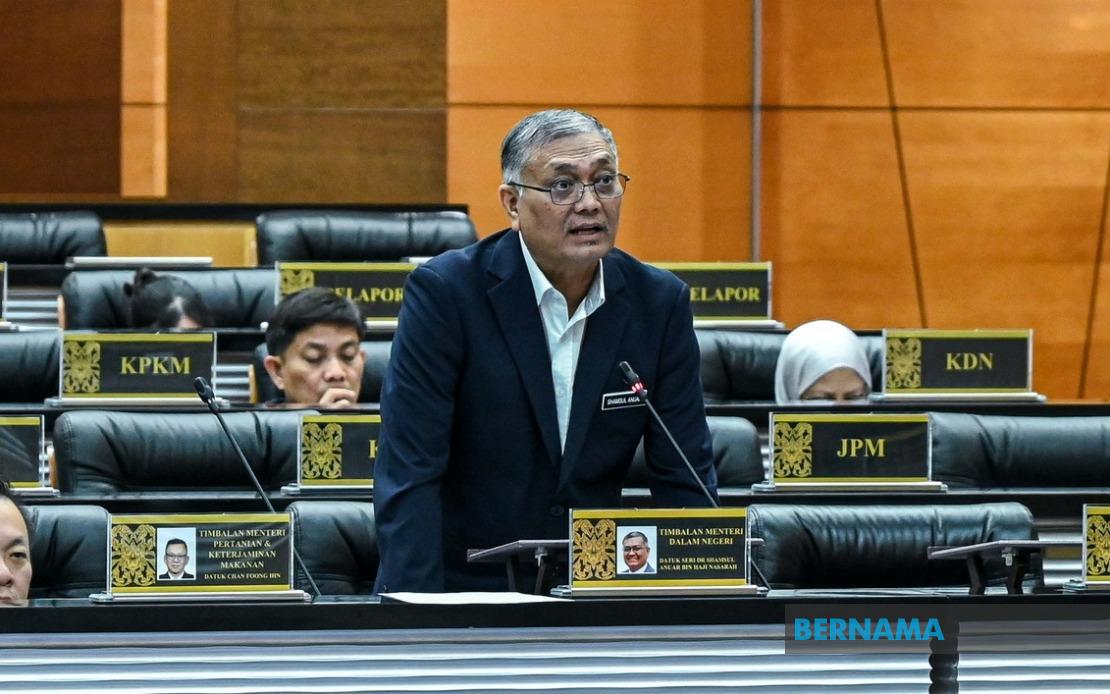
The Home Ministry has acknowledged a substantial backlog of citizenship applications in Sabah, with figures released in Parliament revealing that 3,640 cases remain pending as of the end of May this year. Of the total caseload in the state, only 10 applications have successfully cleared the final hurdle and resulted in citizenship certificates being issued to successful applicants. The disclosure came during parliamentary questioning by Vivian Wong Shir Yee, the representative for Sandakan, who sought clarification on the processing status and systemic improvements to the citizenship pipeline.
Deputy Home Minister Datuk Seri Dr Shamsul Anuar Nasarah provided the figures whilst outlining the ministry's broader response to mounting concerns about processing delays in Sabah's citizenship system. The minister emphasised that late birth registration applications have performed somewhat better within the overall caseload, with 2,659 approvals recorded against 611 cases still under active review. This distinction is significant for Malaysian policymakers and regional observers, as it suggests that certain categories of application move through the system more efficiently than others, potentially pointing to differentiated procedural challenges across various application types.
The bureaucratic machinery for handling citizenship claims has been substantially overhauled in recent months, according to the ministry's statement to Parliament. The Home Ministry has implemented revised standard operating procedures for applications filed under Articles 15A, 15(2), and 19(1) of the Federal Constitution, establishing a formal one-year timeframe from the date of document completion to final ministerial determination. This codification of timelines represents an attempt to introduce predictability and accountability into a process that has historically been characterised by opacity and indefinite waiting periods that have frustrated applicants and civil society observers across Sabah.
The geographical and institutional expansion of application services demonstrates an effort to democratise access to the citizenship process beyond Kuala Lumpur's corridors of bureaucratic power. Late birth registration applications can now be lodged at all National Registration Department offices nationwide, rather than being concentrated in a limited number of processing hubs. Furthermore, the Menyemai Kasih Rakyat (MEKAR) programme has been extended to reach rural and remote communities, recognising that citizenship documentation challenges are particularly acute in underserved areas where transport infrastructure and government facilities remain limited.
The Sabah Special Committee on Citizenship Status is scheduled to convene at the end of July or in early August to deliberate on a further 1,018 pending applications. This committee mechanism, whilst welcome as a dedicated institutional forum, also underscores the extraordinary backlog confronting Sabah's citizenship administration. The state's historical experience with irregular migration, undocumented residents, and complex family status issues has created a citizenship verification challenge unlike that faced in most Malaysian peninsula states, requiring sustained political attention and resource allocation.
A critical procedural distinction has emerged from the ministry's parliamentary response, one that potentially explains discrepancies between the perception of delays and official approval statistics. Applications formally approved by the Home Ministry but awaiting citizenship certificate printing and physical delivery remain classified within the NRD system as "being processed" rather than approved. This definitional nuance means that the actual number of approvals may exceed what headline figures initially suggest, though it simultaneously highlights bottlenecks in the certificate production and distribution chain that warrant separate scrutiny and resource investment.
The delegation of late birth registration decision-making authority to Sabah's regional NRD offices represents a significant decentralisation of administrative power aimed at accelerating case resolution. Rather than channelling all determinations through federal headquarters, empowering state-level officials to issue final decisions promises to reduce bureaucratic layering and transit times. This approach recognises that Sabah's citizenship challenges require responsiveness to local contexts and demographic realities, and that centralised processing in Kuala Lumpur has demonstrably failed to deliver timely resolutions for affected communities.
The underlying causes of incomplete applications and registration delays reveal systemic vulnerabilities in Malaysia's citizenship documentation framework, particularly in Sabah. The Deputy Home Minister identified several contributory factors: limited public awareness among parents and guardians concerning statutory registration deadlines, family relationship complications, financial hardship preventing document gathering, and incomplete supporting documentation. These barriers disproportionately affect marginalised and lower-income populations, creating a feedback loop where vulnerability compounds administrative obstacles.
The Home Ministry has initiated expanded inter-agency coordination involving the NRD, Sabah state government, community leaders, hospitals, schools, welfare organisations, and non-governmental bodies to proactively identify individuals lacking identity documentation and facilitate their access to supporting evidence. This networked approach acknowledges that citizenship status determination is not purely an administrative exercise but requires social outreach and institutional collaboration. Hospitals can verify birth records, schools can document educational history, and community leaders can attest to family background—resources that lie outside the traditional bureaucratic apparatus.
For Malaysian readers and policymakers, these revelations carry implications beyond Sabah's borders. The state's experience with citizenship backlogs, late registrations, and documentary challenges prefigures issues likely to intensify across Southeast Asia as migration becomes increasingly complex and family structures more transnational. The MEKAR programme's expansion and the decentralisation of administrative authority offer potential models for other nations confronting similar documentation crises, though Malaysia's relative institutional capacity and resources remain vastly superior to those available to neighbouring countries.
The appointment of parliamentary focus on Sabah's citizenship question reflects broader anxieties about statelessness and documentary marginalisation within Malaysia's diverse demographic landscape. While only 3,640 pending applications and 611 late registrations under review may seem statistically modest against Malaysia's 34-million population, each unresolved case represents an individual whose access to education, employment, healthcare, and political participation remains circumscribed. The pace of resolution—only 10 approvals in the first five months of 2025—suggests that clearing this backlog will demand years of sustained administrative effort and resource commitment rather than mere procedural reform.

