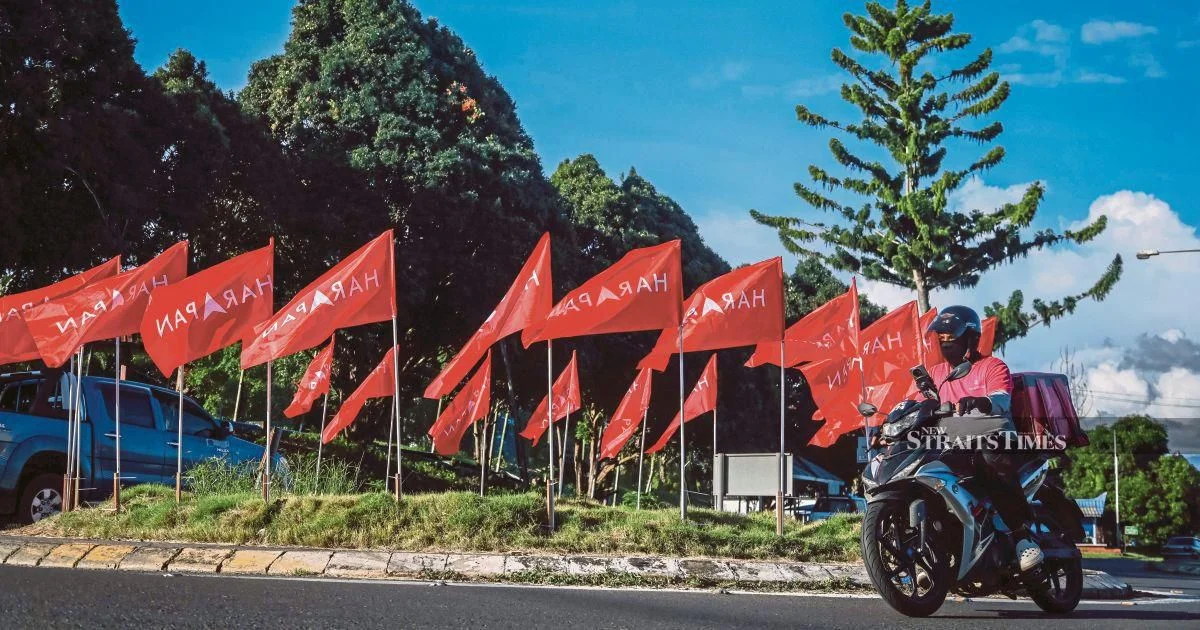
Pakatan Harapan leadership has made clear that it will not bow to external demands to reveal its choice for menteri besar ahead of the forthcoming 16th Johor state election, maintaining that such decisions must be made on the coalition's own timeline and according to its internal processes. The statement represents a deliberate pushback against what party figures view as attempts by rival coalitions to manufacture pressure and influence the selection process through public discourse. By refusing to name a candidate prematurely, the multiethnic opposition coalition is asserting its autonomy in candidate selection and signalling confidence in its electoral prospects irrespective of how the question of leadership is framed in the interim.
This measured approach reflects broader strategic thinking within Pakatan Harapan about managing intra-coalition dynamics and maintaining credibility with voters in Johor, a state where the opposition has been working to rebuild its political presence after suffering significant reversals in recent years. The coalition understands that naming a menteri besar candidate too early could open that individual to sustained attacks from rivals, potentially undermining their personal credibility and creating ammunition for negative campaigning during the critical final weeks before polling. Conversely, withholding such an announcement preserves flexibility and prevents opponents from weaponising leadership selection into a referendum on a single personality rather than on policy platforms and governance vision.
The timing of leadership announcements in Malaysian state elections has become an increasingly delicate political calculation, with implications for how campaigns develop and how voters perceive coalition unity and preparedness. Johor presents particular complexities because the state has served as a political bellwether and traditionally been governed by UMNO within the Barisan Nasional framework, though recent electoral cycles have demonstrated growing volatility in voter behaviour across different demographic and geographic segments. For Pakatan Harapan to project strength in such a context requires demonstrating that its internal decision-making is robust and insulated from external manipulation, rather than reactive to perceived pressure from competitors.
The 16th Johor election assumes significance not merely as a state-level contest but as a potential indicator of broader shifts in Malaysian political alignment heading into the next federal election cycle. All major coalitions have incentives to secure strong results in Johor, where the electorate has shown willingness to split votes across different parties and where demographic changes are reshaping traditional voting patterns. Opposition coalitions nationwide are watching Johor closely as a test case for whether they can effectively compete in states that have been Barisan Nasional strongholds, while the ruling coalition remains determined to hold or recover ground in areas where it faces challenge.
Pakatan Harapan's public stance also carries implications for how the coalition manages its constituent parties, each of which brings distinct organisational structures, voter constituencies, and leadership aspirations to any electoral arrangement. By declining to be rushed into a menteri besar announcement, the coalition leadership avoids immediately resolving disputes that may exist between coalition partners regarding which party or faction should claim the top state position. This deliberate ambiguity, while potentially frustrating to sections of the media and rival politicians seeking clarity, permits behind-the-scenes negotiations to continue without every discussion being litigated through public pronouncements.
The decision to resist external pressure also demonstrates awareness of how electoral information is consumed by different voter segments in contemporary Malaysia. Many voters make decisions based on local issues and perceptions of governance capacity rather than on early leadership announcements, particularly in state elections where federal considerations may be secondary. By withholding leadership designation until later in the campaign, Pakatan Harapan can focus early messaging on platform commitments, service delivery grievances in the current Johor administration, and reasons why the state requires new direction, before personalising the campaign around a specific candidate.
Historically, opposition coalitions in Malaysia have sometimes suffered from premature leadership announcements that allowed governing coalitions to concentrate fire on a single individual before that candidate had opportunity to establish themselves as a credible alternative administration. The Pakatan Harapan leadership appears determined to learn from such experiences and to control the narrative arc of its campaign rather than allowing rivals to define the terms of leadership debate from the moment a candidate is named.
For Southeast Asian observers and comparative politics analysts, this cautious approach by Pakatan Harapan also reflects broader patterns visible across democracies in the region regarding how opposition coalitions manage the inherent tensions between transparency, strategic advantage, and internal consensus-building. The calculated withholding of information is a form of political leverage that opposition movements can exercise, particularly when governing coalitions expect that such information will be released and are preparing counter-strategies accordingly.
Looking ahead to the actual campaign period, all indications suggest that Pakatan Harapan will eventually announce its menteri besar candidate at a moment of its choosing, likely when doing so offers maximum strategic benefit and when internal coalition discussions have sufficiently matured. Until that moment arrives, the coalition's refusal to be pressured serves multiple purposes: asserting autonomy, preserving flexibility, managing intra-coalition negotiations, and keeping public discussion focused on issues rather than personalities. This approach may frustrate observers seeking clarity, but it represents sophisticated political management by an opposition coalition that has learnt from previous electoral campaigns and understands how timing of leadership revelation can significantly influence campaign dynamics and electoral outcomes in contested state contests.