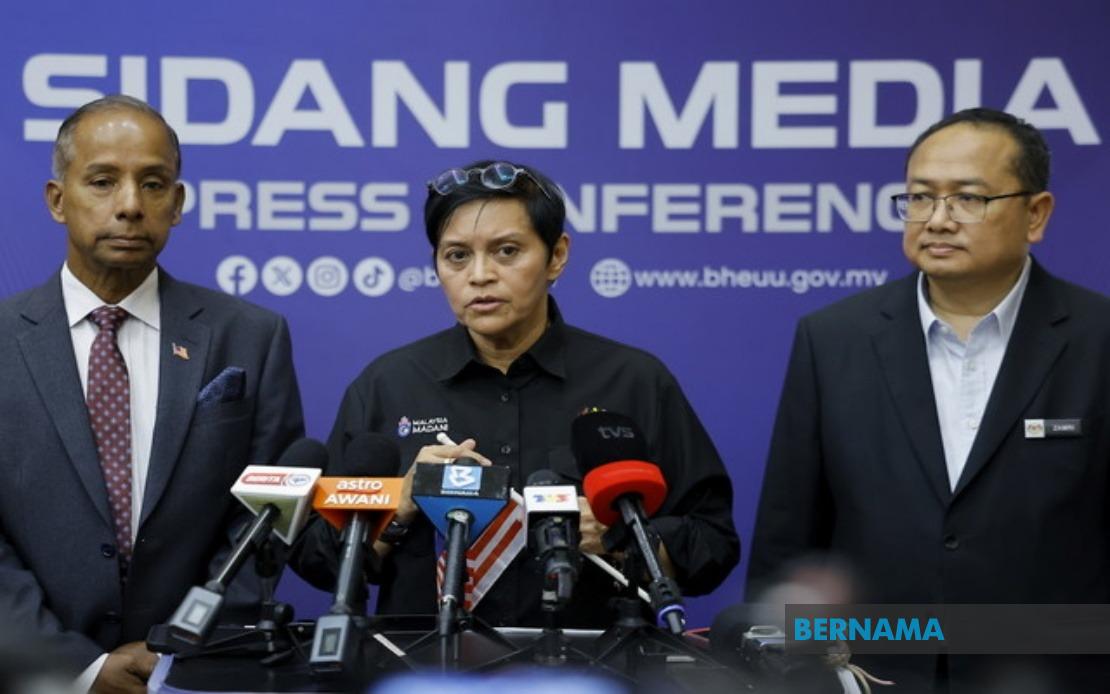
The Freedom of Information Bill 2026 enters a critical review phase tomorrow when a Parliamentary Select Committee convenes to scrutinise the proposed legislation ahead of its formal parliamentary presentation. Datuk Seri Azalina Othman Said, Minister in the Prime Minister's Department (Law and Institutional Reform), will chair the committee and lead the examination of what promises to be one of the most significant governance reforms in recent Malaysian legislative history.
The inaugural session of the Select Committee marks a deliberate shift towards collaborative legislative development. By channelling the Bill through a committee process rather than proceeding directly to parliamentary debate, the government has signalled its commitment to building consensus around transparency measures that will reshape how citizens interact with public institutions. This approach reflects growing recognition that legislation governing information access requires extensive stakeholder engagement to achieve legitimacy and effective implementation.
Azalina indicated that tomorrow's meeting will establish the committee's operational parameters and terms of reference—the foundational rules that will guide the entire review process. The emphasis on completing this framework at the outset suggests the government anticipates a methodical examination of the legislation across multiple sessions. By establishing clear boundaries for the committee's work early, the administration aims to maintain momentum while ensuring the process remains structured and purposeful.
The Bill fundamentally establishes a formal mechanism through which Malaysian citizens can request access to information held by public authorities. The legislation sets an age threshold of 18 years, meaning all adult citizens possess the statutory right to submit written applications for official documents. This represents a departure from Malaysia's historical approach to information governance, which has traditionally concentrated on restricting rather than facilitating disclosure.
Yet the proposed framework contains significant limitations that have already attracted criticism from civil society organisations and professional associations. The legislation explicitly preserves existing secrecy statutes, most notably the Official Secrets Act 1972, which remains one of the world's most restrictive information classification systems. This preservation means that large categories of government records—those deemed sensitive under national security, defence, or other official confidentiality provisions—will remain beyond the reach of citizens exercising their new statutory rights. The tension between establishing a freedom of information regime and maintaining expansive exemptions through existing laws creates a paradox at the heart of the Bill.
Azalina acknowledged during her remarks that NGOs and professional bodies have submitted extensive feedback demanding broader legislative scope. These stakeholders argue that the Bill's current configuration tilts too heavily toward protecting government secrecy rather than promoting genuine transparency. The minister's willingness to reference these concerns publicly suggests the Select Committee will genuinely engage with proposals to widen the legislation's application. This openness contrasts with typical legislative processes in Malaysia, where executive preferences often dominate committee deliberations.
The bipartisan composition of the Select Committee represents another meaningful procedural development. By incorporating opposition Members of Parliament into the review process, the government has created space for alternative perspectives to influence the Bill's final form. Opposition parties, along with independent analysts and civil society representatives, can now shape not merely the parliamentary debate but the foundational recommendations that will guide legislative amendments. This structure acknowledges that information access legislation requires political legitimacy that transcends partisan divisions.
The committee faces a compressed timeline, with recommendations and findings expected before the next parliamentary sitting. This deadline reflects the government's determination to move the Bill through the legislative process without indefinite delays, yet also creates pressure to resolve complex philosophical questions about the proper balance between transparency and secrecy in relatively short order. The timeframe suggests that while the government welcomes deliberation, it has predetermined that the Bill will advance in 2026.
For Malaysian businesses and international observers monitoring governance developments, this legislative moment carries substantial implications. A well-crafted freedom of information law could enhance Malaysia's standing on transparency indices and potentially attract foreign investment in sectors valuing governance predictability. Conversely, a framework perceived as performative—establishing formal rights while preserving expansive exemptions—risks reputational damage and cynicism about institutional reform commitments. Southeast Asian peers like Thailand and the Philippines have grappled with similar tensions between transparency aspirations and security classifications.
The engagement with NGO concerns signals that Azalina's committee may genuinely consider substantive amendments to the Bill's scope. Potential modifications could include narrowing the categories of information protected under existing secrecy laws, establishing procedural timelines for responding to access requests, or creating independent oversight mechanisms to adjudicate disputes between citizens and government agencies. Each modification would represent genuine movement toward the transparency framework that civil society has advocated for across multiple reform cycles.
The deliberative process unfolding tomorrow reflects broader Malaysian democratic maturation. Rather than treating legislative development as an executive prerogative, the government has created space for scrutiny and stakeholder input that may meaningfully influence policy outcomes. Whether the Select Committee's eventual recommendations substantially alter the Bill's trajectory will signal whether Malaysia's commitment to transparency represents substantive institutional reform or rhetorical positioning aimed at satisfying domestic and international audiences expecting expanding democratic norms.

