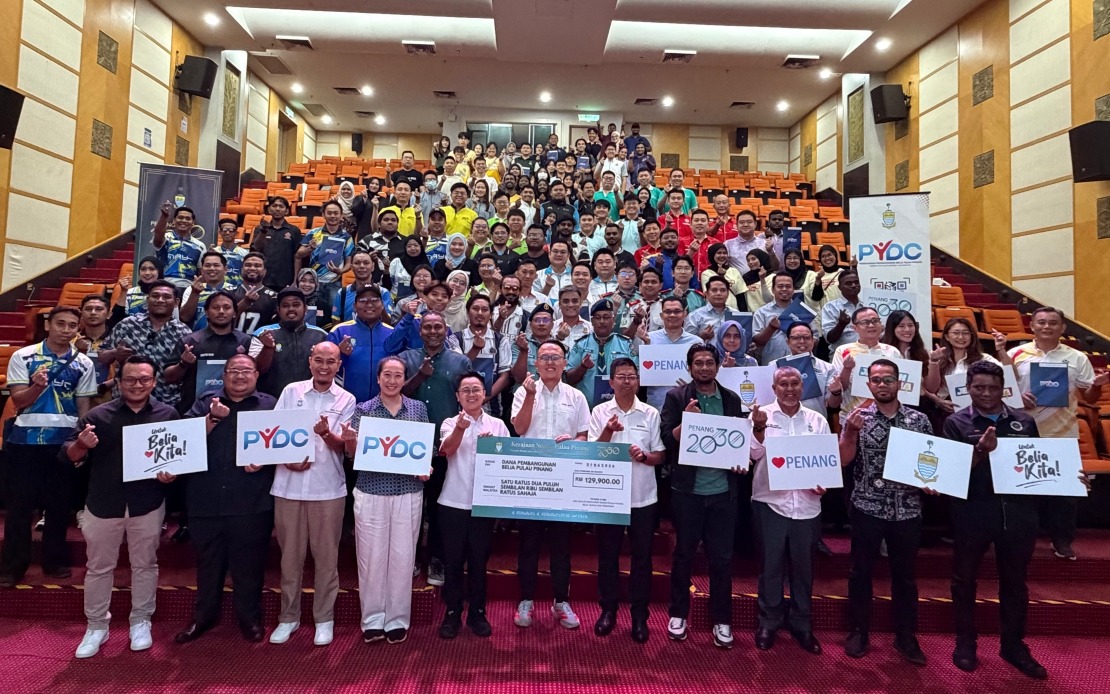
The Penang state government has committed RM129,900 from its Youth Development Fund to support a comprehensive slate of 68 youth programmes organised by 48 local associations throughout the state. The allocation, announced through the Youth State Executive Council Meeting, represents part of a broader RM200,000 funding envelope designed to nurture youth engagement and development across the region.
Daniel Gooi Zi Sen, chairman of the Penang Youth, Sports and Health Committee, framed the initiative as more than routine grant dispensation. In remarks released this week, Gooi characterised the funding as a deliberate expression of confidence in youth associations, entrusting them with resources to translate their visions and entrepreneurial thinking into tangible community contributions. This framing reflects a growing recognition among state administrations that youth funding mechanisms can serve as catalysts for civic participation and social problem-solving when coupled with meaningful autonomy.
The 68 programmes span multiple development domains including vocational skills enhancement, workforce readiness initiatives, volunteer service mobilisation, and emerging leadership training. This thematic diversity suggests Penang's approach targets the multifaceted needs of younger residents—from immediate employability concerns to longer-term civic capacity building. The breadth of programming aligns with broader Southeast Asian discussions about youth engagement in economies increasingly shaped by technological change and digital transformation.
A critical element of Gooi's statement addresses accountability and programme quality. He explicitly cautioned recipient organisations to observe strict standards of integrity, financial transparency, and operational efficiency throughout implementation. This emphasis on governance reflects lessons learned across Malaysia's public funding landscape, where scrutiny of youth programme outcomes has intensified in recent years. By foregrounding these requirements, Penang signals its intention to move beyond performative activity reporting toward demonstrable impact assessment.
Gooi's distinction between programme execution and sustainable impact carries particular weight for Malaysian stakeholders monitoring youth development effectiveness. Many youth initiatives across the region historically emphasise activity completion—workshops held, participants registered, certificates issued—without systematic tracking of behavioural change, skill retention, or participant trajectory beyond programme conclusion. Penang's articulation of impact measurement extending into the community at large suggests an attempt to recalibrate evaluation frameworks toward longer-term value creation.
For the 48 associations receiving support, the fund represents an opportunity to scale existing efforts or pilot new initiatives that might otherwise remain unfunded. Many youth-focused civil society organisations in Malaysian states operate on constrained budgets, relying on volunteer labour and ad-hoc donations. Structured government funding, even at modest per-programme levels, can enable more professional delivery, improved participant outreach, and enhanced programme design sophistication.
The timing of this allocation carries contextual significance. Youth unemployment and underemployment remain persistent policy concerns across Malaysia and the region, particularly among first-time jobseekers and school leavers lacking tertiary credentials. Programmes addressing skills gaps and professional networking directly address these labour market pressures. Leadership and volunteerism training, meanwhile, addresses concerns about civic participation and social cohesion among younger demographics.
Penang's approach also reflects broader governance patterns within Malaysian state administrations increasingly focused on outcome-based funding and performance accountability. The emphasis on programme integrity and transparent management mirrors language adopted in federal youth development initiatives, suggesting some convergence in governance standards across Malaysian public institutions. This harmonisation could facilitate information-sharing and best practice diffusion across state boundaries.
The geographic concentration of funding in a single state highlights potential disparities in youth development resource availability across Malaysia. Penang, as a relatively urbanised and administratively developed state, possesses institutional capacity and tax base advantages that smaller or more rural states may lack. This funding announcement implicitly raises questions about equitable resource distribution for youth development nationally, and whether less-resourced states possess comparable mechanisms for supporting youth-led initiatives.
Looking forward, implementation success will depend significantly on recipient organisations' capacity to design rigorous monitoring frameworks and conduct credible impact evaluation. Gooi's invocation of long-term community benefit presumes sophisticated programme management capabilities not universally present among grassroots youth associations. Penang might consider complementing financial allocations with technical support in programme design, data collection, and impact assessment to maximise returns on the public investment.
The fund allocation also signals state commitment to preventive social investment in youth trajectories. By providing structured development opportunities, skills-building platforms, and leadership pathways, Penang positions itself within a forward-looking governance paradigm that treats youth development as preventive public health and crime prevention measure alongside its intrinsic social value. This strategic framing may influence how other Malaysian states conceptualise youth funding priorities in coming budget cycles.
For Malaysian youth themselves, particularly those in Penang seeking development opportunities beyond formal schooling, this funding injection expands accessible pathways for skills acquisition and civic participation. The diversity of programmes suggests multiple entry points for young people with varied interests and developmental needs. As implementation unfolds, monitoring programme uptake and participant demographics will reveal whether initiatives effectively reach underserved youth populations or concentrate benefits among already-advantaged groups with established civil society connections.
%22%2F%3E%3C%2Fpattern%3E%3C%2Fdefs%3E%3Crect%20width%3D%22100%25%22%20height%3D%22100%25%22%20fill%3D%22url(%23phje2hg)%22%2F%3E%3Crect%20width%3D%22100%25%22%20height%3D%22100%25%22%20fill%3D%22url(%23phje2hp)%22%2F%3E%3Ctext%20x%3D%2250%25%22%20y%3D%2250%25%22%20text-anchor%3D%22middle%22%20dominant-baseline%3D%22central%22%20fill%3D%22rgba(255%2C255%2C255%2C0.95)%22%20font-family%3D%22Georgia%2C%20'Times%20New%20Roman'%2C%20serif%22%20font-weight%3D%22700%22%20font-size%3D%22320%22%20letter-spacing%3D%22-0.02em%22%3E70%3C%2Ftext%3E%3C%2Fsvg%3E)