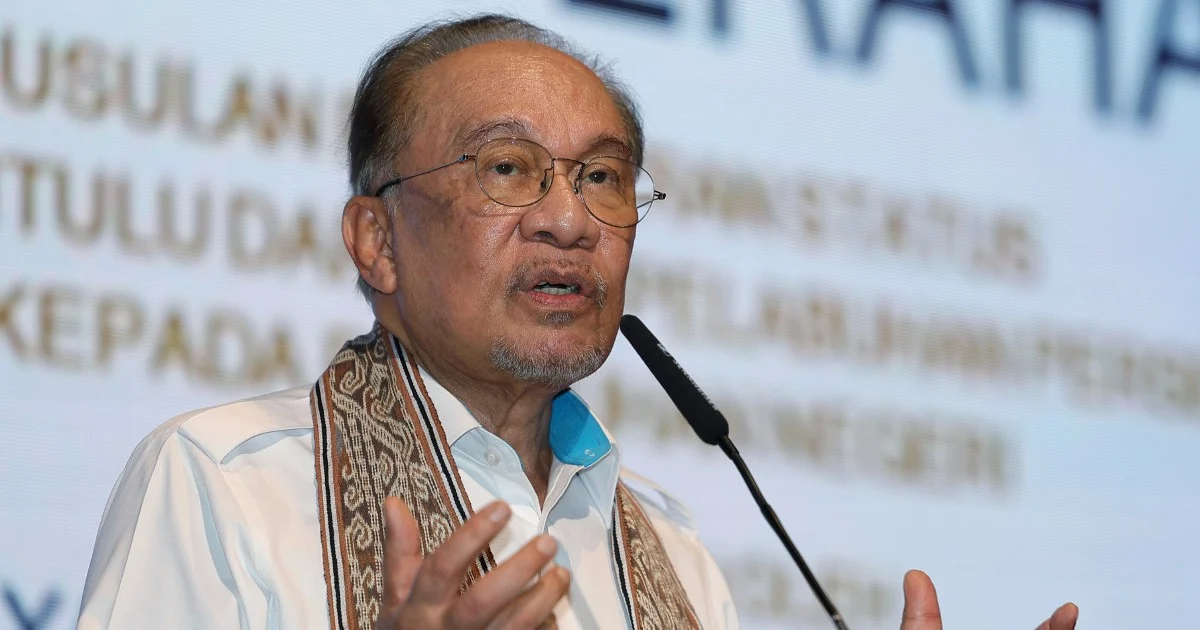
Negotiations between Malaysia's national petroleum company Petronas and Sarawak's state-owned petroleum authority Petros are advancing constructively, according to Prime Minister Datuk Seri Anwar Ibrahim, who disclosed the development while in Kuching.
The remarks, made during a visit to Sarawak's capital, underline the importance both the federal and state governments place on resolving long-standing tensions over petroleum resource management in Malaysia's oil-rich eastern region. The negotiations represent a carefully calibrated dialogue aimed at balancing national interests with Sarawak's sovereignty over its resource endowment, a matter that has intermittently sparked political friction over several decades.
Petronas, established as the national petroleum authority in 1974, has traditionally held dominant control over Malaysia's upstream oil and gas operations. However, the structure of oil and gas arrangements in Malaysia presents inherent complexities, particularly regarding jurisdictional boundaries and revenue distribution frameworks. Sarawak, as a state with constitutionally protected resource rights, has increasingly sought greater influence over petroleum decisions affecting its territorial waters and development priorities.
The constructive tone reflected in the Prime Minister's statement carries significance beyond corporate logistics. It suggests that the federal administration recognises the necessity of repositioning the relationship between national and state-level petroleum entities to reflect contemporary governance expectations. This realignment would acknowledge Sarawak's legitimate claims to participate meaningfully in decisions concerning resources within its jurisdiction, addressing grievances that have occasionally threatened to destabilise Malaysia's federal compact.
Petros, which was incorporated to assert Sarawak's petroleum interests, has gradually established itself as an independent player in the sector. The organisation manages the state's petroleum rights and revenue streams, and its capacity to negotiate effectively with Petronas affects both Sarawak's fiscal position and its development agenda. The current negotiations therefore extend beyond technical operational matters to encompass questions of regional equity and the distribution of petroleum wealth.
The positive characterisation of progress suggests that both entities have identified shared ground on several procedural and substantive issues. This might include enhanced information-sharing mechanisms, clearer delineation of operational responsibilities in specific production areas, or revised frameworks for joint ventures that provide Petros with expanded involvement in decision-making. The specifics remain confidential, which is typical during ongoing commercial negotiations involving sovereign entities.
For Malaysian investors and the international energy sector, clarity on the Petronas-Petros relationship carries material importance. The petroleum industry depends upon predictability in governance structures, regulatory frameworks, and contractual arrangements. Sustained uncertainty regarding resource control between federal and state authorities can create investment hesitancy, complicate project financing, and delay critical energy infrastructure development. A successful accord would consequently benefit not only the two principal parties but the broader Malaysian economy by enhancing the investment climate.
Regionally, Malaysia's capacity to manage internal resource governance disputes diplomatically positions it as a model for other Southeast Asian federations navigating similar tensions between national and subnational resource claims. The Petronas-Petros framework ultimately serves as a test case for whether sophisticated petroleum economies can negotiate power-sharing arrangements that satisfy both centralised coordination and localised sovereignty concerns.
The timing of Anwar's remarks reflects a deliberate political communication strategy, suggesting that sufficient progress merits public acknowledgement. This transparency serves multiple purposes: it reassures Sarawak stakeholders that federal leadership takes state concerns seriously, signals to international investors that Malaysia's institutional arrangements are stabilising, and demonstrates to the broader Malaysian public that the government is actively resolving complex resource governance challenges.
For Sarawak specifically, improved collaboration with Petronas creates opportunities to leverage its hydrocarbon endowment more effectively in pursuit of state development objectives. Enhanced involvement in strategic petroleum decisions would position Sarawak to ensure that resource extraction supports its economic diversification, employment creation, and fiscal sustainability in a period when global energy markets are experiencing transition toward renewable resources.
The petroleum sector remains fundamentally important to Malaysian federal and state revenues despite growing focus on economic transition and renewable energy. Extracting maximum value from remaining hydrocarbon reserves while maintaining institutional harmony between Petronas and Petros therefore constitutes a priority that transcends any single administration or political cycle. The reported progress suggests that current leadership recognises this imperative and has committed resources to achieving a durable accommodation.
Ongoing development of these negotiations will merit close monitoring, as successful resolution would represent a significant advancement in Malaysia's federal governance practices. The outcomes will influence not only petroleum industry operations but also set precedents for how federal authorities negotiate with states on resource matters more broadly, potentially affecting discussions surrounding minerals, timber, and other strategic commodities.
%22%2F%3E%3C%2Fpattern%3E%3C%2Fdefs%3E%3Crect%20width%3D%22100%25%22%20height%3D%22100%25%22%20fill%3D%22url(%23ph55gaog)%22%2F%3E%3Crect%20width%3D%22100%25%22%20height%3D%22100%25%22%20fill%3D%22url(%23ph55gaop)%22%2F%3E%3Ctext%20x%3D%2250%25%22%20y%3D%2250%25%22%20text-anchor%3D%22middle%22%20dominant-baseline%3D%22central%22%20fill%3D%22rgba(255%2C255%2C255%2C0.95)%22%20font-family%3D%22Georgia%2C%20'Times%20New%20Roman'%2C%20serif%22%20font-weight%3D%22700%22%20font-size%3D%22320%22%20letter-spacing%3D%22-0.02em%22%3EMUDA%3C%2Ftext%3E%3C%2Fsvg%3E)